
How does order volume affect disposable medical supplies cost?
Order volume can significantly affect disposable medical supplies cost, but the lowest unit price does not always mean the lowest total procurement expense.
Larger orders may unlock volume discounts and reduce shipping costs per item, while increasing storage needs, cash requirements, and the risk of products expiring before use.
For procurement teams, understanding these trade-offs is essential to maintaining reliable supplies without unnecessary spending. The best order size balances total cost, product availability, and clinical requirements.
How Does a Larger Order Change the Cost per Item?
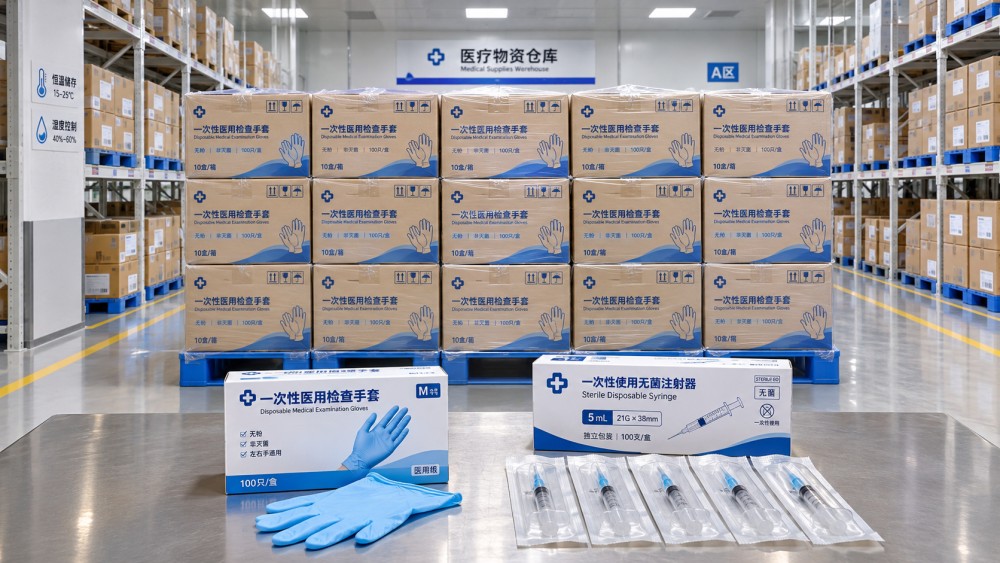
Suppliers often offer lower prices for larger orders because production, packaging, administration, and distribution costs can be spread across more units.
For buyers, the potential savings extend beyond the quoted product price. Consolidated shipments and fewer purchase orders may also reduce freight and administrative costs.
However, discounts are rarely uniform. Pricing may change at specific quantity thresholds, and the strongest reduction may require a contract commitment or a longer lead time.
A hospital ordering 100,000 examination gloves, for example, might receive a lower price per glove than a clinic ordering 5,000. The difference depends on specifications, supplier capacity, and market conditions.
Before increasing an order, compare the savings from the next pricing tier with the additional cost of holding, financing, and potentially discarding the extra stock.
Which Costs Should Buyers Include Beyond the Unit Price?
A useful comparison starts with the total landed cost: the product price plus applicable freight, insurance, duties, taxes, and other charges needed to receive the order.
Buyers should then add the costs of placing orders, storing inventory, financing stock, handling damage, and managing products that cannot be used before expiry.
Not every cost appears on the supplier invoice. Warehouse space, stock rotation, receiving labor, and cash tied up in inventory can materially affect the purchasing decision.
A practical comparison is: total procurement cost equals product cost plus ordering, delivery, holding, and expected waste costs, minus applicable rebates or credits.
Use costs over the same period and for the same expected consumption. Otherwise, an apparently cheaper quote may simply cover a different quantity or delivery schedule.
Product Price and Quantity Discounts
Confirm whether the quoted price applies per item, pair, pack, box, or case. Different pack sizes can make supplier comparisons misleading.
Ask whether a discount applies to the entire order once a threshold is reached or only to the units above that threshold.
Check whether the price depends on annual volume, a single purchase order, a minimum release quantity, or a commitment across multiple facilities.
Freight and Ordering Costs
Combining orders can reduce freight per item, particularly when small shipments incur minimum charges. Fewer orders can also reduce internal processing and receiving work.
That saving is not automatic. An oversized shipment may require special handling, additional warehouse labor, or multiple deliveries that the initial quote does not include.
Compare freight using the same destination and delivery terms. Identify who pays insurance, customs clearance, duties, and any charges arising after arrival.
Storage, Financing, and Waste
Holding more stock requires suitable space and controls. Depending on the product, buyers may need protection from moisture, temperature extremes, contamination, or damaged packaging.
Inventory also ties up money that could support other purchases. Include the organization’s relevant financing or capital cost when comparing materially different stock levels.
Expiry, damaged sterile barriers, discontinued specifications, and changes in clinical practice can make inventory unusable. Estimate these losses using product-specific history where available.
When Does a Bulk Discount Actually Save Money?
Consider an illustrative annual requirement of 120,000 disposable syringes. Assume both offers meet the same clinical, quality, and regulatory requirements and use identical delivery terms.
Supplier A charges $0.12 per syringe in twelve monthly orders. Annual product spending is $14,400, and ordering and delivery charges total $1,200.
Supplier B charges $0.11 per syringe for one annual order. Annual product spending is $13,200, and its single ordering and delivery charge is $300.
Before inventory costs, the bulk offer appears to save $2,100: $15,600 for Supplier A compared with $13,500 for Supplier B.
Assume the annual order adds $1,300 in storage and financing costs and $500 in expected expiry or damage losses compared with monthly ordering.
The bulk purchase then costs an estimated $15,300, leaving a $300 annual saving. A modest forecasting error or extra handling charge could eliminate that advantage.
These figures illustrate the calculation, not typical market prices. Actual results depend on contract terms, consumption patterns, shelf life, and the buyer’s operating costs.
Repeat the calculation for each viable order size. A quarterly order may outperform both extremes if it captures a discount without creating excessive inventory.
How Much Inventory Can Your Organization Use Safely?
Start with average consumption by product specification, location, and clinical use. Review at least a representative operating period and investigate unusual spikes or shortages.
Do not combine products merely because they share a category. Different syringe sizes, glove materials, or dressing types may have very different demand patterns.
Adjust historical use for planned changes such as new services, seasonal activity, facility expansion, procedure volumes, or substitutions that affect the product.
Then compare forecast consumption with the usable shelf life available on delivery. A product’s original shelf life is less important than the time remaining when received.
Set a minimum remaining shelf life in the contract where appropriate, and establish a process for accepting exceptions before goods are shipped.
For example, if a facility expects to use 2,000 units monthly and receives stock with eight months remaining, theoretical consumption is 16,000 units.
That figure is not automatically a safe order quantity. Allow for demand variation, receiving delays, internal distribution time, and stock already on hand.
Use first-expiry, first-out stock rotation where appropriate, and track expiry dates by batch. A discount has limited value if staff cannot identify aging inventory.
How Should Lead Time and Supply Risk Affect Order Size?
Low inventory reduces holding costs, but it can expose facilities to stockouts when suppliers miss delivery dates or demand rises unexpectedly.
Estimate lead time from purchase order placement to usable stock availability, including approval, manufacturing, transit, customs clearance, receiving, and internal distribution where relevant.
Also examine lead-time variability. A supplier averaging four weeks may be harder to plan around if deliveries sometimes take twice that long.
A basic reorder point is expected demand during lead time plus safety stock. The safety stock should reflect demand uncertainty, delivery variability, and clinical consequences.
For clinically critical items, procurement teams should agree acceptable service levels with clinical stakeholders rather than selecting safety stock solely to minimize inventory cost.
Emergency purchases, substitute products, canceled procedures, and disrupted care can be more costly than planned inventory. Include realistic shortage consequences in the comparison.
Where feasible, qualify alternative suppliers or products in advance. Substitution may require clinical review, compatibility checks, and training before an alternative can be used.
Can You Get Volume Pricing Without Receiving Everything at Once?
An annual volume agreement with scheduled releases can combine stronger negotiating leverage with smaller deliveries. The supplier holds or plans stock against agreed demand.
For example, a buyer may commit to an annual quantity but receive monthly or quarterly shipments. The contract should specify release quantities and delivery windows.
Confirm whether the supplier guarantees stock availability, reserves production capacity, or simply accepts forecasts. These arrangements have different implications when demand changes.
Ask who owns the inventory before delivery, who pays storage charges, and what happens if products expire or become obsolete while held by the supplier.
Review minimum commitments and penalties carefully. A discount may be reversed if annual purchases fall short, or the buyer may be required to accept unused stock.
Some organizations use group purchasing arrangements to combine demand across facilities. Before joining, verify product suitability, eligible volumes, delivery terms, and any administrative fees.
Consignment or vendor-managed inventory may also reduce on-site planning effort. These models still require clear ownership, replenishment rules, stock visibility, and accountability for expired goods.
What Should Procurement Teams Ask Suppliers?
A structured request for quotation makes volume comparisons more reliable. Ask each supplier to quote the same product specifications, packaging units, destinations, and forecast period.
- What are the price breaks, and do they apply to the full order or only incremental units?
- What minimum order quantities, annual commitments, release sizes, and lead times apply?
- Can the supplier quote both bulk delivery and scheduled releases, including all associated fees?
- What remaining shelf life is guaranteed on arrival, and how are exceptions handled?
- Which delivery charges, duties, taxes, insurance costs, and customs responsibilities apply?
- Are prices fixed for the contract period, and what conditions allow changes or surcharges?
- What happens if forecast demand changes, a shipment is delayed, or a product is discontinued?
- Are returns, replacements, recalls, damaged packaging, and expired stock covered by written terms?
Request the documentation required for the destination market and intended use. Depending on the product, this may include labeling, regulatory evidence, quality certificates, and traceability information.
Involve clinical and infection prevention stakeholders when evaluating products. A lower price is not a meaningful saving if the item is unsuitable or incompatible.
Which Ordering Approach Fits Your Supply Category?
High-volume, predictable products with adequate shelf life are often suitable for larger commitments or scheduled releases, provided storage and supply terms are favorable.
Low-volume or highly specialized items may justify smaller orders, even at a higher unit price, because expiry and specification changes create greater waste risk.
Critical products with volatile demand may need more safety stock or a qualified backup source. Assess availability and clinical impact alongside the quoted price.
Products undergoing evaluation or expected to change should generally be ordered cautiously until acceptance, compatibility, and future requirements are clearer.
Review the strategy periodically. Changes in utilization, freight rates, supplier reliability, shelf life, or contract pricing can alter the most economical order size.
Conclusion: Choose the Lowest Sustainable Total Cost
Increasing order volume can reduce disposable medical supplies cost through better pricing and fewer shipments, but those savings must exceed additional inventory and risk costs.
Compare equivalent offers using expected consumption, landed cost, storage, financing, waste, and supply reliability. Include clinical requirements before deciding which products can be purchased together.
For many procurement teams, the best answer is neither the smallest order nor the largest. It is a defensible quantity supported by forecasts and contract terms.
Have questions about the global trade trends discussed here, or planning your expansion and supply chain strategy? Leave a message below and let the trade experts at MTHH guide you.
We respect your privacy. Your information is strictly confidential.
Related News
- How does order volume affect disposable medical supplies cost?Nov 07, 2026Discover how order volume affects disposable medical supplies cost and learn to balance bulk discounts, storage, expiry risk, and reliable supply.
- How to choose suction consumables in South Africa that fit your pumpOct 29, 2026Buying suction consumables South Africa suppliers offer? Learn how to verify pump compatibility, compare system costs and choose the right fit before ordering.
- How to assess a bandage manufacturer's batch-to-batch consistencyOct 25, 2026Choosing a bandages manufacturer? Learn how to compare production lots, verify test data, and check traceability to reduce sourcing risks and buy with confidence.
- How to verify a surgical gown manufacturer’s barrier level claimsOct 24, 2026Evaluating a surgical gowns manufacturer? Learn how to verify barrier level claims, review test reports, and confirm critical-zone protection before approving your next supplier.