IVD & Lab Instruments
-
 2026-08-26
What laboratory information systems interoperability means for lab data exchange
Laboratory information systems interoperability explained: learn how reliable lab data exchange reduces errors, improves workflows, and helps healthcare buyers choose systems with confidence.
-
 2026-08-21
What throughput should you expect from automated molecular testing systems?
Automated molecular testing systems: learn what throughput to realistically expect based on workflow, sample type, turnaround time, and maintenance—so you can compare platforms with confidence.
-
 2026-08-18
How often should biomedical engineering calibration be done for lab instruments
Biomedical engineering calibration frequency for lab instruments depends on risk, usage, drift, and compliance. Learn how to set defensible intervals and avoid hidden audit risks.
-
 2026-08-13
China’s First Class III IVD-AI Approval Signals Faster Global Market Entry
China’s first Class III IVD-AI approval signals faster global market entry, shaping CE IVDR and FDA pathways while helping importers, distributors, and buyers assess compliance, credibility, and launch readiness.
-
 2026-08-10
EU Extends IVD Transition to End-2027
EU Extends IVD Transition to End-2027: learn how the new EU rule affects IVD compliance, LDT scope, UDI coding, e-label filing, and export planning for the EU market.
-
 2026-08-09
FDA Tightens IVD Import Filing for UDI-DI and e-Labels
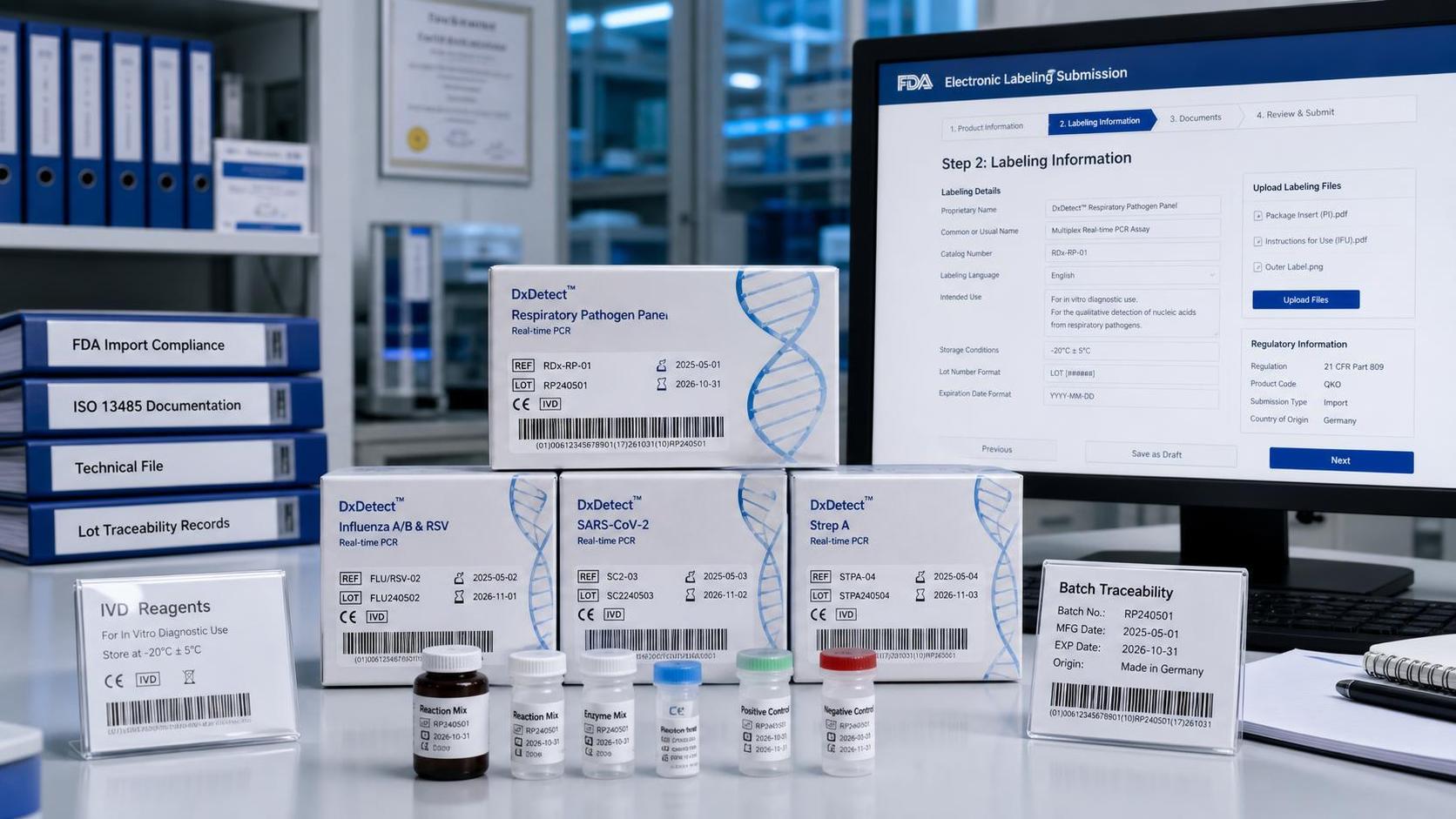
FDA Tightens IVD Import Filing for UDI-DI and e-Labels: learn how the new rule affects customs clearance, labeling workflows, inventory turnover, and U.S. market access for IVD exporters.
-
 2026-08-08
EU IVD Rule 2026/1345 Tightens Classification Timeline
EU IVD Rule 2026/1345 tightens classification timeline, moving many Class A products to Class B. Learn the compliance impact on CE certificates, technical files, and EU market access.
-
 2026-08-07
FDA Sets eLabel Rule for IVD Imports
FDA Sets eLabel Rule for IVD Imports: learn how the new FDA eLabel Portal requirement from Oct 1, 2026 will impact IVD importers, exporters, labeling workflows, and customs compliance.
-
 2026-08-06
EU IVDR Guide Shifts Importer Checks From Formality to Duty
EU IVDR Guide update: importer checks now shift from formality to duty. Learn how stricter verification, records, and supplier review will impact IVD shipments, contracts, and EU market access.
-
 2026-08-05
How to Evaluate Throughput and Test Menu in Automated In Vitro Diagnostic Equipment
Automated in vitro diagnostic equipment evaluation starts with real lab workload. Learn how to assess throughput, test menu, STAT handling, and hidden bottlenecks for smarter procurement.