
Expected throughput from automated molecular testing systems should be read as an operational range rather than a single catalog number. A quoted figure may describe the analytical engine under ideal loading, but daily output depends on specimen arrival pattern, extraction method, assay menu, control frequency, rerun rate, and whether the system is truly walk-away or still requires manual intervention between stages. In practical terms, an instrument that appears fast on paper can feel slow if it processes samples in fixed batches, needs frequent reagent preparation, or pauses for decontamination and calibration at inconvenient times.
Throughput in this category is usually described in tests per hour, samples per shift, or maximum samples per day. These are not interchangeable. Tests per hour may overstate real capacity when one patient sample needs multiple targets, repeats, or reflex testing. Samples per shift may hide idle periods caused by loading windows or by extraction bottlenecks upstream. Daily capacity can look generous while still failing urgent clinical requests if the system only reaches that number after long uninterrupted operation. When comparing automated molecular testing systems, the more useful question is how many reportable results can be released within the required turnaround time under the actual mix of urgent and routine work.
Why published throughput often differs from live throughput
Automated molecular workflows contain several time layers. There is specimen accessioning, possible vortexing or aliquoting, nucleic acid extraction, amplification, detection, review, result release, and waste handling. A vendor may present only the amplification and detection segment because it is easiest to standardize. Yet a laboratory experiences the full chain. If extraction is separate, the extraction module can become the limiting step even when the PCR module has open capacity. If extraction and amplification are integrated in one closed cartridge, hands-on time may be lower, but cartridge loading density and incubation cycle design may restrict the number of samples entering the system at once.
Another common source of misunderstanding is the difference between continuous random access and batch sequencing. Continuous access systems can accept specimens as they arrive and may suit emergency departments, transplant programs, or infection control screening where every hour matters. Batch systems may deliver a lower apparent hourly rate at the beginning of the run but acceptable daily output when sample arrival is predictable. Throughput expectations should therefore be matched to arrival behavior, not only to sample volume.
Assay complexity also changes the answer. A small respiratory panel, a high-sensitivity viral load assay, and a multidrug resistance genotyping test may all run on molecular platforms, yet their extraction chemistries, amplification cycles, and interpretation steps differ. If the menu contains multiplex tests with long amplification times, a specification sheet showing high throughput on a simpler assay can be misleading. It is better to request throughput estimates by assay family and by sample type, especially if the intended menu spans blood, swabs, sputum, stool, or formalin-fixed material.
Reasonable expectation ranges by workflow style
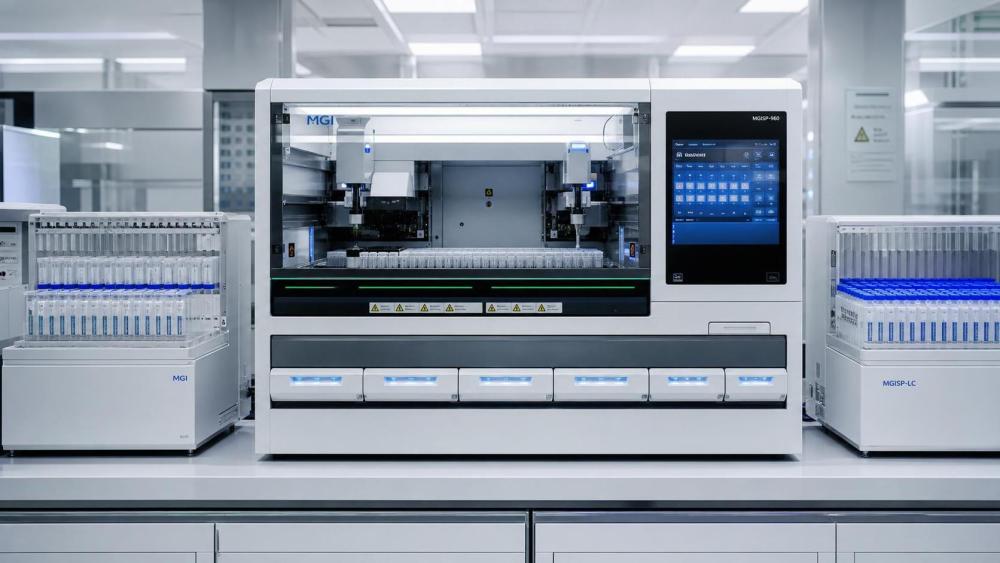
It is usually more realistic to classify automated molecular testing systems by workflow architecture than to ask for one universal number. Small near-random-access platforms designed for stat or moderate daily demand may provide a modest number of reportable results each hour, but maintain very short time to first result. Mid-volume systems often gain efficiency by combining larger onboard reagent packs, more sample positions, and partial overlap between extraction and amplification. High-volume configurations may use separate pre-analytic automation, track-based sample movement, or linked modules that keep instruments fed continuously. These larger systems can support substantial daily volume, although they also become more sensitive to downtime because so much work is concentrated on one line.
If the workload is uneven, the best throughput is not always the highest ceiling. A system that reaches high output only when fully loaded may underperform in settings where samples arrive in clusters followed by long gaps. By contrast, a platform with lower maximum capacity but fast startup and minimal batching may release more clinically useful results across a day. Throughput should therefore be judged against three moments: time to first result, sustained release rate after startup, and total output before reagent replenishment or maintenance interruption.
Sample type changes the throughput calculation
Automated molecular testing systems rarely behave the same across all specimen matrices. Clean upper respiratory swabs may move through extraction and amplification with fewer inhibition issues than sputum, stool, or heavily cellular specimens. Plasma and serum can require different preparation logic from whole blood. Formalin-fixed tissue introduces another layer because nucleic acid quality may be fragmented and variable. If a platform has strong throughput only with easy matrices, published figures may not transfer to a broader clinical menu.
This matters operationally because difficult specimens often generate repeats, invalids, or additional preprocessing. Viscous samples may need liquefaction. Some matrices need off-board centrifugation, heating, or bead beating before they can be loaded safely. Each additional manipulation consumes bench space, biosafety cabinet time, disposables, and staff attention. Once those steps are included, effective throughput can drop well below the nominal instrument capacity. The issue is not only speed; it also affects contamination control and result consistency.
Automation level matters more than the front-panel number
A system described as automated may still require manual reagent thawing, cartridge assembly, extraction plate sealing, cap piercing, or transfer of eluates from one module to another. Each handoff creates latency and another point where queue discipline breaks down. In low-volume settings this may be acceptable. In steady or high demand settings it can erase the benefit of a strong analytic engine.
To estimate realistic throughput, separate the workflow into hands-on minutes per run, unattended run time, operator return points, and end-of-run cleanup. A platform with longer unattended processing can produce smoother daily output than a nominally faster instrument that calls staff back repeatedly. Likewise, onboard refrigerated reagents, automatic retesting logic, barcode-driven sample tracking, and bidirectional interface with the laboratory information system may not increase raw analytical speed, but they often improve reportable throughput because fewer samples stall in administrative or handling steps.
Throughput and turnaround time are related, but they are not the same
One of the most common evaluation errors is assuming that higher throughput automatically shortens turnaround time. A high-capacity batch analyzer may still delay an urgent sample until enough specimens accumulate to justify a run. An integrated lower-volume platform may clear that urgent sample faster despite lower total daily capacity. This distinction matters in molecular testing because many requests are clinically time-sensitive even when the total volume is modest.
When estimating performance, it helps to map the day into arrival waves. Morning inpatient collections, scheduled outpatient draws, emergency arrivals, and late evening add-ons stress the system differently. A platform that performs well during the morning surge but cannot absorb a second wave without pushing evening release past target time may not fit the service model. The right throughput is the level that keeps queue growth under control at the busiest realistic interval, not the number reached during a perfectly balanced day.
Consumables, onboard storage, and maintenance quietly cap output
Throughput is constrained by mundane details as much as by thermal cycling speed. Reagent pack size determines how often loading stops. Waste bottle capacity, tip inventory, cartridge disposal volume, and onboard cold storage shape how long the system can run without intervention. If extraction reagents require frequent equilibration to room conditions or short stability after opening, scheduled capacity may not survive a full shift. Some systems also reserve positions for controls, calibrators, or dead volume, reducing net sample capacity below the headline count.
Maintenance design deserves equal weight. Daily UV decontamination, probe washing, seal replacement, pressure checks, and deep cleaning after certain specimen types all subtract from reportable throughput. A short maintenance step is usually manageable; the problem appears when maintenance windows overlap with peak receiving periods. It is worth asking whether maintenance can be shifted outside active testing hours, whether modules can be serviced independently, and whether one blocked lane stops the whole line or only part of it.
Installation conditions can change expected performance
Molecular systems are sensitive to workflow zoning and utility stability. If the room layout forces incoming specimens, extraction setup, amplification, and post-run waste handling into a cramped footprint, movement inefficiency will show up as lower throughput even if the analyzer itself is performing correctly. Ventilation, temperature stability, uninterrupted power support, data connectivity, and bench depth all matter. So does the route for reagent delivery and cold-chain storage. A high-capacity platform installed in a room with weak pre-analytic organization can spend much of its day waiting for samples to be prepared properly.
Transport from collection sites also affects output. When specimens arrive in large courier batches from satellite clinics, a supposedly continuous-access analyzer may still experience batch-like loading because accessioning and unpacking occur all at once. If transport time is long, some assays may require priority handling on arrival, compressing the usable testing window. Throughput estimates should therefore include the actual specimen logistics pattern rather than assuming smooth internal flow.
Useful questions when comparing specifications
- Does the stated throughput refer to samples loaded, assays initiated, or final validated results released?
- Which assay and specimen type were used to generate the published number, and how different is that from the intended workload?
- Can urgent samples enter immediately, or do they wait for the next batch gate or extraction cycle?
- How many interruptions occur during a normal shift for reagent loading, control processing, maintenance, waste removal, or result review?
- When one module stops, does capacity degrade gradually or does the full workflow pause?
These questions matter because throughput failure is often a systems problem rather than an analyzer problem. A specification may be technically accurate and still unsuitable once local sample mix, control policy, and result authorization practice are applied.
Common interpretation mistakes
One mistake is comparing platforms solely by maximum tests per hour without normalizing for assay menu. Another is ignoring first-result time because daily volume looks low enough on average. A third is assuming that full automation eliminates staffing pressure; in reality, automation can shift work from pipetting to exception handling, reagent logistics, contamination monitoring, and middleware oversight. There is also a tendency to overlook downtime recovery. After an interruption, some systems restart with minimal sample loss, while others require repeat preparation or discard of partially processed material. That recovery behavior has a direct effect on usable throughput.
A final point concerns future expansion. Throughput that appears comfortable during initial deployment may tighten once additional assays are added, seasonal demand changes, or more collection points feed the same laboratory. An automated molecular testing system should therefore be judged by whether it has enough reserve to absorb realistic variation without forcing constant batching compromises or excessive parallel manual work.
In practice, expected throughput should be expressed as a working capacity range tied to assay mix, sample matrix, and service pattern. That range is more credible than any isolated maximum number, and it gives a clearer basis for comparing automated molecular testing systems in real laboratory conditions.