
How to Evaluate Rehabilitation Devices for Musculoskeletal Recovery
Selecting rehabilitation devices for musculoskeletal recovery requires more than comparing features or price.
A sound evaluation connects clinical purpose, engineering detail, user safety, and long-term operating value.
That matters even more when the device will support repeated therapy sessions across different patient conditions.
For technical review teams, the real question is simple.
Will the equipment improve recovery workflows without creating service, training, or reliability problems later?
Start with Clinical Fit and Recovery Goals
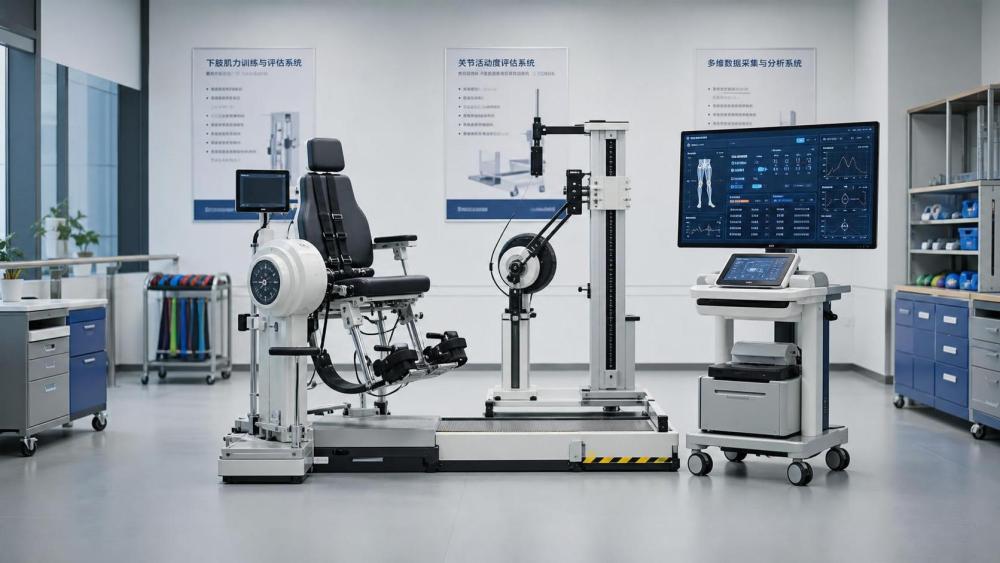
Every evaluation of rehabilitation devices musculoskeletal programs use should begin with the treatment objective.
Some devices support joint mobilization.
Others target gait training, muscle strengthening, posture correction, balance recovery, or pain reduction.
A device that works well in sports rehabilitation may not fit post-surgical orthopedic recovery.
That difference affects configuration, intensity range, accessories, and training protocols.
In practical procurement work, narrow the review by patient profile first.
- Adult or pediatric use
- Neuromuscular weakness or orthopedic limitation
- Acute recovery, subacute therapy, or long-term maintenance
- High-frequency institutional use or lower-volume specialty use
This early filtering prevents overbuying advanced features that do not improve patient outcomes.
It also reduces the risk of selecting rehabilitation devices musculoskeletal teams cannot fully use.
Review Core Technical Parameters
Once clinical fit is clear, move into measurable specifications.
This stage often reveals whether a product is suitable for daily workload or only for demonstration use.
For rehabilitation devices musculoskeletal recovery depends on, key parameters usually include force output, speed range, motion angle, load capacity, and control precision.
For electrotherapy or stimulation systems, output stability and adjustment granularity also matter.
For robotic or motorized units, motion repeatability and stop-response time are especially important.
Specification sheets can look impressive, but they should be matched against actual therapy needs.
A broad range is useful only when clinicians can apply it safely and consistently.
Check Safety, Ergonomics, and Patient Tolerance
Safety review should go beyond basic compliance labels.
For rehabilitation devices musculoskeletal treatment involves close physical interaction, so comfort and control are part of safety.
Look at padding quality, strap security, surface finish, edge design, transfer access, and support positioning.
Poor ergonomics can reduce patient compliance even when the device performs well technically.
That is a common failure point in rehabilitation procurement.
More recent market changes make this even clearer.
Facilities increasingly expect rehabilitation devices musculoskeletal units to serve older adults, heavier patients, and mixed mobility levels.
That means tolerance testing matters.
- Is entry and exit easy for weak or guarded patients?
- Can one therapist operate the system safely?
- Are emergency controls visible and reachable?
- Does the movement feel smooth rather than abrupt?
If possible, request supervised trials using realistic therapy scenarios instead of showroom demonstrations.
Assess Durability and Maintenance Burden
A low purchase price can quickly lose value if service frequency is high.
This is especially true for rehabilitation devices musculoskeletal centers use all day across multiple shifts.
Review the mechanical structure carefully.
Check joints, bearings, cables, actuators, support frames, and any component exposed to repeated loading.
Then examine maintenance planning.
Ask whether preventive maintenance intervals are time-based, cycle-based, or software-triggered.
Clarify spare parts availability, local technician support, calibration needs, and expected downtime.
In actual business terms, reliability has three layers.
- The device should work consistently under normal clinical use.
- Wear parts should be easy to replace without long service delays.
- Technical documents should support troubleshooting and compliance review.
When suppliers cannot provide service records or maintenance logic, long-term risk increases.
Evaluate Workflow Compatibility and Training Requirements
A technically strong system can still fail if it slows therapy flow.
That is why workflow compatibility should be part of any decision on rehabilitation devices musculoskeletal departments plan to install.
Consider setup time, cleaning steps, accessory changes, and storage needs.
A device that needs excessive preparation may reduce daily patient throughput.
Software usability also matters.
Simple controls reduce training time and lower the risk of inconsistent parameter settings.
This also affects cross-shift operation, especially in larger facilities.
Training review should cover more than installation day instruction.
- Initial operator training hours
- Refresher training availability
- Clinical application guidance
- Service and troubleshooting training
- Manual quality and document completeness
For rehabilitation devices musculoskeletal therapy teams share, consistency often depends on training quality as much as hardware quality.
Compare Total Cost and Supplier Readiness
Price should be the final comparison layer, not the first one.
The better decision usually comes from total operating cost.
For rehabilitation devices musculoskeletal recovery programs rely on, that includes accessories, consumables, maintenance, software licenses, training, and downtime exposure.
It also includes the supplier's ability to support installation and ongoing service.
A strong vendor should provide structured answers on documentation, warranty coverage, response time, and spare parts policy.
More importantly, the supplier should understand the rehabilitation setting rather than only the product brochure.
A practical comparison checklist can include:
- Delivered configuration versus quoted configuration
- Warranty length and exclusions
- Estimated annual maintenance cost
- Installation requirements and site preparation
- Lead time for parts and replacement items
- Availability of compliance and technical files
This creates a more defensible procurement decision and reduces hidden lifecycle cost.
Build a Decision Framework That Holds Up Over Time
The best evaluation process is structured, but still practical.
Instead of chasing the most advanced model, focus on evidence that the device will perform well in real recovery work.
For rehabilitation devices musculoskeletal outcomes depend on, good selection comes from balancing therapy value, user safety, engineering stability, and supplier support.
That balance is what protects long-term value.
A useful final step is to score each option across five areas.
- Clinical suitability
- Technical performance
- Safety and ergonomics
- Maintenance and service readiness
- Total cost and supplier capability
This approach makes discussions clearer during procurement review, site planning, and supplier negotiation.
It also helps teams justify why certain rehabilitation devices musculoskeletal programs need are worth selecting over cheaper alternatives.
When evaluation stays grounded in application reality, decisions become easier, risks become more visible, and recovery-focused equipment choices become much stronger.