
On July 7, 2026, the European Commission issued a revision notice to MDR Annex XVI, changing the CE certification path for rehabilitation devices that include AI-assisted decision functions. For products such as intelligent gait analysis systems, neurofeedback training platforms, and remote rehabilitation platforms, the update matters not only to device manufacturers, but also to distributors, hospital buyers, and service providers working around certification, procurement timing, and market entry planning. The immediate relevance lies in the fact that compliance now requires an additional external validation step before CE marking, with direct implications for timelines and budgets.
What the EU Notice Changes in Practice
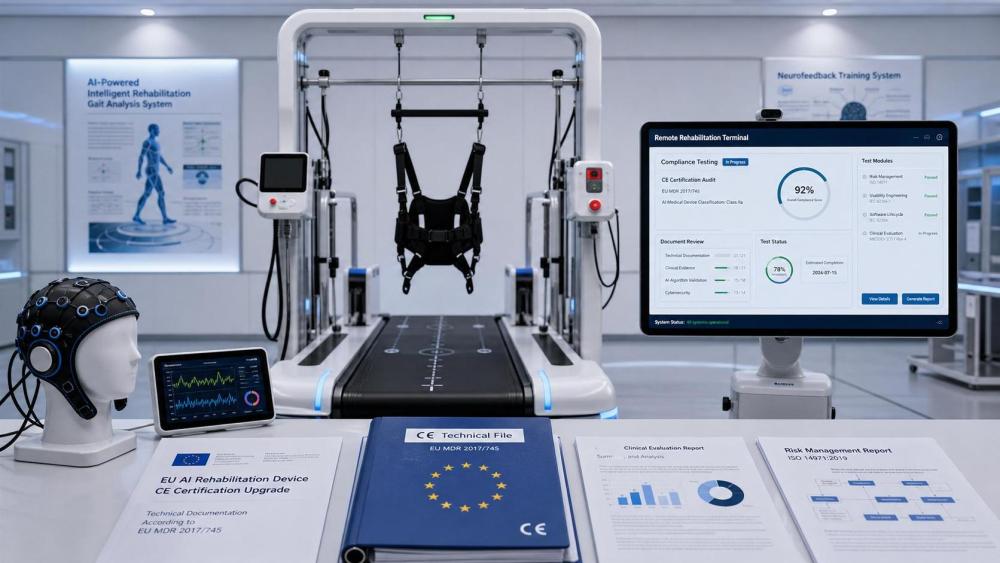
According to the information provided, the European Commission released the MDR Annex XVI amendment notice EU/2026/1193 on July 7, 2026. From that date, all rehabilitation devices with AI-assisted decision-making functions must complete an evaluation report through an independent third-party body recognized by an NB before CE certification.
The required review covers three specified areas: algorithm robustness, generalizability across clinical scenarios, and data bias assessment. The scope mentioned in the input includes intelligent gait analysis devices, neurofeedback training systems, and remote rehabilitation platforms.
The same input states that the change extends certification timelines by 6 to 8 weeks and raises certification-related costs by about 22%. It also directly affects the product selection rhythm of European distributors and hospital budget scheduling for procurement.
Where the Pressure Will Appear First
Manufacturers face a longer pre-certification sequence
From an industry perspective, manufacturers of AI-enabled rehabilitation equipment are likely to feel the most immediate operational pressure because the new requirement sits before CE certification rather than after market entry. The main impact is on submission planning, documentation readiness, and launch timing for products that depend on AI-assisted decision functions.
What deserves closer attention is whether internal technical files, validation materials, and clinical-use descriptions are already organized in a way that can support independent review on robustness, scenario generalization, and bias-related questions.
Distributors may need to adjust product selection and rollout schedules
European distributors are directly affected because the reported 6 to 8 week extension changes how quickly products can move from evaluation to commercial availability. In practice, this may influence portfolio timing, supplier comparison, and coordination with downstream customers expecting confirmed delivery or certification milestones.
Analysis shows that distributor attention should stay on whether suppliers can clearly present their third-party verification status and whether expected certification dates remain realistic under the new process.
Hospitals and procurement teams will be exposed to timing and budget shifts
Hospital buyers and procurement departments are relevant stakeholders because the input explicitly notes effects on budget arrangement. A longer certification path and an approximate 22% cost increase can alter purchasing windows, approval sequencing, and internal planning for AI-enabled rehabilitation equipment.
Observably, procurement teams will need to distinguish between products already aligned with the updated requirement and those still moving through the new pre-certification review stage.
Service partners around compliance and delivery may see process bottlenecks
Service providers involved in certification support, market-entry coordination, or delivery planning may also face pressure as the new requirement introduces an additional dependency before CE marking. The key issue is less about headline policy change and more about workflow synchronization across technical review, certification preparation, and customer communication.
Issues Companies Should Track Now
Watch the exact wording and any follow-on clarification
Analysis shows that companies should pay close attention to how the amended requirement is described in subsequent official wording or implementation-related communications. The central reason is that the rule now makes third-party algorithm validation a mandatory front-end condition, so details around documentation expectations and review handling could materially affect execution.
Prioritize affected product lines rather than treating all devices the same
What deserves closer attention is product scope. The update applies to rehabilitation devices with AI-assisted decision functions, and the examples provided in the input indicate that intelligent gait analysis, neurofeedback training, and remote rehabilitation platforms may require immediate internal review. Companies should therefore separate AI-dependent products from other rehabilitation equipment when planning certification and launch schedules.
Reset delivery expectations in commercial discussions
Observably, the reported 6 to 8 week certification extension means sales, channel, and project teams should revisit external commitments tied to CE timing. This is especially relevant where distributors or hospital customers are making selection and budgeting decisions against fixed windows.
Prepare for cost and documentation discussions earlier
From an industry perspective, the approximate 22% cost increase should not be treated only as a certification issue. It also affects quotation logic, budget communication, and supplier discussions around who carries the cost burden created by the new mandatory verification step.
Why This Looks Like More Than a One-Off Adjustment
Analysis shows that this development is better understood as a compliance signal with immediate operational effects, rather than as a routine administrative update. The reason is straightforward: the EU notice does not merely add another filing form or later-stage checkpoint; it moves independent algorithm review into the pre-CE path for a defined class of AI-enabled rehabilitation devices.
At the same time, it is still more appropriate to understand this as a development that requires continued observation rather than a basis for broad conclusions about every medical technology category. Based on the provided information, the confirmed impact is specific to rehabilitation devices with AI-assisted decision functions and to the certification, distribution, and procurement consequences already identified.
How the Market May Need to Read This Signal
At this stage, the most rational reading is that the rule change creates a near-term operational burden while also signaling a firmer compliance posture toward AI functionality in rehabilitation equipment. The confirmed effects already include longer certification cycles and higher costs, but the broader commercial result will depend on how companies adapt their validation readiness, channel communication, and procurement planning.
For industry participants, this is not just a short-term scheduling issue. It is more appropriate to understand it as a concrete regulatory change with immediate execution consequences and with enough uncertainty around implementation detail to justify close monitoring.
Basis of This Article
This article is based on the user-provided news title, event date, and event summary concerning the European Commission notice on July 7, 2026 and the MDR Annex XVI amendment EU/2026/1193. The analysis above distinguishes confirmed facts from observation and judgment.
For this type of industry update, commonly relevant source categories may include official regulatory notices, company statements, industry association releases, authoritative media reporting, and standards-related documents. A specific official source link was not provided in the input, so the exact source document link still requires follow-up verification. Continued attention should focus on any further official clarification and on how the new pre-certification requirement is implemented in practice across affected rehabilitation device categories.