
On July 15, 2026, an MDR implementation update announced by the European Commission on July 6 takes effect for rehabilitation devices that include AI/ML-assisted decision functions. For products such as intelligent gait training systems and neurofeedback rehabilitation devices, the change matters because CE-related compliance work now extends beyond device performance and into independently verified algorithm traceability. Manufacturers, certification teams, procurement planners, and delivery functions should pay close attention, as the new requirement is directly tied to certification timing and product launch schedules.
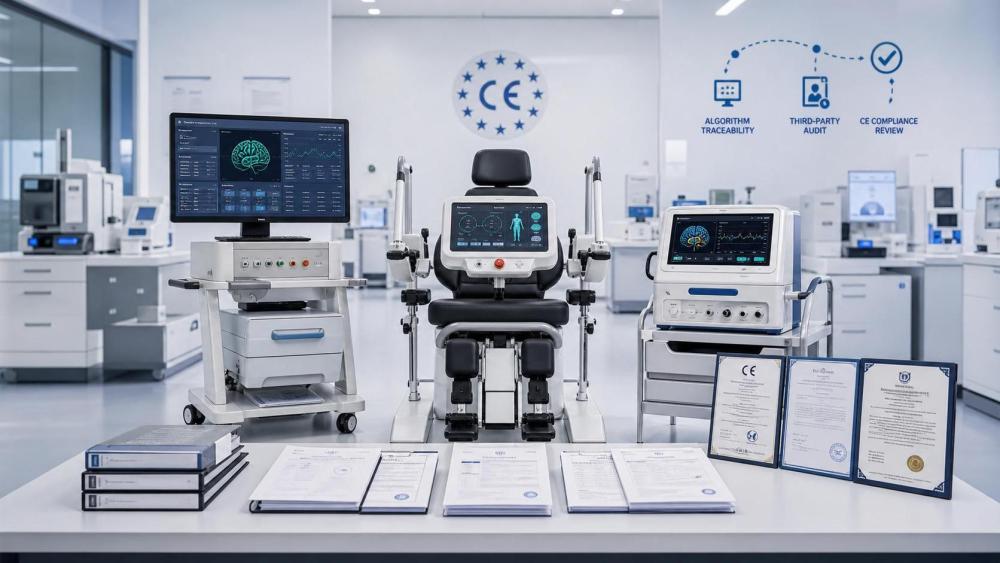
What the new Annex XVI requirement now asks for
According to the provided event information, from July 15, 2026, all rehabilitation devices with AI/ML-assisted decision functionality must submit an algorithm traceability verification report under the new Annex XVI provisions of the MDR.
The report must be executed by an NB body and include at least three elements: a declaration on the source of the training dataset, a bias assessment, and records of robustness testing in clinical-use scenarios.
The provided information also states that this update will directly affect CE certification timelines and time to market.
Where the pressure is likely to appear in the operating chain
Manufacturers developing AI-enabled rehabilitation devices
From an industry perspective, these companies are the most directly affected because the rule applies to rehabilitation devices with AI/ML-assisted decision functions. The practical impact is likely to appear in technical documentation preparation, conformity assessment sequencing, and launch planning. What deserves closer attention is whether existing product files already contain traceable evidence for training data origin, bias review, and clinical-scene robustness records in a form that can support independent third-party validation.
Certification and conformity assessment workflows
For teams managing CE pathways, the change introduces an additional validation layer tied specifically to algorithm traceability. The immediate business effect is not only document expansion but also possible changes in review order, submission completeness checks, and internal readiness gates before files are sent for assessment. Companies involved in certification support should therefore focus on document consistency, auditability of AI-related records, and the risk of timeline extension where evidence is incomplete.
Procurement, project delivery, and commercial planning
Procurement functions and project delivery teams may also be affected because certification timing influences shipment planning, installation commitments, and customer handover schedules. Analysis shows that where rehabilitation equipment is ordered against defined acceptance dates, any added verification step can become a planning issue rather than a purely regulatory one. Buyers and distributors should pay closer attention to certification status, supporting reports, and whether AI-related compliance materials are available early enough to support delivery decisions.
Testing and supporting service providers
Observably, service providers involved in technical testing, documentation support, or compliance preparation may see a more specific demand profile around bias review records, dataset source declarations, and robustness evidence. The operational issue here is not confirmed market expansion, but a likely shift toward more detailed AI-related verification inputs within existing compliance support work.
What companies should review now
Check whether product scope is affected
Companies should first determine whether their rehabilitation devices include AI/ML-assisted decision functions within the meaning described in the provided event summary. This is the threshold question for whether the new Annex XVI submission obligation becomes relevant to an existing CE plan or an upcoming market entry schedule.
Re-examine technical files for algorithm traceability
Analysis shows that the core practical issue is not simply the presence of AI, but the ability to present traceable and review-ready records. Firms should review whether training dataset source statements, bias assessment materials, and clinical scenario robustness testing records exist in a form that can be submitted coherently for third-party verification.
Adjust certification and launch sequencing
Because the provided information states that CE certification cycle and listing time will be directly affected, companies should reassess certification calendars, submission milestones, and downstream delivery plans. This is especially relevant where contracts, tenders, or procurement schedules depend on expected certification timing.
Track follow-up interpretation and execution signals
The current information confirms the new requirement and its effective date, but it does not provide full operational detail on implementation practice. Companies should therefore continue to monitor later official wording, certification execution approaches, tender document updates, and market-side acceptance requirements before treating all internal assumptions as settled.
How this change is best understood at this stage
Analysis shows that this is more than a general policy signal because an effective date and concrete submission elements are already identified. At the same time, it is more appropriate to understand this as both a landed compliance change and an execution signal that still requires close observation in practice. The rule direction is clear: AI-assisted decision functions in rehabilitation devices are being pulled into a more explicit third-party verification framework. What remains to be watched is how consistently that framework is applied across certification workflows and related commercial documents.
A practical reading for the market
For the industry, the significance of this update lies in where compliance effort is moving. The immediate issue is not broad market speculation but the operational effect on certification preparation, document readiness, procurement coordination, and launch timing for AI-enabled rehabilitation equipment. The most balanced reading is that the change should already be treated as an active compliance requirement, while detailed execution practice and market response still warrant continued observation.
Basis of this article and points requiring further verification
This article is generated from the user-provided news title, event date, and event summary. For developments of this type, commonly relevant source categories may include official notices, regulatory authority releases, industry association updates, standard-setting documents, trade or customs information, and reporting by established professional media.
A specific official source link was not provided in the input, so that point still requires follow-up verification. It remains necessary to monitor later policy detail, certification interpretation, tender document changes, industry feedback, and company-level implementation practice as the rule is applied.