
Choosing physical therapy equipment for clinics is rarely a simple purchasing task. The first decisions shape treatment capacity, staffing efficiency, patient safety, and the long-term economics of a rehabilitation service.
That is why a practical physical therapy equipment clinic plan should start with core clinical use, not with the longest product list. In many projects, the best first investment is the equipment that supports daily assessment, high-frequency therapy, and reliable workflow.
From an industry perspective, rehabilitation is becoming more visible in outpatient care, post-surgical recovery, sports medicine, chronic pain management, and aging-related mobility support. This increases pressure to choose equipment that performs well in real treatment settings.
Within the broader medical technology market, rehabilitation equipment also sits inside a larger procurement framework. Selection affects room planning, infection control, maintenance, documentation, operator training, service support, and total operating cost.
What “Choose First” Really Means
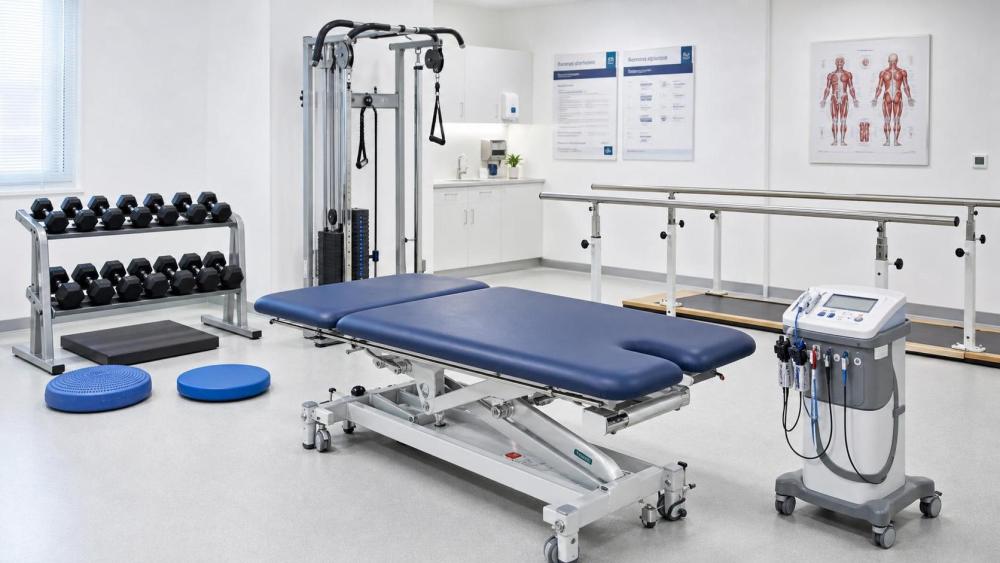
In a new or upgraded clinic, “choose first” does not mean buying the most advanced machine. It means identifying which equipment creates immediate clinical utility across the widest range of patient cases.
A strong physical therapy equipment clinic strategy usually begins with three layers. The first is assessment support. The second is foundational treatment equipment. The third is progression tools for specialized rehabilitation programs.
This sequence matters because rehabilitation outcomes depend on repeatable treatment, not isolated device features. Clinics need equipment that can be used often, cleaned easily, maintained predictably, and integrated into normal staffing patterns.
The Core Equipment Categories to Prioritize
Most clinics do not need to begin with a highly fragmented portfolio. A better starting point is a balanced set of tools that supports examination, exercise therapy, manual therapy, and common pain-management modalities.
Treatment tables and positioning essentials
Adjustable treatment tables are often the first purchase for a physical therapy equipment clinic environment. They support assessment, manual therapy, stretching, positioning, and safe patient transfer.
The right table should be judged by height adjustment, load capacity, stability, upholstery durability, and cleaning compatibility. Electrical reliability also matters because downtime directly affects patient scheduling.
Exercise therapy equipment
Exercise is central to modern rehabilitation. That makes resistance bands, dumbbells, balance pads, steps, wall bars, therapy balls, and compact strengthening stations high-value early purchases.
These tools are comparatively affordable, but their contribution is large. They support orthopedic recovery, gait retraining, neuromuscular rehabilitation, and long-term mobility improvement.
Electrotherapy and pain management devices
Many clinics also place electrotherapy units near the top of the list. TENS, NMES, ultrasound therapy, and combination therapy systems are common in a physical therapy equipment clinic setup.
These devices should be evaluated carefully. Clinical protocols, contraindications, calibration needs, consumable dependence, and operator training all affect whether they deliver real value.
Mobility and gait training equipment
Parallel bars, gait trainers, stairs, and selected cardio equipment become important when the clinic manages post-operative recovery, neurological rehabilitation, or elderly mobility cases.
Treadmills and cycle ergometers are useful, but they should not always come first. Their priority depends on patient volume, available space, supervision capacity, and expected treatment mix.
Why the Market Is Paying More Attention
The rehabilitation segment is no longer seen as a secondary support function. It now connects directly with hospital discharge planning, outpatient expansion, sports recovery, and chronic disease management.
That shift changes procurement behavior. Buyers are asking whether a physical therapy equipment clinic portfolio can improve throughput, support measurable outcomes, and reduce avoidable referrals or treatment delays.
There is also more scrutiny on life-cycle value. A low-cost device may look attractive at tender stage, yet become expensive through calibration issues, spare part delays, unstable software, or difficult cleaning procedures.
This is where structured healthcare intelligence becomes useful. Platforms such as MTHH help compare technical and operational factors in the same frame, rather than isolating price from service reality.
How to Match Equipment to Real Clinic Scenarios
The right physical therapy equipment clinic plan changes according to service scope. A musculoskeletal outpatient center does not need the same starting mix as a hospital-based rehabilitation department.
Orthopedic and sports rehabilitation
These settings usually prioritize treatment tables, resistance systems, balance tools, cryotherapy support, and functional training equipment. The goal is controlled progression from pain reduction to strength restoration.
Neurological and elderly mobility programs
Parallel bars, gait aids, supportive seating, transfer-friendly tables, and selected balance systems may rank higher here. Safety features become more important than device complexity.
Hospital-linked rehabilitation services
These environments often need better integration with infection control procedures, facility planning, biomedical maintenance, and documentation standards. Procurement decisions become part of a larger infrastructure discussion.
- High patient turnover favors durable, easy-clean surfaces and simple controls.
- Complex caseloads increase the value of adjustable and multi-use equipment.
- Limited floor space makes foldable, modular, or compact systems more attractive.
- Home-program integration may reduce the need for oversized specialty devices.
What to Check Before You Commit Budget
A procurement file for rehabilitation equipment should go beyond brochures. Decision quality improves when technical review, commercial review, and operational review are handled together.
For a physical therapy equipment clinic shortlist, several questions deserve early attention.
- Does the equipment support the clinic’s most common treatment pathways?
- Are installation needs compatible with room dimensions, flooring, and electrical supply?
- How often will accessories or consumables need replacement?
- What response time is promised for maintenance and spare parts?
- Is training included for safe and consistent use?
- Are manuals, certifications, and service documents ready for review?
These points sound basic, yet they often separate a useful purchase from an operational burden. In rehabilitation, workflow friction appears quickly because equipment is used repeatedly throughout the day.
A Better Way to Build the First Portfolio
An effective starting portfolio usually combines essential furniture, versatile exercise tools, one or two carefully selected modality devices, and mobility training support where clinically necessary.
This staged model is often stronger than buying many specialized units at once. It protects capital, reduces idle equipment, and leaves room for later expansion based on referral trends and treatment data.
In business terms, the first phase should create dependable service delivery. The second phase can add differentiation, such as advanced balance systems, robotic rehabilitation tools, or digital assessment platforms.
For anyone reviewing the physical therapy equipment clinic market, that distinction is important. Early purchases should solve immediate care needs while keeping future upgrades technically and financially realistic.
Where to Go Next
The most useful next step is to translate clinical scope into an equipment matrix. List treatment volumes, patient categories, room conditions, staffing patterns, and expected service response requirements.
From there, compare each physical therapy equipment clinic option by function, reliability, maintenance demand, documentation quality, and total operating cost. That approach creates a much clearer basis for supplier discussions.
When rehabilitation equipment is selected with that level of structure, the result is not just a better room setup. It is a more stable clinical service with stronger long-term value.