
Effective July 1, 2026, an EU MDR implementation notice identified as MDCG 2026-12 changes how certain rehabilitation devices are treated for CE compliance. For products that include remote data transmission, cloud connectivity, or AI-assisted analysis, the remote monitoring module must now be certified separately as an independent medical device subsystem. This matters to rehabilitation equipment exporters, importers, certification teams, and procurement functions because it shifts the compliance boundary from the complete device alone to a more modular review structure, with direct implications for technical documentation, cybersecurity evidence, cost, and delivery planning.
What the notice confirms from July 1, 2026
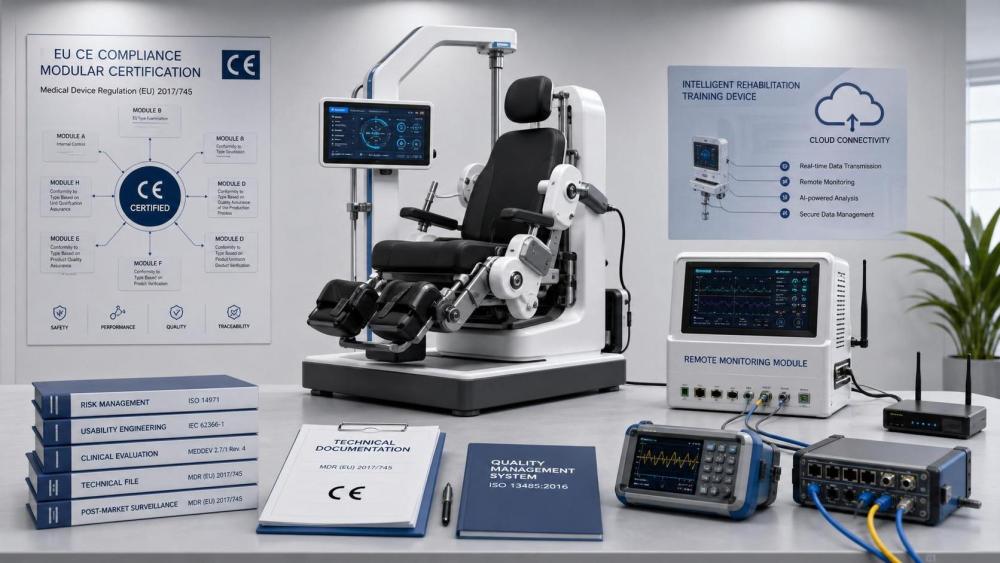
The confirmed change is tied to the EU MDR implementation notice MDCG 2026-12, effective on July 1, 2026. According to the information provided, all rehabilitation devices that contain remote data transmission, cloud connection, or AI-assisted analysis functions, including examples such as intelligent physiotherapy devices and remote gait monitoring systems, must treat the remote monitoring module as a separately certifiable medical device subsystem for CE purposes.
The same notice also requires a dedicated cybersecurity assessment report for that module, with EN IEC 62304 and ISO/IEC 27001 cited in the provided summary. The information provided further indicates that this change directly affects the technical documentation structure and certification cost of Chinese rehabilitation equipment exporters, while also requiring overseas importers to reassess the compliance status of products already in circulation or under supply arrangements.
Where the compliance burden is likely to move
Export manufacturers may need to rebuild document architecture
From an industry perspective, manufacturers of rehabilitation equipment with connected or AI-enabled functions are likely to face the most immediate operational impact. The reason is straightforward: once the remote monitoring module is treated as a separate CE certification object, technical files, subsystem definitions, and supporting evidence may need to be reorganized around that module rather than presented only at whole-device level. What deserves closer attention is whether existing product files, software descriptions, and cybersecurity materials are currently structured in a way that can support a standalone subsystem review.
Importers and channel partners face a renewed verification step
Overseas importers and distribution-side compliance teams may be affected because the provided summary explicitly notes the need to re-review existing product compliance status. In practical terms, the impact is likely to appear in product onboarding, contract review, continued placing on the market, and supplier qualification checks. Attention should center on whether current CE documentation clearly covers the remote monitoring module under the new interpretation and whether supplementary cybersecurity materials are available.
Certification and testing service providers may see a narrower review focus
Certification-related service providers and testing support organizations may also be affected because the rule change separates the remote monitoring module into a distinct compliance subject. Analysis shows that this can shift review work toward subsystem boundary definition, software lifecycle evidence, and cybersecurity assessment deliverables. For companies relying on external support, the practical issue is less about the existence of a new rule alone and more about whether present evidence packages match the revised certification scope.
Procurement and delivery planning could become more sensitive to compliance timing
Buyers, sourcing teams, and supply-chain coordinators may need to watch certification sequencing more closely where connected rehabilitation devices are involved. Observably, if a module now requires separate CE treatment and dedicated cybersecurity evidence, procurement documents, delivery schedules, and acceptance conditions may need to reflect that dependency. The key concern is not only product availability, but also whether compliance milestones for the module and the main equipment remain aligned during supply and handover.
What companies should review now
Check whether product scope already includes a separately definable remote module
Analysis shows that companies should first identify which rehabilitation products include remote data transmission, cloud connection, or AI-assisted analysis, and whether those functions sit within a technically separable remote monitoring module. This is a threshold issue because the new requirement is tied to module status, not only to general digital functionality.
Reassess technical files and cybersecurity evidence together
What deserves closer attention is the relationship between CE documentation and the newly required cybersecurity assessment report. Where technical files were originally built around an integrated device narrative, companies may need to review whether subsystem descriptions, software documentation, and cybersecurity materials are consistent enough for a separate certification path tied to EN IEC 62304 and ISO/IEC 27001.
Review active supply commitments and importer-side documentation checks
Observably, exporters and overseas importers should pay attention to products already quoted, registered in internal supplier systems, or prepared for shipment, because the provided summary indicates that importers must reassess compliance status. That makes document readiness, declaration consistency, and supplier communication more important in current transaction flows, even where the commercial arrangement predates the effective date.
Monitor execution language beyond the headline requirement
The provided information confirms the rule direction, but it does not provide detailed enforcement scenarios, transition handling beyond the stated change, or market-specific review practice. It is therefore more appropriate to treat follow-up monitoring as part of current compliance work, especially for certification interpretation, tender document wording, and how market participants request proof of subsystem conformity.
Why this reads as an execution signal, not just a policy headline
Analysis shows that this development is more than a general reminder about software or cybersecurity. The practical signal is that the compliance unit itself is being redrawn for certain rehabilitation devices: the remote monitoring function is no longer just an accessory feature inside a larger CE story, but a separately examined subsystem. That has consequences for how manufacturers describe products, how importers verify them, and how commercial transactions reference compliance status.
At the same time, it would be premature to turn this into a broad market conclusion beyond the information provided. Observably, the current value of this update lies in its effect on certification scope, documentation structure, and review discipline. The fuller execution impact still depends on how certification practice, procurement wording, and market feedback develop after the effective date.
How to read the change at this stage
At this stage, it is more appropriate to understand the July 1, 2026 change as an implemented compliance signal with direct operational consequences for connected rehabilitation devices, rather than as a purely theoretical regulatory update. The confirmed facts already justify immediate review of product scope, document architecture, importer checks, and cybersecurity evidence. Beyond that, the market still needs continued observation on detailed execution language and day-to-day certification handling before drawing broader conclusions.
Basis of this article and points requiring continued verification
This article is based on the user-provided news title, event date, and event summary. For developments of this type, commonly relevant source categories may include official notices, publications from regulatory authorities, trade or customs authorities, industry association updates, standards organization documents, and reporting by established industry media. A specific official source link was not provided in the input, so the exact official reference path still requires further verification. Follow-up attention should remain on detailed policy wording, certification application practice, tender document changes, market feedback, and how affected companies implement the requirement in ongoing export and import operations.