
Singapore HSA Makes ISO 13485:2025 a Prerequisite for Dental Imaging Imports
On July 1, 2026, Singapore’s Health Sciences Authority (HSA) updated its guidance for Class B/C dental imaging devices, turning ISO 13485:2025 certification into an immediate entry requirement for HSA registration of dental X-ray systems, CBCT units, and intraoral scanners. The change matters beyond product approval alone: it also reaches importer qualification review, which means manufacturers, importers, compliance teams, and procurement functions may all face direct effects on documentation readiness, registration timing, and market access.
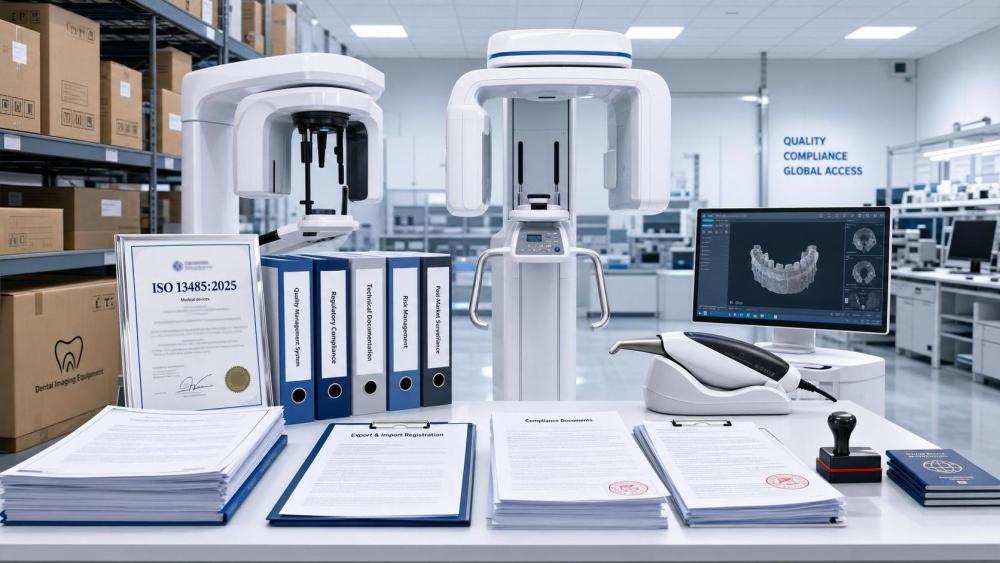
What the Updated HSA Guidance Now Requires
According to the information provided, HSA updated the Class B/C Dental Imaging Devices Importer Guidance on July 1, 2026. From that date, any manufacturer of dental X-ray equipment, CBCT equipment, or intraoral scanners applying for HSA registration must hold a valid ISO 13485:2025 quality management system certificate rather than a 2016 version certificate.
The certificate scope must expressly cover “dental imaging equipment design and manufacturing.” The same requirement has also been applied to importer qualification review. Applications that do not meet this condition will be returned immediately.
Where the Pressure Points Move in the Supply Chain
Manufacturers now face a narrower compliance gateway
Analysis shows that the most direct impact falls on manufacturers whose products are intended for HSA registration. The requirement is no longer limited to holding a general quality management certificate; the certificate version and the wording of the scope both become practical screening points. For affected manufacturers, the key business impact is likely to appear in registration preparation, document consistency, and internal readiness for market submission.
Importers take on higher front-end screening responsibility
From an industry perspective, importers are also directly exposed because the requirement has been incorporated into importer qualification review. This means importer-side checks may need to move earlier in the process, especially when reviewing manufacturer credentials, scope wording, and submission completeness. The immediate-return consequence increases the importance of pre-submission validation rather than correction after filing.
Procurement and channel decisions may become more documentation-driven
Observably, procurement teams and distribution channels involved with the covered device categories may need to pay closer attention to supplier qualification status before confirming sourcing or launch plans. The main issue is not a broad commercial shift already confirmed, but a practical document threshold that can affect whether a product can proceed into registration and subsequent delivery arrangements.
Certification and support service providers may see closer scrutiny of scope language
What deserves closer attention is the explicit requirement that the certificate scope cover “dental imaging equipment design and manufacturing.” For certification-related service providers, regulatory support teams, and documentation specialists, the wording of existing certificates may become a focal point in file review. The issue is less about generic certification possession and more about whether the certificate aligns precisely with the regulated product and activity description.
What Companies Should Check Immediately
Confirm the certificate version and scope wording
Analysis shows that companies involved in HSA registration for the covered products should first verify whether the manufacturer holds a valid ISO 13485:2025 certificate and whether the certificate scope clearly matches the required wording around dental imaging equipment design and manufacturing. Where the scope is broad, abbreviated, or framed differently, that gap may need special attention before submission.
Recheck importer submission files before registration filing
Because the requirement now applies to importer qualification review as well, importers should examine whether their submission packages, supporting records, and manufacturer qualification files are internally consistent. The practical concern is not only whether a certificate exists, but whether the submitted documentation presents the required version and scope in a way that avoids immediate return.
Review purchase timing and delivery assumptions for affected products
From an operational perspective, companies handling dental X-ray systems, CBCT units, or intraoral scanners may need to revisit current sourcing schedules and registration-related delivery assumptions. The provided information does not state broader execution timelines beyond immediate application, so businesses should treat document readiness as a near-term checkpoint when planning procurement or market entry activities tied to HSA registration.
Keep watching for execution language and downstream document changes
Observably, the current information confirms the requirement itself, but does not provide wider detail on later implementation practice. Companies should therefore continue to watch for any official wording that may affect supporting documents, technical file expectations, importer review practice, or references to certification requirements in related commercial or tender documents.
Why This Looks Like an Execution Signal Rather Than a Distant Policy Trend
From an industry perspective, this update is more appropriate to understand as an already effective compliance condition than as a tentative policy direction. The requirement is tied to current HSA registration eligibility and importer qualification review, and the consequence for non-compliance is stated as immediate return of the application. At the same time, analysis should remain disciplined: the available information does not by itself establish how broadly market behavior, supplier selection, or commercial timelines will shift in practice, so those effects still need observation.
How the Market Should Read This Development for Now
The practical meaning of this update is relatively clear: for the specified dental imaging device categories, acceptable manufacturer certification is no longer a background compliance item but a front-end filing condition linked to both registration and importer review. A neutral reading is that this is a concrete rule implementation signal with direct procedural consequences, while the full extent of its impact on procurement rhythm, supply arrangements, and market responses still requires continued monitoring.
Basis of This Article and What Still Needs Verification
This article is based on the user-provided news title, event date, and event summary. For developments of this type, relevant source categories typically include official regulatory notices, publications from supervisory authorities, trade or customs-related releases, industry association updates, standards organization documents, and reporting by authoritative trade media.
No specific official source link was provided in the input, so the exact official publication link remains to be verified on an ongoing basis. It is also still necessary to follow later details such as implementation language, certification review interpretation, changes in tender or filing documents, industry feedback, and how companies are executing against the updated requirement.
Have questions about the global trade trends discussed here, or planning your expansion and supply chain strategy? Leave a message below and let the trade experts at MTHH guide you.
We respect your privacy. Your information is strictly confidential.
Related News
- How to choose dental radiography for clinic that fits your workflowAug 16, 2026Dental radiography for clinic selection starts with workflow, not specs. Learn how to compare intraoral, panoramic, and CBCT options for better efficiency, fit, and ROI.
- What FDA Cleared Dental Imaging Systems Mean for Daily PracticeJul 16, 2026Dental imaging systems FDA cleared: learn what clearance really means for workflow, compliance, training, and long-term value before choosing the right system for your practice.
- ANVISA Tightens AI Filing Path for Dental ImagingJul 15, 2026ANVISA tightens AI filing path for dental imaging in Brazil. Learn how the new Clinical Equivalence Report rule affects compliance, registrations, shipments, and market access.
- ANVISA Tightens AI Filing Rules for Dental ImagingJul 14, 2026ANVISA tightens AI filing rules for dental imaging in Brazil. Learn how the new requirements affect CBCT, intraoral X-ray, and panoramic system approvals, timelines, and market entry.