
Radiology Workflow Automation: Where ROI Shows Up First
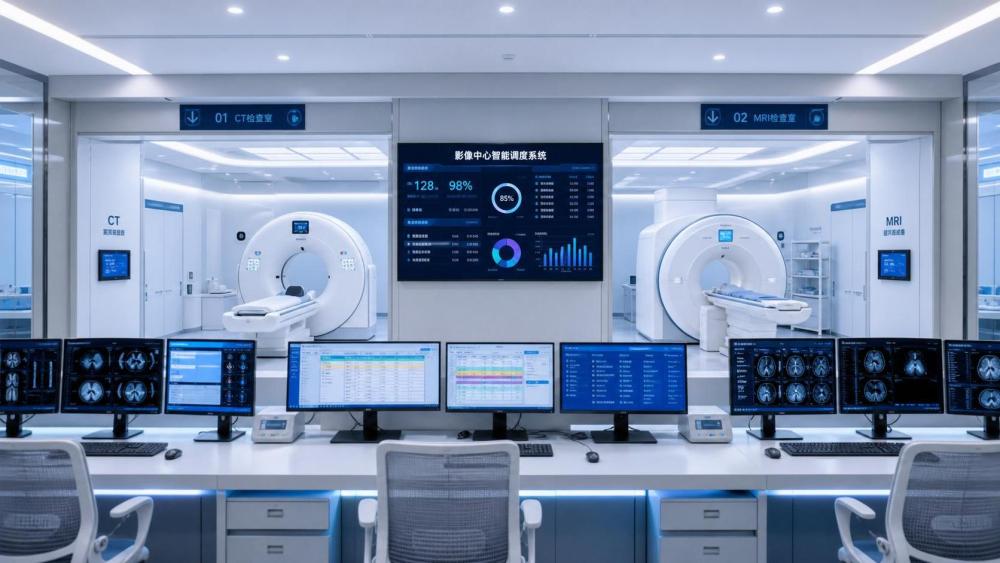
Radiology workflow automation is often framed as a long digital journey. In practice, the first returns usually arrive much earlier than expected.
That matters when capital budgets are tight and every system upgrade needs a clear business case. Early ROI helps justify broader transformation later.
For imaging providers, the value of radiology workflow automation rarely starts with ambitious AI headlines. It starts with fewer delays, fewer handoffs, and more predictable throughput.
From a procurement and cost perspective, the question is simple. Which parts of the workflow generate measurable savings first, and how fast can those gains appear?
In most hospitals and imaging centers, four areas stand out early. Report turnaround improves, scheduling friction drops, staff time is used better, and imaging assets stay productive longer.
These are not abstract benefits. They affect overtime, backlog, scanner utilization, referral satisfaction, and patient flow across the wider care network.
Why Early ROI in Radiology Workflow Automation Is Easier to Capture
Radiology already runs on a chain of connected tasks. Orders, scheduling, acquisition, reading, reporting, review, and distribution all depend on timing and data accuracy.
That structure makes inefficiencies visible. Even small delays can ripple through the day, especially in CT, MRI, ultrasound, and emergency imaging workflows.
Radiology workflow automation targets these repeatable tasks first. It reduces manual coordination before organizations need to redesign the entire imaging department.
That is why early financial impact often appears in operating metrics, not only in strategic dashboards. Leaders can see changes in days, not only in annual reviews.
- Less time spent on manual exam routing and exception handling
- Fewer avoidable gaps between completed scans and final reports
- Lower scheduling waste caused by incomplete information
- Stronger use of existing PACS, RIS, and modality capacity
This also explains why radiology workflow automation is often attractive before large equipment replacement. It can unlock value from systems already in place.
The First ROI Signal: Faster Report Turnaround
Report turnaround time is usually the clearest early indicator. When reporting slows down, every downstream clinical decision slows with it.
Radiology workflow automation improves this by routing studies intelligently, prioritizing urgent cases, standardizing worklists, and reducing non-reading tasks for radiologists.
In real operations, the gain often comes from fewer interruptions. Staff stop chasing missing context, duplicated entries, unsigned reports, or misrouted studies.
A one-hour improvement in average turnaround can produce wider value than expected. Emergency teams move faster, referring physicians wait less, and discharge planning becomes smoother.
For a business evaluator, this translates into operational and commercial outcomes. Better responsiveness supports referral retention and helps avoid capacity loss caused by backlog.
- Measure current turnaround by modality, urgency, and reading shift.
- Identify delays caused by manual prioritization and report distribution.
- Estimate savings from reduced backlog, less overtime, and faster case closure.
When vendors discuss radiology workflow automation, this is the area where proof should be easiest to demonstrate with baseline data.
The Second ROI Signal: Fewer Scheduling Bottlenecks
Scheduling is often underestimated because it looks administrative. In reality, it directly affects scanner productivity, patient preparation, and daily staffing pressure.
Radiology workflow automation improves scheduling through rule-based exam allocation, automated reminders, protocol matching, and better visibility into preparation requirements.
The early savings here are practical. Missed appointments drop, rescheduling effort falls, and fewer exam slots are wasted by incomplete patient readiness.
This matters even more in MRI and CT environments, where every unused slot carries high opportunity cost. Small improvements can release meaningful revenue capacity.
A hospital may not need more machines at first. It may need fewer scheduling errors, better exam sequencing, and fewer manual calls between departments.
- Check no-show rates before and after automation
- Track same-day slot recovery and refill speed
- Review modality idle time linked to scheduling defects
- Measure staff hours spent on rebooking and patient follow-up
These are the kinds of cost indicators that make radiology workflow automation easier to evaluate during procurement review.
The Third ROI Signal: Lower Manual Workload Across Teams
The strongest hidden cost in imaging operations is often labor fragmentation. Tasks are completed, but too much time is lost between tasks.
Radiology workflow automation reduces repeated data entry, manual status checks, phone coordination, and document chasing across front desk, technologist, and reporting teams.
This does not always mean immediate headcount reduction. More often, it means the same team can handle more exams with less stress and fewer delays.
That distinction is important. Many healthcare organizations are trying to stabilize staffing, not simply cut labor costs at any price.
In practical terms, automation creates capacity where hiring is difficult. It also lowers error risk tied to fatigue, interruptions, and inconsistent handoffs.
The business case becomes stronger when labor savings are paired with quality gains. Fewer administrative mistakes can also reduce repeated exams and patient complaints.
Where to Look for Labor Impact
Focus on tasks that happen many times each day. Small time reductions per case scale quickly in high-volume departments.
The Fourth ROI Signal: Better Use of Existing Imaging Assets
One of the most compelling arguments for radiology workflow automation is that it can improve asset utilization without immediate hardware expansion.
Imaging devices are expensive, but underused time often comes from workflow friction rather than technical limits. Idle gaps, repeat scans, and uneven workload are common examples.
Automation helps by aligning scheduling, patient prep, protocol consistency, and worklist flow around the actual capacity of scanners and staff.
From a cost viewpoint, this can delay capital expenditure. Better throughput from current CT or MRI units may postpone the need for another room or another device.
This is especially relevant for organizations comparing software investment with equipment purchase. In some cases, workflow improvement delivers the faster payback.
Radiology workflow automation also supports more consistent service delivery across sites. Multi-location providers benefit when exam balancing becomes more visible and coordinated.
What Buyers Should Validate Before Purchase
Not every automation platform creates the same kind of ROI. Results depend on integration depth, workflow fit, implementation discipline, and user adoption.
A strong procurement review should focus less on broad claims and more on operational evidence. Ask where the vendor has shortened time, reduced labor, or lifted utilization.
The more practical the metrics, the easier the decision becomes. That is where radiology workflow automation should prove itself.
- Compatibility with RIS, PACS, EMR, and modality interfaces
- Time required for deployment and workflow configuration
- Visibility into audit trails, exceptions, and performance dashboards
- Training needs for schedulers, technologists, and radiologists
- Vendor support for optimization after go-live
It is also worth testing the downside case. Poorly matched automation can shift complexity rather than remove it, especially when local workflow rules are not mapped properly.
That is why the best radiology workflow automation projects begin with a narrow baseline. Measure a few high-friction steps, then confirm whether the system changes them.
A Practical Way to Build the Business Case
A useful business case does not need complex forecasting first. It needs operational clarity.
Start with baseline metrics from one service line or modality group. Then connect those metrics to direct cost or revenue impact.
- Map the current workflow from order entry to final report delivery.
- Identify the three most frequent delays or manual touchpoints.
- Attach each delay to labor cost, lost slot value, or backlog risk.
- Request vendor proof tied to similar imaging volumes and modalities.
- Set a 90-day and 180-day ROI review after implementation.
This approach keeps the evaluation grounded. It also helps separate useful radiology workflow automation from generic software promises.
The first ROI usually shows up where repetitive work meets expensive capacity. That is the center of the opportunity.
For organizations weighing procurement and cost priorities, radiology workflow automation makes the strongest case when it improves today’s throughput before asking for tomorrow’s transformation.