
Why does radiology equipment cost rarely match the quoted purchase price?
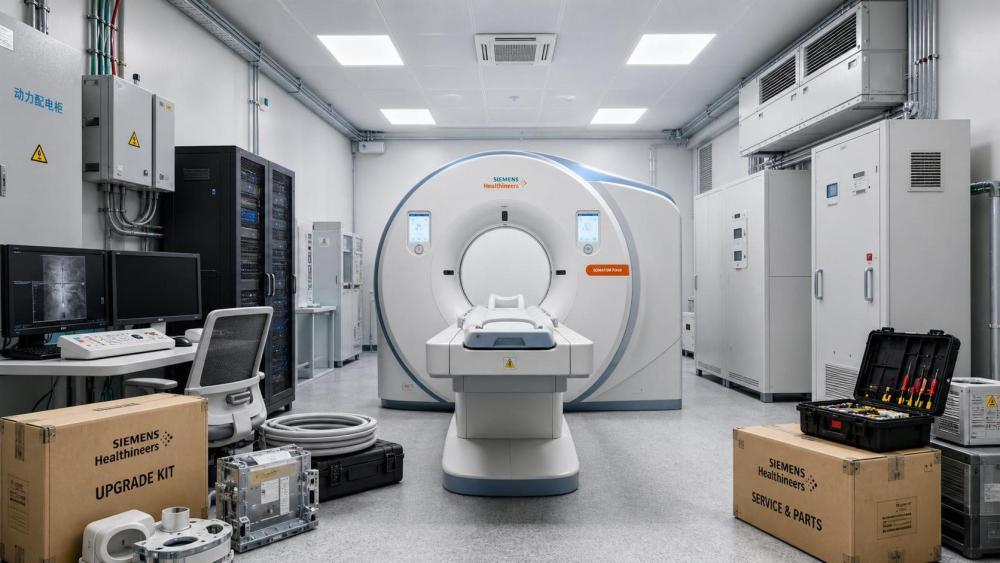
Radiology equipment cost looks simple at first glance. One quote, one machine, one capital request. In practice, that number is only the starting point.
Imaging systems carry connected expenses that appear before go-live and continue long after installation. This is why price-only comparisons often create budget pressure later.
A CT scanner, DR room, MRI system, or C-arm may require site preparation, shielding, HVAC adjustments, electrical upgrades, networking, and workflow integration.
The same issue applies to software. Base configurations may exclude advanced applications, dose management tools, post-processing packages, or interface licenses.
When reviewing radiology equipment cost, the more useful question is not, “What does the machine cost?” It is, “What will it take to operate reliably for seven to ten years?”
That broader view matters across healthcare procurement. MTHH often frames equipment decisions around lifecycle value, because technical performance and commercial terms are tightly linked.
In imaging projects, a lower entry price can still mean higher ownership cost if uptime is weak, spare parts are limited, or upgrade paths are unclear.
What should be included in a real radiology equipment cost breakdown?
A useful cost breakdown separates one-time spending from recurring obligations. That makes approval discussions more realistic and easier to defend.
Most imaging projects should review at least these cost layers:
- System purchase price, including standard accessories and clinical applications
- Freight, insurance, customs, and local delivery handling
- Room renovation, shielding, electrical work, cooling, and structural preparation
- Installation, calibration, acceptance testing, and staff training
- Warranty coverage, service contracts, preventive maintenance, and call-out rates
- Software licenses, cybersecurity updates, PACS or RIS interfaces, and future application modules
- Compliance documents, quality records, and market-specific registration support where needed
- Planned upgrade costs, detector replacement, coils, tubes, workstations, or storage expansion
Some categories vary by modality. MRI often brings heavier facility demands. DR may appear simpler, yet detector replacement risk can materially affect radiology equipment cost.
In real procurement reviews, the missing line items are usually not dramatic. They are small exclusions that accumulate across service, software, and site readiness.
A quick review table for budget discussions
The table below helps separate visible costs from commonly overlooked ones.
How much do service contracts change long-term radiology equipment cost?
Usually more than first-time buyers expect. Service is one of the largest variables in total radiology equipment cost after acquisition.
The key difference is not just price. It is scope. Two contracts with similar annual fees can deliver very different financial outcomes.
A full-service plan may include preventive maintenance, emergency response, labor, travel, and selected parts. Another plan may exclude high-value components.
For CT and MRI, tube or coil exclusions can materially shift annual risk. For DR systems, detector coverage deserves the same attention.
Downtime also has an economic effect. Delayed service can reduce imaging throughput, extend patient waiting time, and push cases to external providers.
A practical review should ask:
- What response time is contractually guaranteed?
- Which parts are included, and which are billed separately?
- Are software updates included or sold as renewals?
- Is remote diagnostics available?
- How is uptime measured, and are penalties defined?
MTHH often highlights these service details because they influence real operating value more directly than brochure-level specifications.
When do upgrades become cheaper than replacement?
This is where radiology equipment cost decisions become strategic. An upgrade can extend useful life, but only if the platform still supports current workflow.
A detector swap, workstation refresh, software package, or reconstruction upgrade may cost far less than a new system. That does not always make it the better option.
An upgrade tends to make sense when image quality improves materially, service support remains stable, and room infrastructure can be reused without major work.
Replacement becomes more rational when the platform is near end-of-support, spare parts are unpredictable, cybersecurity gaps remain unresolved, or throughput limits affect revenue.
Another factor is interoperability. Older imaging equipment may struggle with modern PACS environments, AI tools, dose tracking, or enterprise data requirements.
In practical terms, compare upgrade cost against three things: expected life extension, annual service reduction, and performance gain tied to clinical demand.
Signs an upgrade proposal deserves closer scrutiny
- The vendor cannot confirm support duration after upgrade
- Key hardware remains old, despite new software branding
- Downtime during upgrade is unclear
- Interface compatibility depends on third-party fixes
- Energy, cooling, or room limitations remain unchanged
What are the most common budgeting mistakes in imaging projects?
The first mistake is treating radiology equipment cost as a one-time capital event. Imaging systems behave more like managed technical assets than static purchases.
The second is accepting generic lifecycle assumptions. A five-year model may understate actual support needs, while a ten-year model may ignore obsolescence risk.
Another common issue is separating technical review from financial review. That creates blind spots around infrastructure, documentation, maintenance, and training.
There is also a tendency to undervalue implementation time. Delays in room readiness or regulatory paperwork can postpone utilization and distort return calculations.
In global healthcare markets, documentation quality matters as well. Service manuals, quality records, labeling, registration status, and support commitments influence operational risk.
That is why structured information platforms such as MTHH are useful during early comparison. Clear technical and commercial framing helps reduce approval-stage surprises.
How should a final radiology equipment cost review be prepared before approval?
A sound review package should show more than vendor pricing. It should explain the logic behind the investment and the conditions required for stable operation.
A simple approval checklist usually works better than a long narrative.
- Define modality, expected volume, and clinical use case
- Separate capital cost from annual operating cost
- Confirm room readiness and utility requirements
- Review service scope, exclusions, and escalation terms
- Document software, interface, and cybersecurity obligations
- Compare upgrade path versus full replacement economics
- Check documentation support, compliance status, and training commitments
The strongest decisions usually come from aligning commercial terms with technical reality. That means looking at purchase, service, and upgrade as one connected cost story.
If the goal is to control budget risk, start by mapping the full radiology equipment cost over the intended service life. Then test each assumption against workflow, support, and infrastructure conditions.
That approach makes comparisons clearer, exposes hidden obligations early, and creates a more reliable basis for the next imaging investment decision.