
Preventive Maintenance for Medical Equipment Provider: What Reduces Downtime
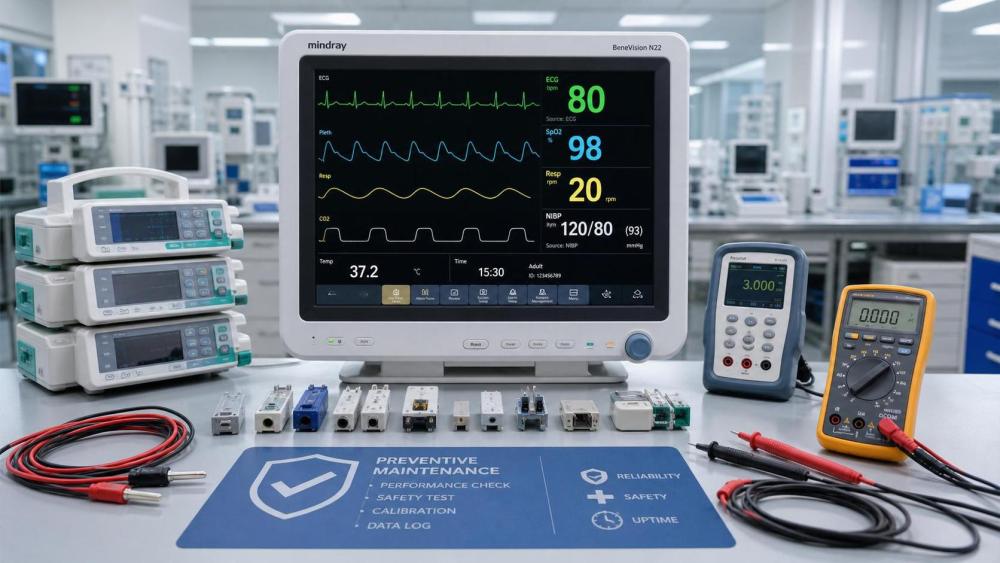
For any preventive maintenance for medical equipment provider, reducing downtime is not just a service goal.
It directly affects clinical continuity, equipment safety, and customer trust.
A structured maintenance strategy helps teams catch failures early and keep service performance stable.
In hospitals, a delayed repair can interrupt diagnosis, postpone treatment, or create pressure on backup devices.
That is why preventive maintenance for medical equipment provider operations must be practical, scheduled, and measurable.
The real question is simple.
What actually reduces downtime, beyond basic checklists and routine visits?
In daily service work, the answer usually comes from better planning, better records, and faster decisions.
A strong preventive maintenance for medical equipment provider model also connects maintenance tasks with clinical use patterns.
This makes maintenance less reactive and more aligned with the way equipment is truly used.
Why Downtime Happens More Often Than Expected
Downtime rarely starts with a major failure.
More often, it begins with small signs that were missed or delayed.
A cooling fan sounds different.
A battery cycle weakens.
A sensor drifts out of tolerance.
Software logs show repeated warnings, but no one escalates them.
For a preventive maintenance for medical equipment provider, these details matter because they forecast larger service interruptions.
Common causes of avoidable downtime include:
- incomplete maintenance history
- poor spare parts planning
- missed calibration windows
- inconsistent technician training
- slow field response approvals
- unclear communication with hospital users
From a service perspective, downtime is often an information problem before it becomes a technical problem.
That also means it can be reduced through process discipline.
Build a Preventive Maintenance Program Around Risk
Not every device needs the same service intensity.
A preventive maintenance for medical equipment provider should group assets by clinical risk, usage frequency, and failure impact.
This helps after-sales teams place effort where downtime would hurt most.
Start with a practical asset ranking
Create priority groups such as life-support, high-throughput, and standard-use equipment.
Ventilators, anesthesia systems, patient monitors, and infusion devices usually need tighter maintenance intervals.
Imaging systems and laboratory analyzers may need risk-based service linked to workload and environment.
Use maintenance intervals that reflect real usage
Calendar-based schedules are useful, but they are not enough on their own.
Devices in busy departments wear faster than the same models in low-volume sites.
A preventive maintenance for medical equipment provider should combine time, usage count, and fault trends.
That shift makes the maintenance plan more accurate and more defensible.
What Service Actions Reduce Downtime Most
In practice, a few maintenance actions create most of the uptime benefit.
These actions are not complicated, but they must be consistent.
1. Standardize inspection points
Inspection checklists should be model-specific, not generic.
Power quality, connectors, airflow paths, alarms, software versions, and calibration status should be reviewed every time.
A preventive maintenance for medical equipment provider benefits when every technician checks the same critical points.
2. Replace wear parts before failure
Batteries, seals, filters, lamps, sensors, tubing, and fans often fail predictably.
Waiting for end-of-life creates emergency calls and avoidable shutdowns.
Planned replacement keeps service visits shorter and more controlled.
3. Control software and firmware status
Some downtime comes from compatibility issues, not broken hardware.
Version control, patch review, and rollback planning are part of preventive maintenance today.
This is especially important for networked monitors, analyzers, and digital imaging systems.
4. Document every small deviation
A preventive maintenance for medical equipment provider should treat recurring minor alerts as useful failure signals.
When records are detailed, pattern recognition becomes much faster.
That improves troubleshooting and cuts repeat visits.
Use Data to Make Preventive Maintenance for Medical Equipment Provider Teams Faster
Maintenance becomes more effective when service data is usable in the field.
Technicians should not need to reconstruct asset history during an urgent call.
A practical service record should include:
- installation date and warranty status
- maintenance logs and replacement history
- error codes and event frequency
- calibration and compliance records
- site conditions and user notes
- approved spare parts list
This kind of visibility shortens diagnosis time and supports better dispatch decisions.
More importantly, it helps a preventive maintenance for medical equipment provider move from guesswork to trend-based action.
Spare Parts and Workflow Control Matter More Than Many Teams Expect
Even a good technician cannot restore equipment quickly without the right parts.
This is where many service programs lose time.
A preventive maintenance for medical equipment provider should define minimum stock for critical consumables and high-failure components.
The stock plan should reflect installed base, model age, and regional demand.
Keep workflow simple and time-bound
Internal approvals should not delay obvious maintenance actions.
If a known wear part meets replacement criteria, the workflow should allow immediate action.
This keeps preventive maintenance for medical equipment provider teams responsive during site visits.
Coordinate with clinical schedules
Downtime can rise when maintenance is planned without understanding patient flow.
Imaging rooms, ICU devices, and laboratory analyzers often need service windows outside peak hours.
That kind of coordination improves customer confidence and reduces disruption.
Train for Root Cause, Not Only for Task Completion
A checklist can confirm task completion, but it cannot replace technical judgment.
The best preventive maintenance for medical equipment provider teams train technicians to interpret patterns.
That includes understanding why a failure occurred, not just how to clear it.
Useful training topics include electrical stability, sensor aging, environmental effects, software behavior, and user-driven damage patterns.
In actual service work, root-cause thinking is what reduces repeat faults.
It also improves communication with hospitals because recommendations become clearer and easier to justify.
A Practical Action Plan That Lowers Downtime
For a preventive maintenance for medical equipment provider, the most effective approach is usually gradual, not overly complex.
A workable action plan can follow these steps:
- rank devices by clinical risk and downtime impact
- set maintenance intervals by usage and fault history
- standardize inspection points by model family
- replace wear parts before expected failure
- track repeat faults and unresolved alerts
- keep critical spare parts close to demand
- review PM performance with monthly service metrics
This kind of structure is realistic for field service operations.
It also supports stronger conversations with procurement teams, biomedical departments, and healthcare facilities.
When preventive maintenance for medical equipment provider teams work from reliable data and repeatable routines, downtime becomes easier to control.
The result is not only better service efficiency.
It is also safer equipment performance, longer asset life, and stronger customer trust over time.