
Enterprise medical imaging: what is really being purchased?
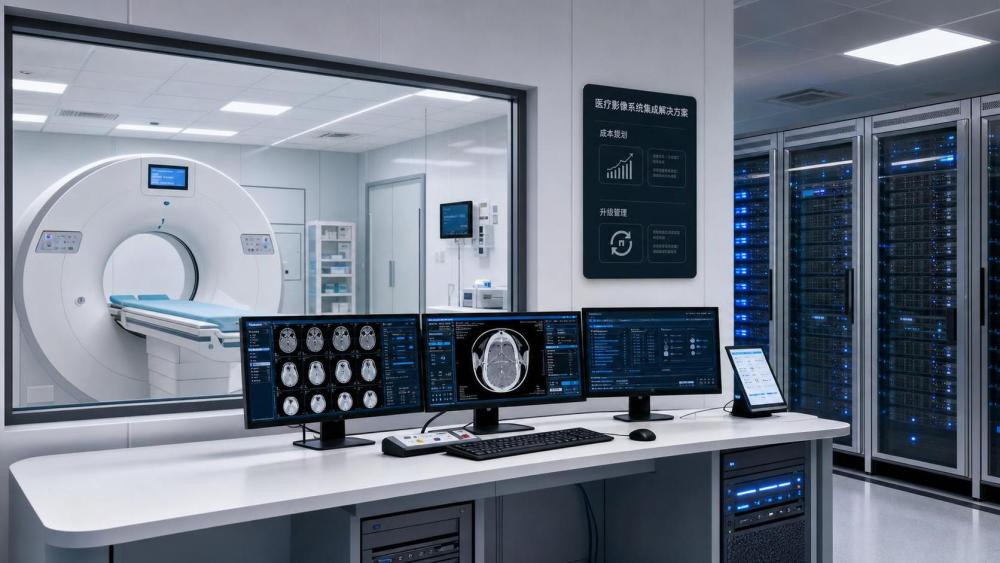
Enterprise medical imaging is not just a scanner, workstation, or archive. It is a connected clinical and operational system.
That system may include CT, MRI, ultrasound, X-ray, mammography, image storage, reporting tools, network links, cybersecurity controls, and service commitments.
In practice, the investment decision is bigger than equipment price. It affects diagnosis speed, room utilization, IT workload, maintenance planning, and long-term upgrade flexibility.
This is why enterprise medical imaging often sits between clinical demand and infrastructure planning. A low entry price can still become expensive later.
MTHH often frames medical technology decisions this way: performance only matters when it matches workflow, safety, documentation, service readiness, and operating cost.
For enterprise medical imaging, that means asking a broader question. Are you buying a device, or building a stable imaging environment for the next seven to ten years?
Why can enterprise medical imaging cost vary so much between similar projects?
The short answer is that headline price rarely reflects the full project scope.
Two enterprise medical imaging proposals may look similar on paper, yet differ in software licenses, detector quality, storage capacity, room adaptation, and service response terms.
A common mistake is to compare only the acquisition figure. More reliable evaluation starts with total lifecycle cost.
That usually includes installation, shielding, cooling, electrical upgrades, PACS or RIS integration, user training, preventive maintenance, replacement parts, and future software updates.
It also includes downtime risk. If one platform has lower reliability or slower service support, the hidden cost may exceed the original price gap.
In enterprise medical imaging, utilization matters as much as ownership cost. An underused premium system and an overloaded basic system can both become poor investments.
A more grounded comparison often looks like this:
When these items are reviewed together, enterprise medical imaging cost becomes easier to explain and easier to defend internally.
How much integration is enough before an imaging platform becomes worth the investment?
More integration is not always better. Useful integration is the kind that removes delays, duplicate work, and avoidable errors.
In many projects, the first threshold is basic interoperability. Images, patient data, orders, and reports must move reliably across existing systems.
The next threshold is workflow integration. Can technologists access orders quickly? Can radiologists report without manual re-entry? Can IT monitor devices remotely?
Enterprise medical imaging starts to create real value when these steps reduce turnaround time and lower operational friction.
Needless complexity creates the opposite effect. A platform with many interfaces but weak testing can increase failure points.
That is why implementation planning should confirm not only standards support, but also version compatibility, responsibility boundaries, and validation procedures.
A practical checklist often includes:
- Whether DICOM, HL7, and reporting workflows are already proven in similar environments
- Whether archive growth and network traffic are sized for future study volume
- Whether access control and cybersecurity policies match institutional rules
- Whether downtime procedures are documented before go-live
MTHH regularly emphasizes this broader view across digital hospital infrastructure. Integration succeeds when clinical use, technical compatibility, and support ownership are all clear.
When does an upgrade make more sense than replacement?
This is often the most useful enterprise medical imaging question, because replacement is not automatically the smarter choice.
An upgrade can be reasonable when the installed base remains reliable, the clinical performance is still acceptable, and bottlenecks come from software or workflow limits.
For example, older imaging systems may still produce acceptable images but struggle with speed, dose optimization, storage expansion, or compatibility with newer reporting tools.
In that case, a targeted upgrade may extend value without the disruption of full replacement.
Replacement becomes more compelling when service parts are difficult to source, uptime is unstable, vendor support is shrinking, or clinical requirements have clearly moved beyond system limits.
Another turning point is compliance and security. If an imaging platform can no longer meet software support or cybersecurity expectations, extension may become a risk.
A simple comparison helps:
The best enterprise medical imaging decision here usually comes from lifecycle evidence, not from a preference for new equipment.
What risks are commonly missed during enterprise medical imaging selection?
One overlooked risk is assuming that a technically advanced platform will automatically fit existing workflows.
Another is underestimating implementation timing. Delivery may be fast, while room readiness, interface testing, and user training take much longer.
There is also the documentation issue. Medical technology projects need clear specifications, acceptance criteria, maintenance records, and software support terms.
Without that structure, later disputes about performance or responsibility become difficult to resolve.
In enterprise medical imaging, common blind spots include:
- Buying for peak specifications instead of realistic daily case mix
- Ignoring operator training needs after software changes
- Accepting unclear uptime commitments or weak service escalation paths
- Missing future storage, archiving, and cybersecurity cost
- Treating integration as an IT issue alone, not a clinical workflow issue
This is where structured industry information becomes useful. MTHH helps organize performance, application conditions, support expectations, and long-term operating value into one evaluation frame.
How should upgrade planning be organized before the final decision?
A good enterprise medical imaging plan usually starts with current-state mapping. What systems are installed, how heavily are they used, and where are the actual constraints?
From there, the more useful question is not “Which model is best?” but “Which configuration solves the next stage of clinical and operational demand?”
That planning process works better when it combines technical, commercial, and implementation checkpoints in one sequence.
- Document current imaging volume, downtime frequency, reporting delays, and support pain points.
- Define which issues require replacement, and which can be solved by software, workflow, or infrastructure upgrades.
- Compare vendors on compatibility, documentation quality, service structure, and upgrade roadmap.
- Validate site readiness, implementation timeline, acceptance testing, and training coverage before contract closure.
- Review lifecycle economics over several years, not only the initial budget window.
Enterprise medical imaging decisions become more defensible when this sequence is followed. It reduces the chance of buying a strong device into a weak system environment.
The next sensible step is to build a comparison sheet around cost, integration, service, upgradeability, and implementation risk.
That approach keeps the discussion practical. It also makes it easier to judge long-term value with the same discipline used across other healthcare technology investments.