
Why daily use tells the real story
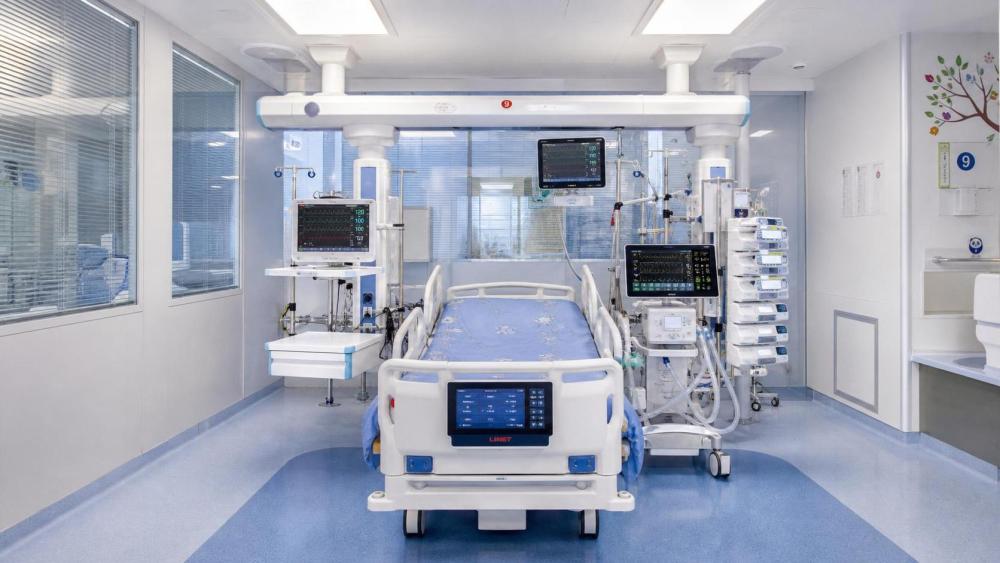
In pediatric critical care, performance claims matter less than daily reliability.
That is why intensive care systems PICU are usually judged at the bedside, not in a brochure comparison.
The practical question is simple.
Can the system support fast observation, clear alarms, safe intervention, and smooth coordination during a demanding shift?
This matters across the broader healthcare equipment market as well.
Platforms such as MTHH frame medical technology around clinical use, maintenance, infrastructure, and long-term operating value.
That perspective is especially useful for intensive care systems PICU, where technical specifications only explain part of the outcome.
Daily use exposes what really affects patient support.
Interface clarity, alarm logic, network stability, accessory readiness, service response, and workflow fit often matter as much as core monitoring functions.
Actual PICU settings do not ask for the same thing
Different PICU environments create different priorities, even when the equipment category looks similar on paper.
A tertiary hospital with complex cardiac cases will judge intensive care systems PICU differently than a regional unit handling short-stay stabilization.
The first setting usually needs deeper integration and higher data continuity.
The second may care more about simplicity, quick onboarding, and dependable core functions under staffing pressure.
Age range also changes the assessment.
Neonates, infants, and older children do not create the same signal quality, alarm behavior, or accessory requirements.
In actual application, the stronger evaluation method is to start with care complexity, staffing patterns, bed turnover, and integration needs.
Only then does it make sense to compare brands, modules, or expansion options.
When acuity is high, alarm quality matters more than alarm quantity
High-acuity beds generate constant streams of data.
In these cases, intensive care systems PICU must do more than display numbers accurately.
They must help teams notice the right change at the right time.
Poorly structured alarms can create fatigue, delay escalation, and increase unnecessary interruptions.
A more useful system separates critical events from technical alerts, supports pediatric-specific threshold adjustment, and keeps alarm navigation simple during urgent intervention.
When turnover is fast, usability becomes a safety issue
Some PICU areas face frequent admissions, transfers, and step-down decisions.
Here, the value of intensive care systems PICU is tied to speed and consistency.
If patient setup takes too many steps, cable management is confusing, or profiles are difficult to switch, delays build up quickly.
What looks minor during a demo often becomes a repeated burden during real turnover peaks.
The bedside view changes from monitoring to coordination
The best intensive care systems PICU do not work as isolated devices.
They support a wider clinical rhythm that includes ventilation, infusion, charting, handover, and response escalation.
That means daily-use value is often hidden in coordination details.
- Screen layouts should present priorities clearly during rounds and emergencies.
- Waveforms must remain readable from different viewing angles and distances.
- Data export and central station visibility should reduce duplicate documentation.
- Battery backup and transport continuity should prevent data gaps during internal transfer.
- Accessory compatibility should stay stable across beds and acuity levels.
More often than expected, frustration comes from coordination friction rather than missing advanced functions.
A system may offer many parameters, yet still slow care if it interrupts routines that must remain fast.
Different PICU scenarios change the evaluation focus
A side-by-side comparison helps clarify why intensive care systems PICU cannot be judged with a single checklist.
This is where structured healthcare intelligence becomes useful.
MTHH-style evaluation methods help connect commercial comparison with operational reality, instead of treating all PICU use as identical.
What gets overlooked before installation
Many weak decisions happen before the first patient ever reaches the bed.
A frequent mistake is to compare intensive care systems PICU mainly by visible features and procurement price.
That approach misses several conditions that shape long-term performance.
Infrastructure fit is not a minor detail
Network stability, central station connectivity, mounting options, power backup, and transport workflow should be checked early.
If these are treated as later details, even good intensive care systems PICU can feel unreliable in practice.
Consumables and accessories shape real operating cost
Another common misjudgment is to assume accessories are interchangeable without friction.
Sensor life, lead durability, neonatal fit, cable replacement cycles, and local availability all affect uptime.
In pediatric environments, even small accessory shortages create workflow disruption quickly.
Training depth should match turnover reality
A short orientation may look sufficient during rollout.
Yet daily performance depends on whether staff can adjust settings confidently, troubleshoot minor faults, and interpret alarms consistently.
For intensive care systems PICU, training must reflect real bedside conditions, not only standard demonstrations.
A practical way to match system choice with use conditions
A better selection process starts with scenario mapping rather than model comparison alone.
That usually means reviewing how intensive care systems PICU will perform across normal shifts, escalation periods, internal transfer, maintenance intervals, and staffing variation.
- Define the dominant case mix and expected acuity pattern.
- Check which alarms truly require immediate action.
- Review integration with ventilators, infusion devices, and records systems.
- Measure setup speed, transport continuity, and accessory replacement burden.
- Confirm service response time, spare part pathways, and software support.
This kind of review aligns with how professional healthcare platforms assess equipment value.
The emphasis is not on promotional language.
It is on whether the system stays dependable under real clinical load.
What matters most after the comparison stage
The strongest intensive care systems PICU are usually not the ones with the longest feature list.
They are the ones that remain clear, stable, maintainable, and clinically coherent every day.
In practical terms, that means judging bedside visibility, alarm discipline, workflow fit, training realism, and infrastructure compatibility together.
Before moving forward, it is worth documenting the main PICU use scenarios, listing non-negotiable safety conditions, and comparing lifecycle demands rather than purchase cost alone.
That approach leads to clearer decisions and more durable value in pediatric critical care.