
How to Verify Patient Care Systems CE Certified Status
Why does verifying patient care systems CE certified status matter before any decision?
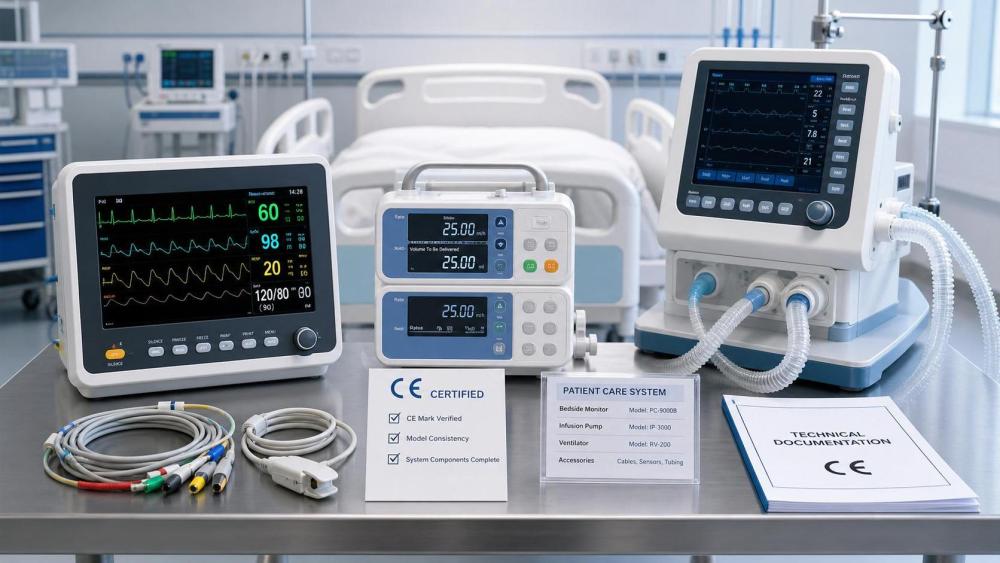
A CE mark on a patient monitor, ventilator, infusion pump, or nurse call system is not enough by itself.
What matters is whether the patient care systems CE certified claim is genuine, current, and matched to the exact device being reviewed.
That point becomes critical before procurement approval, warehouse release, installation, or cross-border distribution.
In practical healthcare settings, a weak document check can lead to delayed commissioning, customs problems, unsupported software, or safety concerns during clinical use.
The more complex the system, the more careful the verification should be.
For example, bedside monitoring platforms may include hardware, accessories, networking modules, alarms, and software versions that affect the declared scope.
This is where structured review becomes useful.
Platforms such as MTHH help organize technical and compliance information in a clearer way, especially when a device decision also depends on maintenance, workflow, and long-term support.
Simple price comparison rarely tells the full story.
A patient care systems CE certified review should confirm not only legality, but also whether the product fits clinical risk, installation conditions, and documentation readiness.
What should you ask for when a supplier says the system is CE certified?
The first useful question is not “Do you have CE?”
A better question is, “Which documents prove this exact patient care system is CE compliant today?”
A solid verification file usually includes several linked records, not one certificate alone.
- EU Declaration of Conformity for the exact model or family.
- Certificate issued by the relevant Notified Body, when applicable.
- Product labeling, packaging, and Instructions for Use.
- Manufacturer details, authorized representative details, and Basic UDI-DI if available.
- Technical documentation references, including risk management and clinical evaluation support.
- Software version or configuration list for networked patient care systems.
Need to confirm one more thing: the legal manufacturer name must be consistent across all records.
If the sales entity, brand owner, and certificate holder are different, that is not automatically wrong.
It simply means the relationship must be transparent and documented.
For patient care systems CE certified verification, the most common weakness is mismatch.
The brochure mentions one model, the label shows another, and the certificate covers only part of the system.
That is often where review teams lose time.
How can you tell whether the certificate actually covers the device in front of you?
This is the point where many checks should slow down rather than speed up.
A certificate may be real, but still not apply to the delivered configuration.
The easiest way to review patient care systems CE certified status is to compare five elements side by side.
This comparison is especially important for central monitoring platforms and ICU systems.
A display unit may be covered, while optional telemetry packs or integration software are not clearly listed.
More cautious reviewers also compare the intended use wording.
If the certificate supports general monitoring, but the sales material promises advanced clinical functions, that gap deserves clarification.
In short, patient care systems CE certified status should be checked against the actual delivered system, not the marketing summary.
Which supporting technical documents usually reveal compliance problems fastest?
Certificates are the headline, but supporting documents usually tell the real story.
When documentation is inconsistent, the problem often appears first in routine technical files.
Start with labeling and instructions
Check the product label, packaging, and Instructions for Use together.
The CE mark, manufacturer identity, storage conditions, and intended use should align.
For electrically powered patient care systems, warnings and installation conditions should be specific, not generic.
Review software and configuration records
Patient care systems increasingly depend on software, connectivity, and upgrade control.
That means software release status may affect whether a patient care systems CE certified claim remains properly supported.
If one ward receives version A and another receives version B, the declared configuration should still be traceable.
Look for risk management consistency
You may not always receive the full risk management file.
Still, summary evidence should show that alarm failure, power loss, network interruption, and user error have been considered.
That is especially relevant for monitors, ventilators, and integrated ICU systems.
Resources that organize these technical checkpoints, such as MTHH content libraries, can help teams compare device categories more efficiently before formal approval.
What are the most common red flags behind a weak patient care systems CE certified claim?
Some warning signs appear subtle at first, but they usually point to deeper compliance risk.
- The certificate number is provided, but no Declaration of Conformity is shared.
- The device brand is visible, but the legal manufacturer remains unclear.
- The certificate covers a broad family, yet the exact model is missing.
- The CE mark appears on sales material, but not consistently on labeling files.
- Accessories are offered separately without confirming whether they are part of the certified system.
- Software updates are promised, but change control and validation records are vague.
- Documents are valid in date, but the intended use wording seems too generic.
Another frequent issue is overreliance on old approvals.
A legacy certificate may exist, while current production, labeling, or post-market support has changed significantly.
In real projects, this often affects imported equipment bundles and refurbished patient care systems.
If anything feels incomplete, the right move is usually to pause release, request a document map, and check traceability before use.
How deep should the review go for procurement, distribution, or on-site installation?
The review depth should match the decision risk.
A simple document archive check may be enough for repeat orders of unchanged equipment.
A new ICU monitoring platform deserves a broader verification path.
For procurement approval
Focus on legal validity, intended use, total system scope, and support readiness.
A patient care systems CE certified review should also connect with service manuals, training plans, spare parts availability, and maintenance obligations.
For distribution release
Traceability becomes more important.
Batch records, labeling consistency, importer details, and storage conditions should be checked together.
For installation and commissioning
The question shifts from paper compliance to operational fit.
Electrical requirements, network compatibility, alarm integration, calibration status, and operator instructions all affect safe use.
That is why compliance review and technical review should not be separated too far.
In healthcare infrastructure projects, CE status is only one checkpoint within a larger decision framework covering reliability, workflow, and lifecycle cost.
So what is the most practical next step if the documents look incomplete?
Start by listing every delivered item that forms the patient care system.
Include monitors, accessories, cables, mounts, software modules, servers, and optional connectivity units.
Then map each item against the Declaration of Conformity, certificate scope, and labeling file.
If one part cannot be traced clearly, that gap should be resolved before approval.
It also helps to keep a short internal checklist for future reviews.
- Confirm exact model and configuration.
- Verify current CE documents and legal manufacturer.
- Check intended use against the real application setting.
- Review software, accessories, and installation dependencies.
- Record unresolved questions before release or commissioning.
That approach is usually more reliable than chasing certificates one by one.
When patient care systems CE certified claims are reviewed in context, decisions become safer, faster, and easier to defend later.
A careful review now can prevent service disruption, compliance disputes, and avoidable patient risk after installation.
For ongoing projects, the most useful next move is to build a repeatable verification standard and compare every new device package against it.
Have questions about the global trade trends discussed here, or planning your expansion and supply chain strategy? Leave a message below and let the trade experts at MTHH guide you.
We respect your privacy. Your information is strictly confidential.
Related News
- FDA Issues Benefit-Risk Discussion Paper on Robotic Medical DevicesNov 07, 2026Explore the FDA discussion paper on robotic medical devices, its potential benefit-risk implications, and what manufacturers and purchasers should monitor.
- How to select ISO standards for medical device performance evaluationNov 06, 2026Choose medical device performance evaluation ISO standards with confidence. Learn to match claims, test methods, and regulatory requirements to reliable evidence.
- FDA Updates QMSR FAQs and Medical Device Cybersecurity GuidanceNov 06, 2026FDA QMSR FAQs and medical device cybersecurity guidance: Explore potential implications for ISO 13485 alignment, compliance planning and supplier coordination.
- Philips Reaches €288 Million Settlement in US Respiratory Device Recall ProbeNov 05, 2026Philips reaches a €288 million US settlement over its respiratory device recall. Explore the financial impact and implications for manufacturers.