
Medical equipment maintenance training matters most when service pressure is uneven
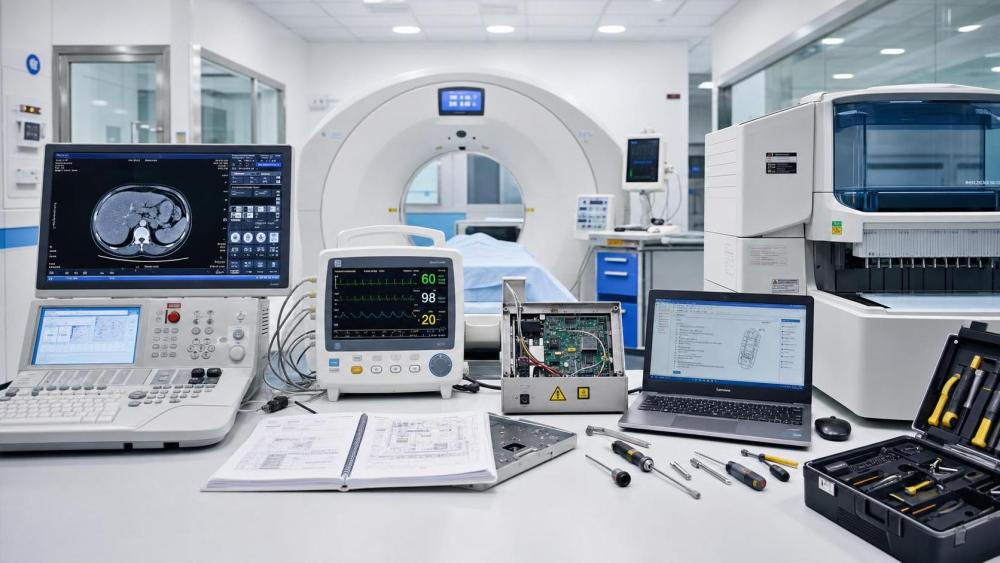
Medical equipment maintenance training is not simply a technical course. It shapes how quickly faults are isolated, how safely systems return to use, and how reliably hospitals keep daily workflows moving.
In real service environments, downtime rarely affects one device alone. A delayed CT repair can disrupt scheduling, patient preparation, reporting speed, and revenue planning across several departments.
That is why medical equipment maintenance training needs to reflect operational context, not just manuals. The maintenance logic for imaging, laboratory, monitoring, and critical care systems is never fully identical.
This is also where structured industry insight becomes useful. Platforms such as MTHH help connect technical details with procurement, clinical engineering, installation conditions, documentation, and long-term service expectations.
A training plan that looks strong on paper may still underperform if it ignores software dependencies, spare parts access, calibration routines, user behavior, or site infrastructure limits.
Different care settings create different maintenance priorities
The first judgment point is not the device category alone. It is the service consequence of failure. Some systems stop a department. Others quietly degrade accuracy before anyone notices.
Medical equipment maintenance training should therefore begin with failure impact mapping. Faster troubleshooting matters everywhere, but what counts as an urgent response changes by application setting.
Imaging systems often carry high downtime cost per hour. Laboratory instruments may keep running with hidden quality risks. Monitoring devices demand alarm reliability and network stability. Sterilization systems affect infection control and case turnover.
A practical way to compare these differences is to look at the service burden behind each type of equipment.
This comparison shows why medical equipment maintenance training cannot be generic. The same repair speed target may require very different diagnostic habits in different environments.
Imaging departments usually need deeper diagnostic discipline
Imaging service teams often face a mix of hardware, software, and room-related variables. A fault code may point to the detector, but the real cause could be power quality, cooling instability, or connection failure.
For this setting, medical equipment maintenance training should emphasize structured troubleshooting paths. Random part replacement wastes time and increases service cost without improving uptime.
Ultrasound systems, digital X-ray units, CT scanners, and C-arms also differ in service rhythm. Portable systems face mobility wear. Fixed systems depend more heavily on room readiness and integration conditions.
A useful training approach here includes image artifact recognition, subsystem isolation, restart hierarchy, log review, and environmental verification. Those skills reduce unnecessary escalation.
A common mistake is to treat imaging maintenance as a pure engineering issue. In practice, workflow pressure matters just as much. The right decision may be temporary recovery first, full repair second.
Laboratory systems require attention to hidden accuracy risks
Laboratory equipment may appear stable while performance is already drifting. That makes medical equipment maintenance training especially important for reading warning signals before they become reportable failures.
In chemistry, immunoassay, hematology, and coagulation systems, maintenance quality affects more than uptime. It can influence calibration consistency, reagent use, sample carryover, and confidence in result reproducibility.
Training in this setting should combine mechanical maintenance with process understanding. Error handling must include reagent status, wash performance, temperature control, and quality control trends.
More importantly, teams should know when an issue is technical and when it belongs to workflow design. Poor sample loading habits, delayed maintenance, or incompatible consumables can mimic instrument faults.
- Review recurring alarm patterns instead of treating each event as isolated.
- Link maintenance logs with quality control deviations and reagent changes.
- Train around contamination risks, not only component replacement.
- Confirm LIS or automation interface issues before opening the instrument.
This is where structured market and technical information from MTHH can help. It supports better review of maintenance needs, consumable dependence, and workflow compatibility before equipment enters routine service.
Monitoring and critical care devices demand fast judgment under tighter risk conditions
Patient monitors, ventilators, infusion pumps, and defibrillators create a different maintenance environment. The immediate concern is rarely throughput. It is safety, continuity, and confidence in real-time device behavior.
Medical equipment maintenance training for these systems should strengthen rapid function verification. A technician may have only a short service window before the device is needed again.
Battery performance, alarm reliability, sensor quality, accessory wear, and network connectivity deserve as much attention as internal boards. Many field complaints begin outside the core device.
Another practical issue is separating user error from actual failure without oversimplifying either. If training ignores common operating mistakes, service time increases and trust declines.
In ICU and emergency settings, the best maintenance outcome is often predictable performance rather than complex repair. That means stronger preventive checks, tighter accessory control, and clear replacement criteria.
What is often misjudged before training programs are designed
One frequent error is building medical equipment maintenance training around product specifications alone. Service outcomes depend on installation quality, software version control, local utilities, and documentation discipline.
Another mistake is assuming similar devices share the same maintenance pattern. A compact ultrasound in a clinic and a high-throughput CT in a referral center may both be imaging devices, yet the service logic differs sharply.
Teams also tend to underestimate post-installation variability. Usage intensity, cleaning routines, accessory turnover, and environmental stress can change maintenance frequency far more than brochure claims suggest.
Cost is another blind spot. Lower purchase price does not reduce service burden if spare parts are slow, consumables are unstable, or diagnostic access is limited. Training should prepare for those realities.
- Do not separate maintenance planning from procurement review.
- Do not rate training quality by course hours alone.
- Do not ignore documentation readiness and service response pathways.
- Do not treat preventive maintenance as less urgent than repair.
How to make medical equipment maintenance training more usable in practice
The most effective medical equipment maintenance training usually combines technical depth with scenario selection. Instead of teaching every device the same way, build modules around failure impact and service complexity.
Start with equipment that combines high downtime cost and frequent troubleshooting. Then add systems where hidden quality drift creates clinical or operational risk over time.
A practical rollout can follow these steps.
- Map devices by service urgency, complexity, and dependency on software or consumables.
- Define fault categories that appear most often at each site type.
- Match training depth to actual field tasks, not ideal factory conditions.
- Link maintenance records with downtime, repeat failures, and response speed.
- Review spare parts, manuals, and compliance documents alongside technical lessons.
This approach fits the wider healthcare equipment landscape covered by MTHH, where procurement, service support, clinical use, and lifecycle value need to be assessed together rather than in isolation.
When the next training cycle is planned, the useful starting point is simple: sort equipment by real operating context, compare maintenance risks across scenarios, and define what faster recovery actually means for each device group.