
Why does hospital capital equipment cost analysis go far beyond the quoted price?
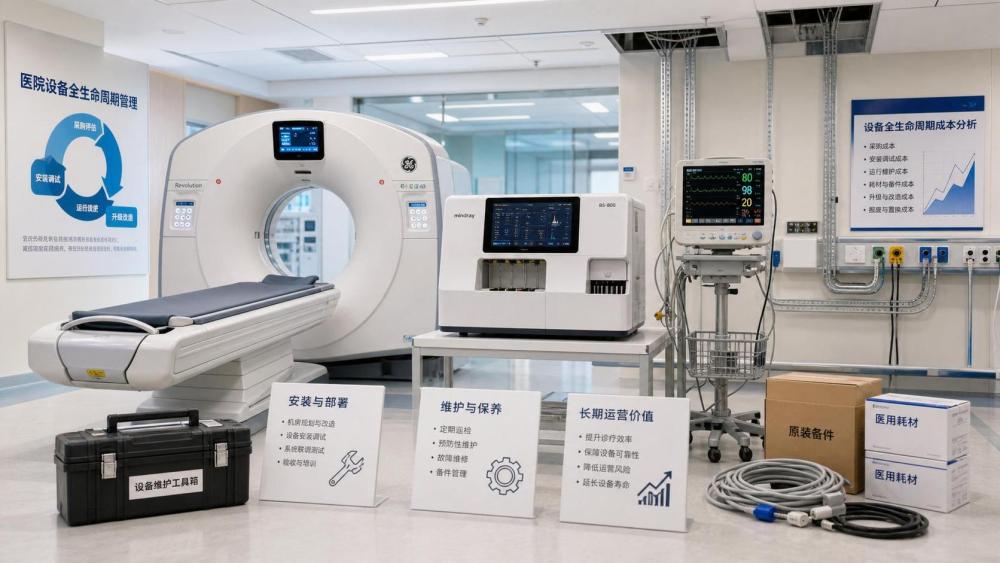
Hospital capital equipment cost analysis starts with price, but it should never stop there.
In healthcare, a scanner, analyzer, monitor, or sterilization system affects budgets for years after delivery.
The real financial picture includes installation, site preparation, training, software, maintenance, accessories, consumables, and service continuity.
That is why hospital capital equipment cost analysis matters in imaging, laboratory diagnostics, patient care, and hospital infrastructure projects.
A lower purchase price can still lead to higher total ownership cost if uptime is weak or service support is slow.
A higher-priced system may deliver better value when workflow is stable and operating costs stay predictable.
This is where structured industry information becomes useful.
Platforms such as MTHH help organize technical and commercial details before financial approval is given.
That support is practical because medical procurement is not ordinary equipment buying.
Clinical performance, patient safety, documentation readiness, and long-term service terms directly shape cost exposure.
Which hidden costs most often change the final budget?
The most common budgeting mistake is treating the purchase order as the full project cost.
In actual hospital capital equipment cost analysis, hidden costs usually appear in six areas.
- Site preparation: shielding, electrical upgrades, HVAC changes, plumbing, network points, and room renovation.
- Commissioning: delivery handling, installation labor, calibration, validation, and acceptance testing.
- Training: initial operator education, refresher sessions, super-user development, and onboarding for staff turnover.
- Software and connectivity: licenses, cybersecurity updates, PACS or LIS integration, and interface maintenance.
- Service support: preventive maintenance, spare parts coverage, response time, remote diagnostics, and loaner availability.
- Ongoing operation: reagents, probes, filters, contrast injectors, disposables, and energy consumption.
Some categories carry more hidden cost than others.
MRI and CT often involve room work and cooling requirements.
IVD systems may look affordable initially, yet reagent dependency can dominate lifetime spending.
Patient monitoring systems may require software modules, central station upgrades, and recurring network support.
A disciplined hospital capital equipment cost analysis should therefore map both capital cost and operational cost from the start.
A quick budgeting table for early review
Before comparing brands, it helps to pressure-test the cost structure with a simple review grid.
When does a lower-priced system become the more expensive choice?
This happens more often than many approval reviews assume.
A cheaper unit becomes expensive when it interrupts workflow, consumes more supplies, or requires frequent service calls.
Downtime is a major cost driver, especially in imaging, laboratories, emergency care, and intensive care environments.
If a CT scanner stops, patient scheduling, referrals, and revenue can be affected immediately.
If a laboratory analyzer becomes unstable, repeat testing, delayed reports, and reagent waste quickly increase operating cost.
A lower bid can also hide weak documentation or poor local support.
That matters because incomplete manuals, unclear maintenance plans, or limited spare parts access can slow every repair event.
In hospital capital equipment cost analysis, the more useful comparison is cost per productive year, not price at delivery.
A system with better reliability and stronger vendor support may protect both clinical operations and budget predictability.
This is one reason MTHH emphasizes structured evaluation across performance, service terms, and long-term operational value.
How should lifecycle cost be compared across imaging, lab, and patient care equipment?
The categories are too different for one flat costing formula.
A useful hospital capital equipment cost analysis adjusts the model to the equipment’s operating logic.
For diagnostic imaging
Focus on room readiness, service intensity, uptime, throughput, detector life, and software expansion path.
Imaging equipment often has heavy installation dependence and high downtime sensitivity.
For IVD and laboratory systems
Look closely at reagent pricing, calibration frequency, throughput stability, QC material use, and maintenance intervals.
The instrument price may be secondary if yearly reagent consumption is large.
For patient care and critical support
The cost model should include alarm integration, battery replacement, software modules, accessories, and fleet standardization benefits.
A monitor or ventilator may appear simple, yet accessory and service consistency strongly affect long-term cost.
For hospital infrastructure equipment
Sterilizers, medical gas systems, cleanroom elements, and nurse call platforms depend on compliance, validation, and facility coordination.
Lifecycle budgeting should include inspections, certification, and disruption risk during maintenance windows.
In practice, the best comparison method is category-specific, but the decision rule remains consistent.
Estimate acquisition cost, operating cost, support cost, and failure cost over the expected service life.
What should be checked before approval is signed?
A solid hospital capital equipment cost analysis should end with a decision checklist, not just a supplier quote comparison.
Several approval questions usually reveal whether the budget is realistic.
- Is the room or site already ready, or will capital works be needed?
- Are all required accessories, interfaces, and starter consumables included in the quoted scope?
- What happens after warranty ends, and how much does annual service actually cost?
- Is there any brand dependency for reagents, sensors, probes, or disposables?
- How long will software updates be supported, and are security patches included?
- What level of training is included, and how will competency be maintained later?
- If the system fails, what is the operational and financial impact per day?
These checks help separate affordable equipment from sustainable equipment.
They also align well with the kind of structured information used across MTHH content.
The platform’s value is not in pushing one product.
It is in clarifying what should be reviewed before equipment selection, installation, and long-term use.
What are the most common mistakes in hospital capital equipment cost analysis?
One frequent mistake is approving equipment based on purchase price and warranty headline alone.
Another is treating service contracts as optional without modeling downtime exposure.
Some reviews also ignore software lifecycle risk.
That can be costly when integration, cybersecurity, or version support becomes mandatory later.
A different error appears in laboratory projects.
Decision teams sometimes focus on analyzer price while underestimating reagent contracts and calibration overhead.
In infrastructure projects, site conditions are often assumed rather than verified.
That creates avoidable delays, redesign costs, and disputes over scope responsibility.
The more reliable approach is simple.
Build a lifecycle cost view, test supplier assumptions, and document every cost item that could surface after commissioning.
That is the practical value of hospital capital equipment cost analysis when budgets must stay disciplined.
Where should the next review start?
Start with the clinical purpose, then translate it into a full ownership model.
Map purchase price, facility work, training, service, software, consumables, and downtime assumptions on one page.
After that, compare suppliers using the same cost frame instead of separate quote formats.
Hospital capital equipment cost analysis becomes much more reliable when technical and financial review use shared definitions.
That is especially important for imaging systems, laboratory analyzers, monitoring platforms, and hospital infrastructure assets.
A well-structured review does not eliminate uncertainty, but it prevents avoidable surprises.
The next sensible step is to build a category-specific checklist, validate support assumptions, and test total cost over the expected service life.
That is usually where better approval decisions begin.
- diagnostic imaging
- laboratory diagnostics
- patient monitoring
- medical gas systems
- hospital infrastructure
- contrast injectors
- patient care equipment
- laboratory analyzers
- hospital capital equipment
- hospital infrastructure projects
- hospital infrastructure equipment
- hospital capital equipment cost analysis
- patient monitoring systems