
How to Evaluate a Medical Equipment Manufacturer for Long-Term Supply Stability
Selecting a medical equipment manufacturer for long-term cooperation requires more than a product comparison. The real question is whether the supplier can keep equipment, parts, service, and documentation flowing without disruption.
That matters across imaging, laboratory diagnostics, patient monitoring, sterilization, emergency care, and hospital infrastructure. A weak supply partner can create downtime, delayed installation, unstable consumable availability, and growing compliance risk.
In healthcare procurement, supply stability is closely linked to clinical continuity. Price still matters, but long-term value depends on quality discipline, production resilience, service capability, and the ability to support changing operational needs.
Why supply stability deserves a deeper review
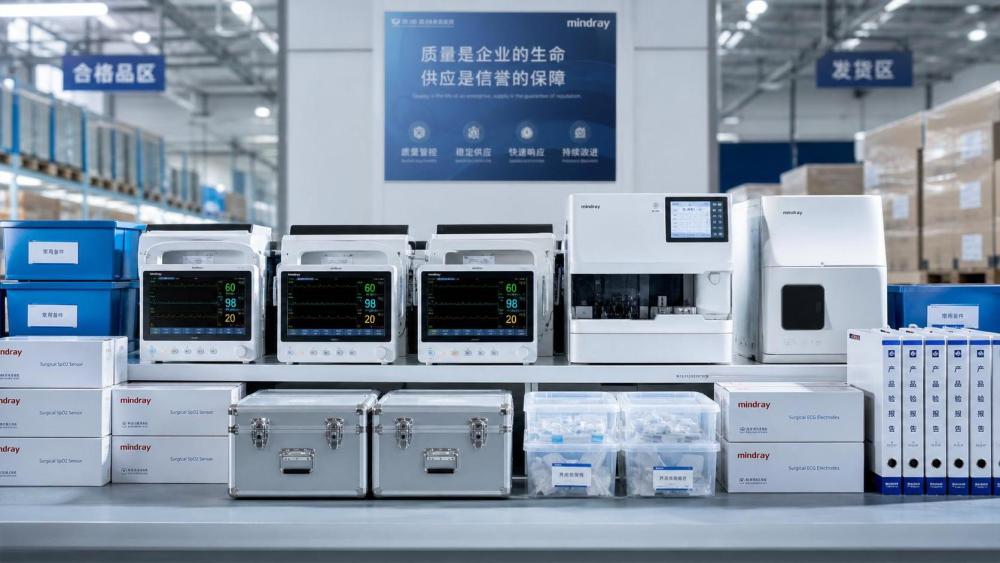
A medical equipment manufacturer often supports more than one transaction. The relationship may involve installation planning, user training, preventive maintenance, spare parts supply, software updates, and future fleet expansion.
If any of those links fail, operational pressure increases quickly. An analyzer without reagent continuity, a monitor without accessories, or an imaging system without responsive service can affect both workflow and patient care.
This is why business evaluation should look beyond current quotations. It should test whether a medical equipment manufacturer can remain dependable during demand swings, regulatory changes, shipping delays, and product lifecycle transitions.
What long-term stability actually means
Long-term stability is not a single metric. It combines manufacturing consistency, documentation readiness, service responsiveness, and commercial discipline over time.
In practical terms, a stable medical equipment manufacturer should be able to deliver the right product configuration repeatedly, maintain traceable quality records, and support the installed base throughout the expected service life.
It also means the supplier can sustain support across geographies. For distributors and healthcare institutions, local registration status, installation support, technical training, and parts logistics often matter as much as factory output.
Production capacity is only the starting point
Factory scale can be misleading if reviewed alone. A large facility does not automatically indicate stable supply, while a mid-sized producer may perform very well with disciplined planning and strong supplier control.
More useful questions focus on production structure. Is there capacity reserved for priority orders? How are critical components sourced? Can the manufacturer handle customized configurations without delaying standard models?
Lead time history is another useful signal. Consistent delivery records often reveal more than headline production numbers. Repeated delays, frequent model substitutions, or unstable accessory availability usually point to deeper planning issues.
Signals worth checking during capacity review
- Average lead time by product family, not just by flagship model
- Dependency on single-source components or imported subassemblies
- Production planning for consumables, accessories, and installation kits
- Ability to maintain support for older installed units
- Evidence of supply continuity during previous market disruptions
Quality systems reveal operational discipline
A reliable medical equipment manufacturer should show mature quality management, not just certificates on paper. ISO 13485, risk management files, complaint handling, and corrective action records all indicate how problems are controlled.
For healthcare equipment, quality stability affects much more than appearance. It influences calibration consistency, alarm reliability, software performance, electrical safety, sterilization assurance, and documentation accuracy.
The strongest suppliers usually demonstrate a clear link between design control, incoming inspection, production testing, and post-market feedback. That link reduces surprises after installation and supports more predictable lifecycle cost.
Questions that sharpen a quality review
It helps to ask how nonconformities are escalated, how field complaints are analyzed, and how software revisions are validated. These details show whether quality is actively managed or only documented for audits.
For categories such as imaging, IVD, patient monitoring, and sterilization, request evidence tied to actual operating conditions. Bench claims alone are less useful than records that reflect field performance and support response.
Spare parts, consumables, and service support shape the real outcome
Many supply relationships look stable until the equipment enters daily use. The real test begins when sensors fail, reagents run low, software needs updating, or users require technical assistance.
A capable medical equipment manufacturer should define spare parts availability periods, service escalation paths, and response commitments. This is especially important for ICU devices, laboratory systems, imaging platforms, and infection control equipment.
Support readiness should include manuals, preventive maintenance procedures, installation requirements, and training materials. When those elements are incomplete, downtime often becomes longer and ownership cost becomes harder to predict.
Compliance readiness affects continuity across markets
A medical equipment manufacturer may produce acceptable hardware yet still create business risk through weak regulatory preparation. Missing product registrations, incomplete labeling, or outdated technical files can delay shipment and market access.
This becomes more important in cross-border distribution. Each target market may require different registration materials, language versions, clinical evaluation records, post-market processes, and importer support documents.
MTHH often emphasizes this practical point: technical performance and commercial viability are closely connected. A product that cannot move smoothly through compliance review is not truly stable from a supply perspective.
Category differences change the evaluation focus
The same checklist does not fit every product line. Long-term evaluation should reflect how the equipment is used, what it depends on, and how failure affects operations.
Diagnostic imaging
Review detector supply, tube life support, room planning guidance, software upgrade policy, and field service coverage. Imaging systems often involve expensive downtime and complex site coordination.
Laboratory diagnostics
Check reagent dependency, calibration routines, throughput consistency, and inventory planning. An IVD-focused medical equipment manufacturer must support both instrument stability and ongoing assay availability.
Patient care and hospital infrastructure
Focus on alarm performance, accessory compatibility, preventive maintenance intervals, and replacement part speed. These categories affect bedside continuity and staff workload every day.
How to turn supplier information into a workable decision
The best evaluations combine documents, interviews, reference checks, and operating evidence. A brochure can introduce a supplier, but stability is usually confirmed by records, processes, and field experience.
It is useful to score each medical equipment manufacturer across a small set of weighted factors. That makes comparison clearer when several suppliers offer similar technical specifications.
- Manufacturing resilience and historical delivery performance
- Quality system maturity and field issue control
- Service, training, and local support depth
- Spare parts and consumables continuity
- Regulatory and documentation readiness for target markets
- Lifecycle cost, not only purchase price
Reference mapping also helps. A supplier that performs well in hospitals, laboratories, imaging centers, or public health projects similar to the intended use case usually presents lower operational uncertainty.
A practical next step for evaluation teams
A strong decision process starts with internal clarity. Define the equipment category, expected service life, usage intensity, compliance destination, and support expectations before comparing any medical equipment manufacturer.
Then build a review framework that tests production, quality, service, and documentation together. Platforms such as MTHH are useful because they organize technical and commercial signals into a clearer structure for pre-purchase judgment.
When the comparison is grounded in real operating conditions, long-term supply stability becomes easier to judge. That is usually the difference between a short-term purchase decision and a dependable healthcare supply relationship.
Have questions about the global trade trends discussed here, or planning your expansion and supply chain strategy? Leave a message below and let the trade experts at MTHH guide you.
We respect your privacy. Your information is strictly confidential.
Related News
- How to choose diagnostic imaging equipment for small clinicsNov 14, 2026Choose diagnostic imaging equipment for clinics with confidence. Compare clinical needs, costs, space, workflows, and supplier support before you buy.
- How to size medical gas pipelines for peak demandNov 09, 2026Medical gas pipeline systems design starts with peak demand. Learn how to size pipes, calculate pressure loss, and check critical paths for reliable performance.
- What Trendelenburg angle should an operating table provide?Nov 05, 2026Compare operating tables Trendelenburg angles, load limits and accessories. Discover what to check before choosing the right table for your procedures.
- How to estimate the total cost of hospital imaging equipmentNov 04, 2026Plan hospital capital equipment imaging investments with confidence. Learn to estimate installation, service and operating costs and compare bids fairly.