
CT Scanners vs Computed Tomography Systems: What Actually Affects Cost?
When comparing CT scanners and full computed tomography platforms, price alone rarely tells the full story.
For capital review, computed tomography systems cost should be assessed across purchase, installation, operations, service, and useful life.
A lower quote can still become the more expensive option over five to ten years.
That usually happens when room preparation, software licensing, uptime risk, or replacement parts were underestimated.
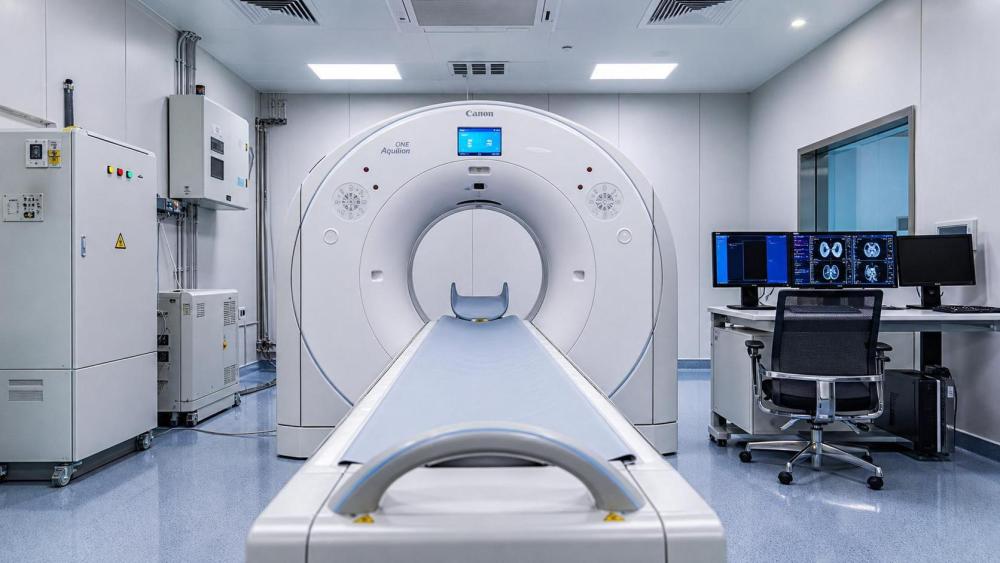
In practice, the term CT scanner often describes the hardware unit itself.
Computed tomography systems cost usually covers a wider package.
That package may include gantry, table, power systems, workstation, reconstruction software, dose tools, injector interfaces, PACS connection, and service support.
This difference matters because approval decisions are rarely based on hardware alone.
They are based on total financial impact and operational fit.
Why the Base Purchase Price Is Only the Starting Point
A quoted system price often reflects a specific configuration, not the final deployed solution.
This is one of the main reasons computed tomography systems cost varies so widely between suppliers.
Slice count, detector design, tube capacity, reconstruction speed, and cardiac capability all influence pricing.
So do workflow features that may look optional during bidding.
Examples include AI-assisted positioning, metal artifact reduction, iterative reconstruction, and advanced post-processing packages.
These tools can raise capital cost.
They can also reduce repeat scans, reading time, and operator workload.
That tradeoff should be reviewed in terms of throughput and clinical demand.
A facility handling trauma, stroke, and oncology cases will not evaluate value the same way as a low-volume imaging center.
The Biggest Cost Drivers Behind Computed Tomography Systems Cost
Several cost elements consistently shape computed tomography systems cost beyond the initial quotation.
The most important ones are usually the following.
- System configuration: detector rows, scan speed, tube heat capacity, and clinical software packages.
- Site preparation: shielding, HVAC, electrical upgrades, floor loading, and room layout changes.
- IT integration: PACS, RIS, EMR connectivity, cybersecurity controls, and data storage expansion.
- Service structure: warranty length, tube coverage, preventive maintenance, and response time commitments.
- Training scope: radiographers, engineers, applications staff, and refresher education after go-live.
- Upgrade path: future software modules, hardware expansion, and compatibility with newer workflow tools.
Among these, site preparation is often underestimated during early budgeting.
A replacement project in an older building may require electrical reinforcement, chilled water changes, or structural adjustments.
That can materially shift computed tomography systems cost before the scanner even arrives.
Installation and Room Readiness Often Decide the Real Budget
Room readiness is where many approval assumptions break down.
Computed tomography systems cost is heavily influenced by what the site can already support.
If the room was previously built for CT, the project may stay relatively controlled.
If it is a new installation, budget exposure grows fast.
Typical hidden costs include construction downtime, radiation shielding validation, delivery route modifications, and temporary service disruption.
There may also be consultant fees for architects, physicists, or compliance reviewers.
These items do not always appear in vendor pricing.
However, they still belong in the full computed tomography systems cost model.
A realistic capital review should separate vendor supply cost from owner-side project cost.
Software, Licensing, and Workflow Tools Change Long-Term Value
Software has become a major pricing factor in computed tomography systems cost.
What looks like one scanner can actually be a layered digital platform.
Base software may support standard imaging only.
Advanced packages can add cardiac analysis, perfusion, vessel assessment, dose tracking, or AI-based reconstruction.
The pricing model also matters.
Some suppliers bundle software permanently.
Others license features annually or by module.
That changes future operating commitments and renewal risk.
From a budget control perspective, it is worth asking which functions are included at handover and which require later activation fees.
This is especially relevant when comparing lower initial bids.
The headline number may exclude functions that become necessary within the first year.
Service Contracts, Uptime, and Parts Support Are Major Financial Variables
For imaging departments, downtime is not just a maintenance issue.
It is a revenue issue, a scheduling issue, and sometimes a patient access issue.
That is why computed tomography systems cost should always include service contract analysis.
The most expensive failure point is often the X-ray tube.
Tube replacement cost, expected life, and coverage terms should be reviewed carefully.
A lower-cost service plan may exclude tubes, detectors, or priority labor response.
That can make annual spending look attractive while raising risk materially.
It also helps to review local engineer coverage, spare parts availability, and remote diagnostics capability.
Faster recovery time often justifies a higher contract price.
In other words, service quality directly affects computed tomography systems cost over the asset lifecycle.
How Throughput and Clinical Scope Influence Cost Justification
Not every CT project needs the highest specification.
Computed tomography systems cost should be aligned with actual case mix and expected patient volume.
A system designed for advanced cardiac imaging may be excessive for routine general radiology.
At the same time, under-specifying the platform can create workflow bottlenecks within two years.
The better question is not simply, “What does it cost?”
It is, “What level of system avoids underuse, overbuying, and avoidable upgrade spending?”
This is where throughput modeling becomes useful.
Scan time, patient preparation, reconstruction speed, and reporting workflow all affect effective capacity.
A faster system may support more studies per day and reduce referral leakage.
That changes the business case even when computed tomography systems cost is higher upfront.
A Practical Comparison Framework Before Approval
Before signing off, a side-by-side comparison should go beyond vendor brochures.
A structured review makes computed tomography systems cost easier to compare across offers.
This approach makes pricing discussions more transparent.
It also helps explain why two systems with similar scan capability may have very different total ownership profiles.
What a Better Approval Decision Looks Like
A sound approval decision balances capital discipline with operational realism.
Computed tomography systems cost should be reviewed as a lifecycle question, not a one-time purchase question.
The strongest decisions usually come from five checks.
- Confirm the exact clinical scope the system must support.
- Separate scanner price from total project cost.
- Review service exposure, especially tube and uptime terms.
- Test whether software and integration costs are fully visible.
- Compare future upgrade flexibility against expected demand growth.
That process leads to fewer surprises after award.
More importantly, it links computed tomography systems cost to actual service capacity, reliability, and long-term budget control.
When those factors are reviewed together, the final choice becomes easier to defend internally and more useful in daily operation.