
Medical Imaging Price Breakdown: Equipment, Installation, and Service Costs
Medical Imaging Price Breakdown: Equipment, Installation, and Service Costs
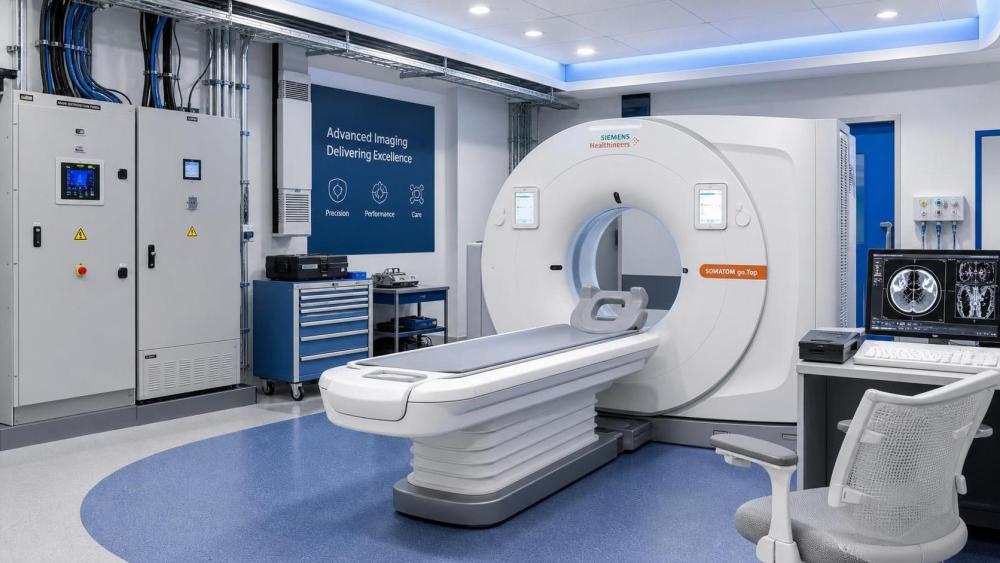
Understanding medical imaging price starts with one simple fact. The scanner price is only one part of the project.
In real procurement work, buyers also pay for room readiness, power upgrades, shielding, software, training, and long-term support.
That is why two proposals with similar equipment pricing can produce very different total budgets.
This matters even more in imaging, where downtime, workflow delays, and service gaps directly affect clinical operations.
A useful medical imaging price review should separate capital cost from ownership cost. It should also show where hidden spending usually appears.
From a purchasing perspective, the better question is not only, “What does the machine cost?”
The better question is, “What will this imaging system cost to install, operate, maintain, and keep productive over time?”
What Shapes Medical Imaging Price
Medical imaging price varies by modality, clinical workload, feature level, and supplier support model.
Basic ultrasound systems usually have the lowest entry cost. MRI and CT projects often carry the highest total investment.
Even within one modality, pricing can change quickly. Detector type, gantry design, software packages, and throughput all influence cost.
Refurbished units can reduce initial spending. Still, they may increase future service risk if spare parts or software updates become limited.
The main cost drivers usually include:
- Modality type, such as ultrasound, DR, mammography, CT, MRI, or C-arm
- System performance, including image quality, speed, and advanced applications
- Configuration scope, such as workstations, detectors, coils, probes, and injectors
- Site preparation complexity, especially shielding, HVAC, power, and structural work
- Software licensing, integration, cybersecurity, and remote service capabilities
- Warranty length, preventive maintenance, uptime guarantees, and local engineer coverage
Seen this way, medical imaging price is really a layered cost structure rather than a single quote line.
Equipment Cost by Imaging Category
A practical budget starts with realistic modality ranges. These ranges differ by brand, region, and system age.
Still, broad comparisons help frame procurement discussions before formal quotation review.
In actual business decisions, category comparisons are only the starting point. The final medical imaging price depends on exact configuration.
A lower-spec CT may fit the capital budget, but miss throughput targets. A higher-spec model may reduce rescans and support more billable studies.
Installation and Room Preparation Costs
This is where many imaging budgets drift. Installation costs are often underestimated during early supplier comparison.
For some systems, installation is straightforward. For CT and MRI, site work can become a major percentage of the total medical imaging price.
Common installation cost items include:
- Civil works, room layout changes, and door access modification
- Lead shielding or RF shielding, depending on modality
- Power supply upgrades, grounding, UPS, and backup support
- HVAC adjustments for heat load and environmental stability
- Floor reinforcement, crane access, and equipment movement logistics
- Network connections, PACS integration, and data security setup
- Acceptance testing, calibration, and regulatory documentation
A quotation that excludes these items can look attractive at first glance. Later, the project team discovers the real cost sits elsewhere.
That also means bid comparisons should separate equipment supply from turnkey delivery.
When installation scope is unclear, the lowest medical imaging price is often just the least complete proposal.
Software, Integration, and Training Expenses
More obvious hardware costs usually get the attention first. Yet software and workflow tools can significantly change project value.
Many imaging systems now depend on licensed applications. These may include dose monitoring, 3D reconstruction, cardiac packages, AI support, or advanced reporting.
Some features are bundled. Others are activated later through paid licenses or annual subscriptions.
Buyers should verify whether the medical imaging price includes:
- DICOM connectivity and PACS or RIS integration
- Post-processing workstations and user seats
- Application training for radiographers, radiologists, and engineers
- Super-user training and refresher sessions
- Cybersecurity patches and software update rights
- Remote diagnostics tools and service platform access
In practical terms, weak training can erase savings fast. Poor adoption slows throughput and increases operator error, repeat scans, and service calls.
Service Contracts and Long-Term Ownership Cost
A strong service plan protects uptime, image quality, and patient scheduling. It also has a major impact on medical imaging price over the equipment life cycle.
This cost is often evaluated too late. By that point, buyers are focused on capital approval and less on annual operating exposure.
Service cost usually includes several layers:
- Warranty coverage period and parts inclusion
- Preventive maintenance frequency and calibration scope
- Labor response time and on-site engineer availability
- Spare parts pricing and regional inventory support
- Helium, coils, detectors, tubes, or probe replacement exposure
- Uptime commitments and penalties for delayed restoration
For high-value modalities, annual service can become a substantial recurring expense. MRI and CT are the most obvious examples.
The more important signal is predictability. A higher contract price may still be the better choice if it stabilizes budgeting and reduces unplanned downtime.
When evaluating medical imaging price, it is worth modeling five-year and seven-year ownership scenarios, not only first-year spending.
How to Compare Quotes Without Missing Hidden Costs
Supplier comparisons often fail because quote structures are inconsistent. One vendor may include accessories and training. Another may separate them.
A better comparison sheet should track:
- Base system configuration and all included accessories
- Optional software and future upgrade pricing
- Room preparation responsibilities and excluded works
- Delivery, installation, testing, and go-live timing
- Warranty length, service exclusions, and spare parts terms
- Training scope, user count, and follow-up support
- Estimated annual operating and maintenance cost
This approach gives structure to medical imaging price discussions and makes internal approval easier.
It also helps clinical engineering teams challenge vague assumptions before contracts are signed.
In many projects, the real savings come from clearer scope definition, not from pushing the equipment line lower.
A More Practical Way to Budget Medical Imaging Price
A sound imaging budget should link cost to workload, uptime needs, and service capacity.
That means balancing capital discipline with operational reality. A cheaper system is not cheaper if it slows patients, increases repeat exams, or fails often.
From recent market behavior, the clearer signal is this. Buyers are paying more attention to lifecycle value than to list price alone.
For procurement planning, the most useful medical imaging price review includes equipment, site work, software, training, warranty, annual service, and likely replacement risks.
That structure supports cleaner negotiations and fewer surprises after purchase orders are issued.
Before final selection, align the quote with clinical demand, room conditions, staffing, digital integration, and expected service response.
Once those points are visible, medical imaging price becomes easier to judge in business terms, not just vendor terms.
The result is a more reliable purchasing decision and a stronger case for long-term ownership value.
Have questions about the global trade trends discussed here, or planning your expansion and supply chain strategy? Leave a message below and let the trade experts at MTHH guide you.
We respect your privacy. Your information is strictly confidential.
Related News
- How to choose diagnostic imaging equipment for small clinicsNov 14, 2026Choose diagnostic imaging equipment for clinics with confidence. Compare clinical needs, costs, space, workflows, and supplier support before you buy.
- How to size medical gas pipelines for peak demandNov 09, 2026Medical gas pipeline systems design starts with peak demand. Learn how to size pipes, calculate pressure loss, and check critical paths for reliable performance.
- What Trendelenburg angle should an operating table provide?Nov 05, 2026Compare operating tables Trendelenburg angles, load limits and accessories. Discover what to check before choosing the right table for your procedures.
- How to estimate the total cost of hospital imaging equipmentNov 04, 2026Plan hospital capital equipment imaging investments with confidence. Learn to estimate installation, service and operating costs and compare bids fairly.