
C-Arm Systems Pulsed Fluoroscopy: How to Balance Dose and Image Quality
In interventional imaging, dose reduction is rarely a simple switch. With C-arm systems pulsed fluoroscopy, the practical question is how to lower exposure while keeping motion, contrast, and anatomical detail clinically usable during real procedures.
That balance matters well beyond radiology. It affects equipment selection, room planning, service expectations, operator training, and long-term operating cost across hospitals, distributors, and healthcare project teams.
For organizations comparing imaging platforms, C-arm systems pulsed fluoroscopy is not just a technical feature. It is a core performance area that shapes safety, workflow stability, and confidence in daily intervention.
Why Pulsed Fluoroscopy Has Become a Key Evaluation Point
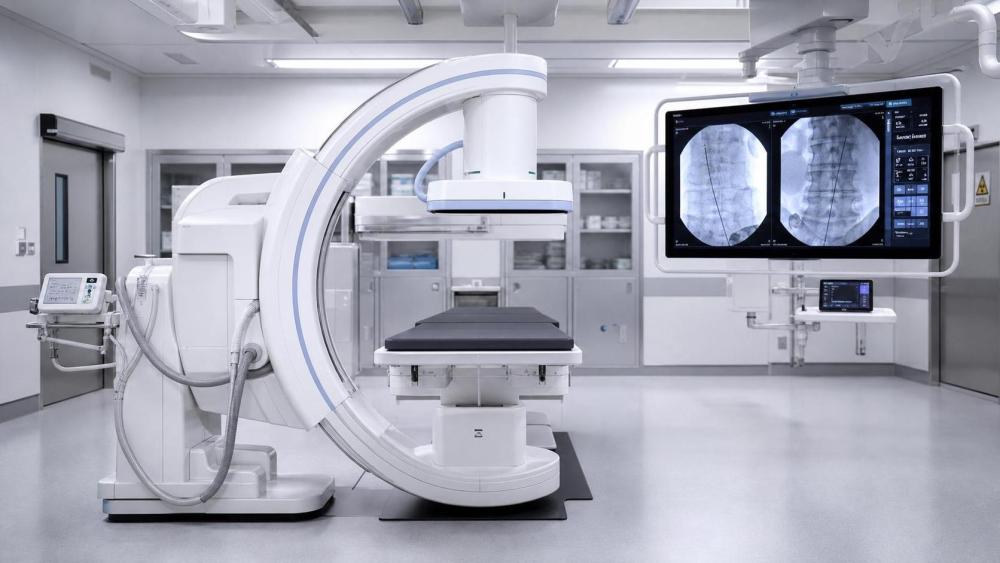
Continuous fluoroscopy delivers a constant stream of X-ray output. Pulsed fluoroscopy breaks that stream into short bursts, reducing radiation by limiting how often exposure is generated.
The idea sounds straightforward, but performance depends on how the system manages each pulse. Lower dose alone is not enough if catheters blur, guidewires disappear, or device positioning becomes uncertain.
This is why C-arm systems pulsed fluoroscopy is now a central topic in technical reviews. It links patient safety, staff exposure, image chain design, and procedural efficiency in one decision area.
Platforms such as MTHH increasingly frame imaging evaluation in this broader way. The technology must be read together with procurement realities, maintenance support, software behavior, and clinical use conditions.
What Actually Shapes the Dose and Image Tradeoff
C-arm systems pulsed fluoroscopy is governed by several interacting variables. Looking at one parameter in isolation often leads to misleading comparisons between models or brands.
Pulse Rate
Pulse rate refers to how many X-ray pulses are produced each second. Common settings include 30, 15, 7.5, or even 3 pulses per second, depending on the procedure.
Lower pulse rates usually reduce dose. However, they can also reduce temporal resolution, which matters during fast instrument movement or when anatomy shifts with breathing or cardiac motion.
Dose Per Pulse
A lower pulse rate does not automatically mean optimal dose performance. Some systems compensate by increasing dose per pulse to preserve brightness and contrast, changing the expected savings.
That is why evaluations should ask for both pulse frequency and dose behavior at each mode. A specification sheet that lists only one of them tells an incomplete story.
Detector Efficiency and Processing
Modern flat panel detectors, image processing algorithms, noise reduction, and edge enhancement all influence how much image quality can be maintained at lower exposure levels.
A system with stronger detector performance may hold acceptable visibility at lower dose settings. In practice, this can matter more than headline generator power in routine fluoroscopic work.
Patient Size and Anatomy
Dose optimization behaves differently across patient profiles and anatomical regions. Orthopedic extremity work, vascular access, spine procedures, and pain management create different imaging demands.
The useful setting for a slim extremity case may be inadequate for larger anatomy. Any serious review of C-arm systems pulsed fluoroscopy should include realistic use-case variation.
Why the Same Setting Performs Differently Across Procedures
Not all interventions need the same visual information. Some cases prioritize fine metal device visibility. Others need broader anatomical orientation, quick repositioning, or stable imaging over longer procedure times.
This is where fixed assumptions become risky. A low-dose mode that works well in pain management may be too aggressive for complex vascular navigation.
Technical assessment should therefore focus on clinical tasks, not just generic image appearance. The most useful question is whether the image remains decision-grade at the intended dose level.
In other words, C-arm systems pulsed fluoroscopy should be judged against procedure families. A single showroom demonstration rarely reveals the full operating reality.
What Technical Evaluation Should Look for in Practice
A practical evaluation combines dose metrics, image review, workflow observation, and support requirements. This approach aligns with how healthcare intelligence platforms like MTHH organize procurement-relevant information.
- Check available pulse rates and whether low-dose presets can be customized by procedure.
- Review detector type, field size, dynamic range, and low-contrast performance under reduced exposure.
- Ask how noise reduction and motion compensation behave during actual device movement.
- Compare dose area product, air kerma reporting, and exposure tracking tools.
- Confirm whether user profiles can lock preferred settings for different intervention rooms.
- Review training needs, software updates, and service response for image optimization issues.
These points matter because system performance is not defined by hardware alone. If staff cannot easily choose the right pulsed mode, a theoretically efficient platform may operate above necessary dose.
Commercial and Operational Value Beyond the Image Chain
The business value of C-arm systems pulsed fluoroscopy extends into ownership decisions. Lower exposure supports safety goals, but stable low-dose imaging also affects throughput, repeat imaging risk, and confidence during complex cases.
From a procurement perspective, it is worth connecting fluoroscopy performance with the full equipment lifecycle. That includes installation constraints, software licensing, preventive maintenance, spare parts access, and operator education.
A lower-priced system can become less attractive if its image optimization tools are weak, presets are rigid, or support teams cannot fine-tune performance after installation.
This is especially relevant in international distribution and project planning. Technical documents, dose claims, labeling clarity, and training materials all influence whether the promised performance can be reproduced in the field.
Common Misreadings During Comparison
Several comparison errors appear repeatedly when reviewing C-arm systems pulsed fluoroscopy. Most of them come from treating dose and image quality as fixed outputs rather than configurable system behaviors.
- Assuming lower pulse rate always means better optimization.
- Comparing only static phantom images, not moving tools or live workflow.
- Ignoring how automatic exposure control changes output by anatomy.
- Focusing on detector size while overlooking processing quality.
- Accepting dose claims without asking how settings were configured.
- Separating image performance from service and training support.
A stronger assessment method is to define several typical procedures, set acceptable visibility criteria, and then compare systems under matching exposure conditions.
A More Useful Next Step for Decision-Making
The most reliable way to assess C-arm systems pulsed fluoroscopy is to build a short evaluation framework before vendor comparison begins. That framework should connect clinical tasks, dose targets, image expectations, and support obligations.
Start by listing the main interventions, expected patient range, preferred pulse settings, and required device visibility. Then compare how each platform performs under those specific conditions rather than generic demo modes.
It is also worth documenting what happens after purchase. Training depth, preset optimization, dose reporting, and software updates often determine whether the initial balance of dose and image quality is maintained over time.
For organizations using MTHH as a reference point, the practical goal is clear: translate technical fluoroscopy claims into structured, comparable purchasing judgment. That makes the discussion around C-arm systems pulsed fluoroscopy more precise, and far more useful in real deployment.
Have questions about the global trade trends discussed here, or planning your expansion and supply chain strategy? Leave a message below and let the trade experts at MTHH guide you.
We respect your privacy. Your information is strictly confidential.
Related News
- What Trendelenburg angle should an operating table provide?Nov 05, 2026Compare operating tables Trendelenburg angles, load limits and accessories. Discover what to check before choosing the right table for your procedures.
- How to estimate the total cost of hospital imaging equipmentNov 04, 2026Plan hospital capital equipment imaging investments with confidence. Learn to estimate installation, service and operating costs and compare bids fairly.
- How to prioritize repairs in a clinical engineering management workflowNov 02, 2026Improve your clinical engineering management workflow with practical repair triage, risk-based priorities, and smarter resource allocation. Learn how.
- What drives the cost of hospital communication systems?Nov 01, 2026Explore the key drivers of hospital communication cost, from installation and integration to licensing and support, and compare supplier proposals with confidence.