
Selecting a bandages manufacturer for healthcare supply is rarely a simple price exercise. Consistent quality influences wound protection, user confidence, stock reliability, and the total cost of procurement over time.
That is why evaluation needs to go beyond catalog claims. In medical consumables, small variations in fabric, adhesive behavior, sterility control, or packaging can create larger operational problems later.
Within the broader medical technology market, MTHH often highlights the same principle across devices and consumables alike: purchasing decisions are stronger when technical, commercial, and compliance factors are reviewed together.
What consistent quality really means in bandage sourcing
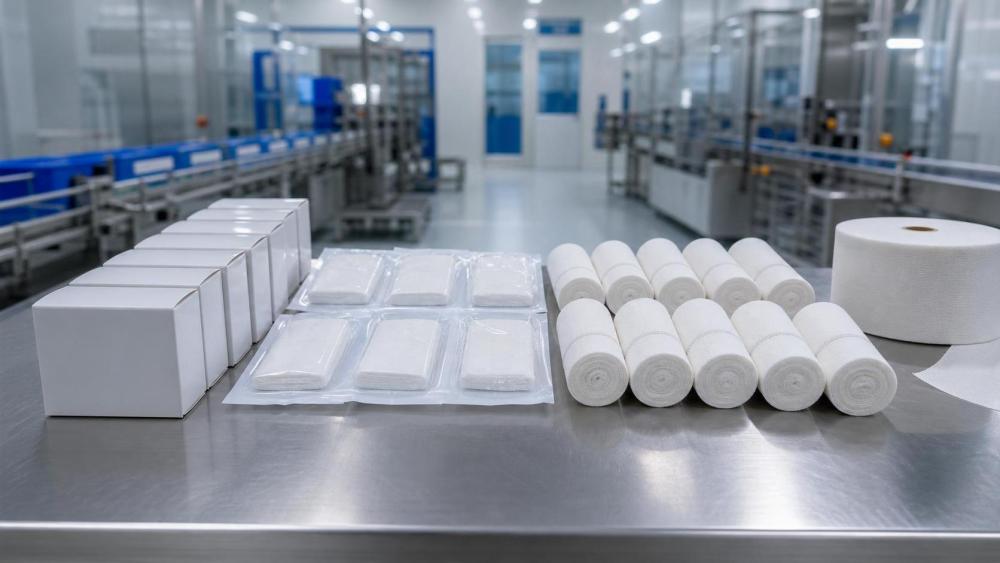
For a bandages manufacturer, quality is not limited to whether the product looks acceptable on delivery. It also includes repeatability across batches, storage stability, documentation accuracy, and predictable performance in use.
In practical terms, buyers usually need bandages that maintain absorbency, softness, tensile strength, adhesion, and skin compatibility within defined tolerances. Any drift can affect treatment routines and inventory confidence.
A reliable bandages manufacturer should therefore be judged on process discipline. The question is not only whether one shipment passes inspection, but whether the same result can be sustained month after month.
Why this matters more in today's healthcare supply environment
Bandages are basic products, yet they sit close to patient care. Hospitals, clinics, distributors, and emergency care providers use them in high volumes, often across departments with different handling conditions.
That makes supply consistency especially important. A low-cost source can become expensive when product complaints, replacement orders, or usage limitations start disrupting routine care.
More attention is also being paid to documentation and traceability. As MTHH often emphasizes in healthcare procurement, the real purchasing risk is not always visible in the unit price.
It may appear later through weak quality systems, incomplete technical files, unstable lead times, or limited after-sales response. Those issues are just as relevant for a bandages manufacturer as for larger medical equipment suppliers.
Core areas to review before approving a bandages manufacturer
A practical review usually works best when it covers materials, production control, compliance, packaging, and supply capability together. Looking at only one area can hide a larger weakness.
Material selection and product construction
Start with the product itself. Different bandage types may use cotton, nonwoven fabric, elastic yarns, synthetic blends, adhesives, absorbent pads, or sterile barrier materials.
The bandages manufacturer should clearly define raw material specifications. Fiber composition, absorbency targets, stretch performance, adhesive formulation, and skin contact safety should not be vague or purely promotional.
It is also useful to ask whether the producer qualifies suppliers formally. Weak incoming material control often leads to inconsistent wound dressing performance later.
Production controls and batch consistency
A capable bandages manufacturer should be able to explain how process parameters are controlled. This may include cutting accuracy, coating uniformity, absorbent pad placement, roll tension, sealing, and sterilization steps when relevant.
What matters here is evidence. Batch records, in-process checks, deviation handling, and final release criteria reveal more than a brochure ever can.
Where production is highly manual, variation risk usually rises. That does not automatically disqualify a supplier, but it makes process supervision and final inspection more important.
Quality management and regulatory readiness
For healthcare procurement, a bandages manufacturer should have a functioning quality management system, not just certificates displayed in marketing files. ISO 13485 is often a strong reference point.
Depending on the market, buyers may also need product registration records, CE-related documentation, FDA-related information, labeling compliance, sterilization validation, biocompatibility data, and shelf-life support.
This is where MTHH's broader compliance perspective becomes relevant. Documentation readiness affects not only import clearance, but also distributor confidence and institutional approval speed.
Questions that help reveal supplier reliability
Good evaluation depends on the questions asked early. A bandages manufacturer with stable systems can usually answer clearly, with records to support the answer.
- What are the critical raw material specifications and tolerance ranges?
- How is lot-to-lot consistency measured and documented?
- Which tests are performed before shipment?
- How are complaints investigated and closed?
- What is the shelf life, and what data supports it?
- Can the supplier maintain output during sudden demand increases?
- Are private label, custom packaging, or regional labeling changes controlled properly?
The quality of these answers often says as much as the answers themselves. Hesitation, inconsistent numbers, or missing records usually signal a need for deeper review.
How different use settings change evaluation priorities
Not every sourcing project needs the same product profile. The right bandages manufacturer for a hospital may differ from the right source for a retail healthcare chain or disaster response stock.
This kind of matching step prevents overbuying on features that are unnecessary, or underestimating requirements that later become compliance issues.
Commercial terms should support quality, not hide risk
A bandages manufacturer may meet technical expectations, yet still create problems through weak commercial structure. Minimum order quantities, carton configuration, reorder flexibility, and claim handling deserve close review.
It is worth comparing not only quoted price, but also the cost of inspection failures, urgent substitutions, excess inventory, and delayed replenishment. In healthcare supply, those indirect costs can be substantial.
Service response matters too. When documentation updates, batch questions, or complaint investigations are slow, internal workflows become harder to manage. A dependable bandages manufacturer supports decisions with timely and consistent communication.
A practical way to compare shortlisted suppliers
Shortlisting becomes more objective when the same review structure is applied to every candidate. That approach aligns well with the MTHH view that procurement quality improves when technical and operational criteria are organized clearly.
- Request product specifications, certificates, test methods, and sample reports.
- Test samples under realistic handling and storage conditions.
- Review packaging quality, label consistency, and carton durability.
- Score quality systems, supply capacity, and documentation support separately.
- Check whether corrective action records show disciplined problem solving.
- Use a trial order before committing to long-volume agreements.
That final step is often underestimated. A controlled trial can reveal actual delivery discipline, communication quality, and batch stability better than early presentations do.
Where the next decision should focus
Evaluating a bandages manufacturer for consistent quality is really an exercise in reducing uncertainty. The strongest choice usually comes from balancing material performance, process control, compliance readiness, and supply support.
A useful next move is to build a comparison sheet around the factors that matter most in your actual use setting. That makes supplier discussions more precise and helps separate acceptable offers from dependable long-term partners.
For organizations working across medical consumables, devices, and infrastructure, the same discipline applies broadly: clear requirements, verified evidence, and scenario-based review lead to better procurement outcomes.