
Singapore HSA Sets IEC 62575:2026 as Sole Dental Imaging Standard
On July 4, 2026, Singapore’s Health Sciences Authority (HSA) introduced a new certification route for dental imaging devices through Notice No. HSA/MD/2026/07. From October 1, 2026, newly registered dental X-ray units, CBCT systems, and intraoral scanners will need to comply with IEC 62575:2026, while IEC 62575:2015 will no longer be accepted. This is worth close attention from device manufacturers, exporters, regulatory teams, and channel partners because it directly affects registration timing and market access planning, especially for Chinese dental equipment suppliers targeting Southeast Asia.
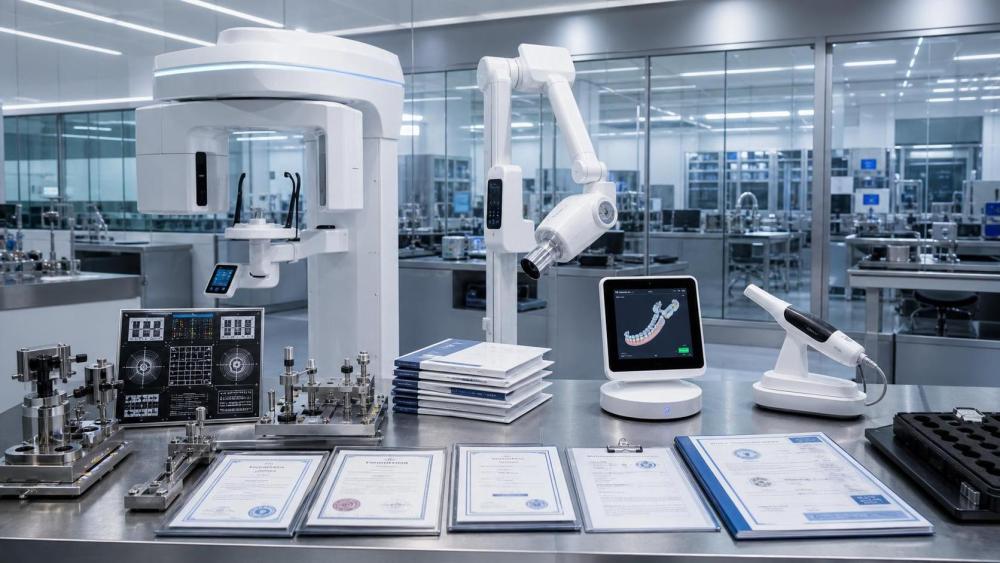
What the New HSA Notice Confirms
The confirmed facts are narrow but commercially significant. HSA issued Notice No. HSA/MD/2026/07 on July 4, 2026 and set October 1, 2026 as the effective date for the new requirement. After that date, all newly registered dental X-ray machines, CBCT devices, and intraoral scanners in Singapore must meet IEC 62575:2026.
The notice also makes clear that IEC 62575:2015 will no longer be accepted for these new registrations. The newly referenced edition includes added provisions covering automatic radiation dose optimization, AI artifact suppression, and DICOM-SR structured reporting.
Where the Pressure Will Be Felt First
Registration and export schedules are the first affected link
From an industry perspective, companies that rely on product registration as a gateway to shipment will likely feel the impact first. The change does not merely update paperwork; it changes the standard that supports new market entry. For exporters, the practical issue is whether products planned for new registration in Singapore can still move forward under the previous compliance basis before October 1, 2026. After that point, registration timing becomes directly tied to readiness under IEC 62575:2026.
Manufacturing and product compliance teams face a narrower window
For device makers, the effect is likely to appear in design verification, technical documentation, and internal compliance review. Because the new edition adds explicit provisions in areas such as dose optimization, AI artifact suppression, and DICOM-SR structured reporting, teams involved in product validation and submission preparation need to assess whether current product configurations and evidence packages align with the revised standard path for Singapore.
Distributors and local channel partners may see changes in launch sequencing
For distributors and channel operators, the main issue is product availability by registration status rather than headline policy language. If a model is intended for new registration after the effective date, launch sequencing, customer commitments, and inventory planning may all need adjustment. What deserves closer attention is whether suppliers can provide a clear compliance timeline that matches Singapore’s new acceptance criteria.
Service providers and buyers need clearer documentation visibility
Regulatory consultants, market access service providers, procurement teams, and downstream buyers may also be affected. Their concern is less about standard interpretation in the abstract and more about document readiness, submission completeness, and delivery certainty. In practice, any uncertainty around standard alignment can flow into quotation timing, procurement decisions, and customer communication.
What Companies Should Track Now
Check which products fall into the new-registration window
Companies should first distinguish between products already registered and products still entering the registration process. The notice, as provided, applies to newly registered dental X-ray units, CBCT systems, and intraoral scanners. That makes the timing of each product’s Singapore filing a practical priority.
Review whether technical files match the new standard basis
Analysis shows that compliance teams should focus on whether current technical files, test evidence, and product descriptions adequately address the newly cited elements in IEC 62575:2026. The key issue is not to assume that documentation prepared around IEC 62575:2015 will remain sufficient for new submissions after October 1, 2026.
Separate policy wording from execution risk
Observably, the official notice sets a clear acceptance rule, but business execution risk will depend on how quickly suppliers can align products and documents to that rule. Companies should avoid treating the notice as a general market signal only; for active projects, it is a registration and delivery planning issue.
Prepare counterpart communication early
Exporters, manufacturers, and channel partners should be ready to explain the effect of the new requirement to customers, distributors, and service providers. The most immediate communication points are likely to involve compliance basis, submission timing, expected registration progress, and whether shipment plans need revision.
Why This Looks Like More Than a Routine Update
Analysis shows that this notice is not just a routine citation change. HSA has set a single accepted standard edition for new registrations in a defined product group and has explicitly closed the path under the previous edition. That gives the update immediate operational weight.
At the same time, it is more appropriate to understand this as both a short-term compliance change and a longer-term regulatory signal. In the short term, it can alter registration pacing for dental imaging products entering Singapore. In the longer term, it signals that market access expectations for these devices are moving toward updated technical and reporting requirements. The industry still needs continued observation because the real business effect will depend on how quickly affected companies align submissions and product documentation.
How the Industry Should Read This Development
The practical meaning of this update is clear: for new dental imaging registrations in Singapore after October 1, 2026, IEC 62575:2026 becomes the only accepted route among the two editions referenced in the provided information. For companies trading into Southeast Asia, especially Chinese dental equipment exporters, this is best understood as a market access timing issue with broader compliance implications.
A neutral reading is more useful than a dramatic one. The notice does not by itself prove wider regional policy convergence, but it does create an immediate checkpoint for companies whose sales plans depend on Singapore registration. Current attention should stay on standard alignment, filing schedules, documentation readiness, and communication across the supply chain.
Basis of This Article and What Still Needs Verification
This article is based on the user-provided news title, event date, and event summary concerning HSA Notice No. HSA/MD/2026/07 and the shift to IEC 62575:2026 for newly registered dental X-ray machines, CBCT systems, and intraoral scanners in Singapore.
For this type of industry update, relevant source categories typically include official regulatory notices, company announcements, industry association updates, authoritative media coverage, and standard-organization documents. The specific official source link was not provided in the input, so continued verification is still necessary. What deserves continued attention is whether further official wording, implementation clarification, or related filing guidance emerges around the October 1, 2026 effective date.
Have questions about the global trade trends discussed here, or planning your expansion and supply chain strategy? Leave a message below and let the trade experts at MTHH guide you.
We respect your privacy. Your information is strictly confidential.
Related News
- How to choose dental radiography for clinic that fits your workflowAug 16, 2026Dental radiography for clinic selection starts with workflow, not specs. Learn how to compare intraoral, panoramic, and CBCT options for better efficiency, fit, and ROI.
- What FDA Cleared Dental Imaging Systems Mean for Daily PracticeJul 16, 2026Dental imaging systems FDA cleared: learn what clearance really means for workflow, compliance, training, and long-term value before choosing the right system for your practice.
- ANVISA Tightens AI Filing Path for Dental ImagingJul 15, 2026ANVISA tightens AI filing path for dental imaging in Brazil. Learn how the new Clinical Equivalence Report rule affects compliance, registrations, shipments, and market access.
- ANVISA Tightens AI Filing Rules for Dental ImagingJul 14, 2026ANVISA tightens AI filing rules for dental imaging in Brazil. Learn how the new requirements affect CBCT, intraoral X-ray, and panoramic system approvals, timelines, and market entry.