
Medical Device Risk Management Audit: Common Findings and Fixes
Why does a medical device risk management audit matter before inspection or market activity?
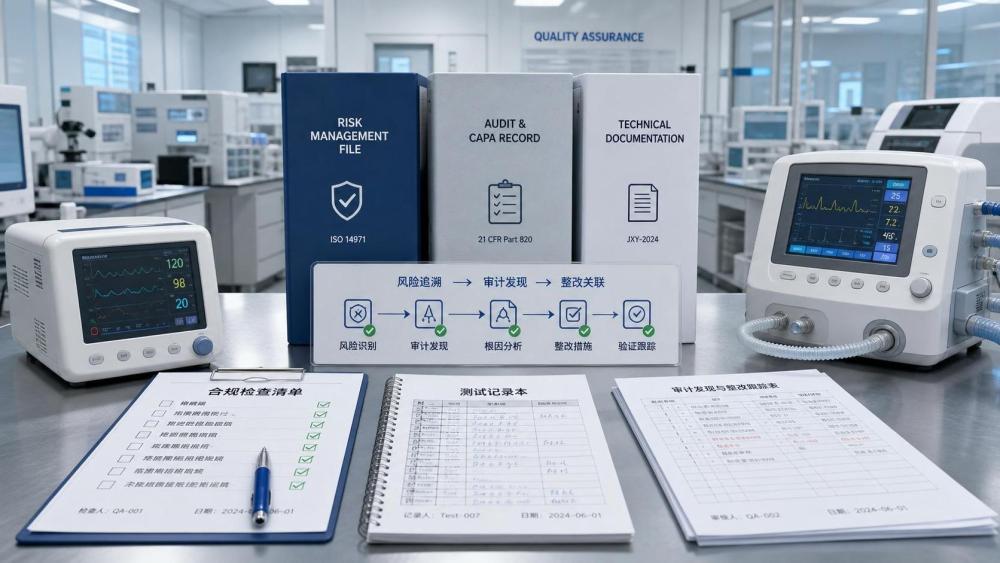
A medical device risk management audit is rarely just a paperwork exercise.
It often exposes weak links between design decisions, safety controls, clinical use, and post-market evidence.
Those gaps may stay hidden for months.
Then they surface during supplier qualification, technical file review, internal audit, or regulatory inspection.
In practical terms, the audit asks a simple question.
Can the organization show, with traceable evidence, that device risks were identified, evaluated, controlled, and reviewed throughout the product lifecycle?
That question applies across imaging systems, IVD instruments, monitors, sterilization equipment, software-driven devices, and hospital infrastructure components.
It also matters beyond manufacturing.
Distribution partners, procurement reviewers, and clinical engineering teams increasingly check documentation maturity before cooperation.
Platforms such as MTHH reflect this broader market reality.
Technical and commercial decisions now depend on safety files, service readiness, and documentation consistency, not only product specifications.
So when a medical device risk management audit finds recurring issues, the real concern is not the finding itself.
The concern is whether the system can prevent the same weakness from returning in the next project, variant, or market submission.
What findings appear most often in a medical device risk management audit?
Most findings are not dramatic.
They usually come from incomplete links between documents, teams, and decisions.
A common example is the hazard list that looks complete on paper, yet misses realistic use scenarios.
This happens with devices used in crowded wards, mobile emergency settings, or reagent-dependent lab workflows.
Another frequent issue is risk control verification without clear acceptance criteria.
Teams may show a test report, but not explain how the test proves the control reduces the intended risk.
Residual risk evaluation is also regularly weak.
The file may conclude that residual risk is acceptable, yet provide no rationale tied to clinical benefit, user training, or foreseeable misuse.
Software-related changes create another audit hotspot.
Alarm logic, interface revisions, cybersecurity updates, or workflow changes may affect risk, but the risk file stays untouched.
Complaint handling and post-market signals are often disconnected too.
Service reports may mention recurring field failures, while the risk management file still presents the issue as remote or already controlled.
The pattern below summarizes the findings auditors raise most often.
When is a finding minor, and when does it signal a larger system problem?
Not every gap has the same weight.
A missing cross-reference may be minor if the evidence exists elsewhere and the logic is still intact.
But repeated documentation breaks usually point to a wider control issue.
A medical device risk management audit becomes more serious when one finding affects multiple processes.
For example, if usability risks are poorly documented, the problem may involve design inputs, validation planning, labeling, and training materials at the same time.
The same is true for infrastructure-dependent devices.
If room conditions, power quality, networking, or sterilization workflows are ignored, the issue may affect installation guidance and real-world performance.
A useful way to judge severity is to ask three questions.
- Does the gap change the understanding of patient or user harm?
- Does it weaken traceability across quality records?
- Could the same weakness affect future variants or submissions?
If the answer is yes to more than one, the finding is rarely isolated.
It usually means the process needs correction, not just the file.
How do you fix medical device risk management audit findings without creating more rework?
The fastest fix is often the least durable one.
Editing the risk management report alone may close a visible gap, but it rarely solves the underlying cause.
A better approach starts with traceability.
Map each finding back to the source records that should support it.
That may include design inputs, FMEA outputs, usability studies, verification reports, complaint trends, software change records, and field service data.
Then check whether the problem is missing evidence, weak rationale, or process drift.
Those require different fixes.
In actual remediation work, these actions tend to be effective:
- Rebuild hazard scenarios around actual use environments, not generic device descriptions.
- Tie every risk control to a verification method and a measurable acceptance basis.
- Review software and labeling changes against the risk file before release approval.
- Use complaint, maintenance, and installation feedback as formal risk review inputs.
- Document residual risk reasoning in business and clinical terms that can be defended later.
This is where structured industry content also helps.
MTHH’s focus on device performance, maintenance conditions, workflow fit, and documentation readiness mirrors the questions that make remediation more precise.
A risk file improves when technical, service, and operational evidence are reviewed together.
Which documents should align if the audit finding involves traceability?
Traceability findings are common because risk management sits in the middle of many records.
If one document changes quietly, the chain can break.
The exact set varies by device type, but certain links should be visible in almost every medical device risk management audit.
When these links are visible, audits move faster.
When they are fragmented, even a technically sound device can appear poorly controlled.
How can teams reduce repeat findings in the next medical device risk management audit?
Repeat findings usually come from routine habits, not one-time mistakes.
The strongest prevention step is to make risk review part of normal change activity.
That means design changes, component substitutions, software updates, installation updates, and field corrections should trigger a documented risk check.
It also helps to review risk files using real operating conditions.
For imaging systems, that may include room constraints and service response assumptions.
For IVD platforms, it may involve reagent dependency, calibration frequency, and throughput pressure.
For patient care devices, alarm behavior, training quality, and maintenance intervals often deserve closer attention.
A concise prevention routine usually includes:
- Periodic sampling of released files against recent changes and complaints.
- Clear ownership for risk file updates after cross-functional decisions.
- Short review checklists tailored to device category and use environment.
- Internal training focused on evidence quality, not just document completion.
In the end, a medical device risk management audit is useful because it shows how safety logic holds up under scrutiny.
The next step is practical.
Review the latest findings, trace them back to source documents, and decide which gaps require document repair, process correction, or stronger field feedback.
That kind of disciplined review improves compliance, supports market readiness, and makes future audits far less reactive.
Have questions about the global trade trends discussed here, or planning your expansion and supply chain strategy? Leave a message below and let the trade experts at MTHH guide you.
We respect your privacy. Your information is strictly confidential.
Related News
- Hong Kong Outlines Medical Device Legislation and Plans for Statutory RegulatorNov 14, 2026Hong Kong medical device legislation could reshape regulatory oversight. Explore the proposed regulator and what businesses should monitor.
- AAMI Issues TIR115 Guidance on Public Cloud Use in Medical DevicesNov 13, 2026AAMI TIR115:2026 guides public cloud use in medical devices. Explore its focus on risk management, supplier assessment and device boundaries.
- How are critical care devices regulated in the United States?Nov 12, 2026Critical care devices face FDA requirements based on intended use and risk. Explore classifications, marketing pathways, and practical compliance checks.
- Hong Kong Drafts Medical Device Bill to Establish Statutory OversightNov 12, 2026Hong Kong's Medical Devices Bill could introduce risk-based statutory oversight. Discover what the proposed framework may mean for suppliers.