
FDA Updates Early Alert on Heraeus Guidewire Recall Over Coating Detachment
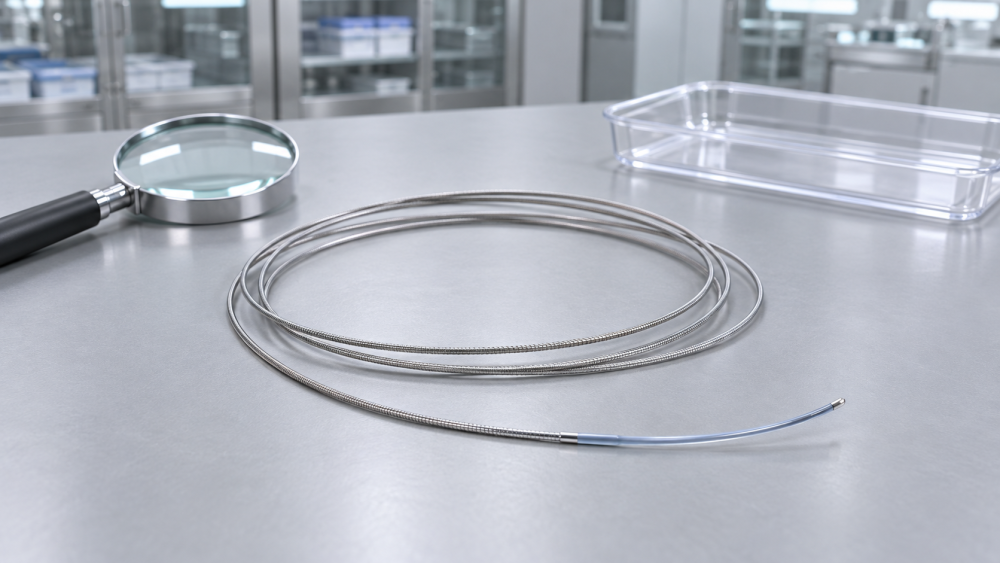
On November 25, 2026, the U.S. Food and Drug Administration (FDA) updated an early alert concerning the recall of certain Heraeus Medical Components vascular guidewires whose coating may shift or detach and enter a patient’s bloodstream. The company had notified all affected customers on November 4 and 5. For medical institutions, manufacturers, distributors and procurement teams, the recall highlights a practical regulatory and supply-chain issue: a safety alert involving a critical interventional consumable can require careful product identification, communication across purchasing channels and assessment of alternatives. The information provided describes a recall and an updated alert; it does not establish a new regulation or industry-wide standard.
What the updated alert says about the guidewires
The FDA updated its early alert on November 25, 2026, in connection with the Heraeus Medical Components recall of certain vascular guidewires. The identified concern is that the guidewire coating may become displaced or detach and enter a patient’s bloodstream.
Heraeus Medical Components notified all affected customers on November 4 and 5, 2026. The products are consumables used in interventional procedures. The information provided does not specify product identifiers, the number of devices involved, the scope of distribution, patient outcomes or the detailed instructions included in the customer notification.
Where the recall could affect the supply chain
Manufacturers and quality teams
From an industry perspective, the alert draws attention to the integrity of a guidewire’s coating during use. Manufacturers of affected products and businesses responsible for related quality activities may need to review how the recalled items are identified and how relevant information moves between quality, customer service and supply teams. Those activities would depend on the actual recall instructions and the organization’s role; the information provided does not establish which specific actions the FDA or Heraeus has requested.
The distinction matters for compliance planning. A recall concerning particular products is a product-specific event, while a new technical requirement would need its own authoritative basis. Companies may nonetheless use the alert as a reason to examine whether their existing product records and communication processes allow them to respond promptly when a coating-related concern is reported.
Distributors and purchasing channels
Analysis suggests that distributors and other intermediaries could face questions about whether products they handle fall within the affected group. The operational issue is not simply whether a supplier’s name appears on a purchase record: the relevant identification criteria must be checked against the actual recall notice. Where goods have passed through several commercial stages, businesses may need to reconcile available purchasing, inventory and customer records to determine what further verification is appropriate.
Delivery discussions could also become more complex if a customer decides to review stock or seek an alternative. Such an effect is possible, not confirmed by the information provided. Buyers and suppliers would benefit from separating verified product status from assumptions about availability, and from recording any agreed changes to orders or delivery plans.
Medical institutions and procurement teams
For hospitals and other medical institutions, the potential concern reaches both clinical supply and purchasing. An institution may need to determine whether any guidewires in its inventory match the affected products and whether the customer notification applies to it. The input confirms that all affected customers were notified, but it does not identify those customers or describe the steps they were asked to take.
Procurement teams may also need to consider continuity of supply for interventional procedures. An alternative guidewire should not be treated as interchangeable solely because it belongs to the same product category. Its suitability for the intended use, compatibility with relevant procedures and availability would require assessment by the institution and the professionals involved. The alert itself does not establish that any particular substitute is suitable or available.
Checks that can support a measured response
Match the notice to actual products
A practical first step is to obtain and review the applicable customer notification and the FDA’s updated alert. Organizations can then compare the identification information in those documents with their own records. The input does not provide model, lot or other identifying details, so it cannot be used on its own to decide whether a specific device is affected.
Where records are incomplete, purchasers and intermediaries may need to seek clarification from the relevant supplier. It may be useful to document what was checked, what remains uncertain and who is responsible for resolving each question. These are suggested controls for handling uncertainty, rather than requirements established by the supplied summary.
Review quality information and communication routes
Businesses involved in supply may wish to confirm that the appropriate quality and technical contacts receive the relevant notice. Depending on their role, they can review the product information and supporting documents available to them, and check whether those materials help answer the questions raised by the alert. Any conclusions about coating performance or product status should rest on verified information, rather than on the general fact that a recall has occurred.
Clear communication can also help prevent a product-specific alert from being interpreted too broadly or too narrowly. A distributor, for example, may need to distinguish between products confirmed as affected, products confirmed as outside the relevant scope and products whose status is still being checked. The available input does not establish the status of any individual inventory item.
Assess alternatives before adjusting supply plans
Procurement and clinical teams could review whether an interruption involving an affected item would create a need for a substitute. That review may cover product specifications, intended use, supplier information and likely delivery timing. The appropriate comparison will depend on the institution’s actual needs and on information obtained from the relevant suppliers.
Any replacement decision should follow the organization’s applicable review process and professional assessment. The summary provides no evidence of a shortage, a confirmed delivery delay or a market-wide change in availability. Planning for those possibilities is a precautionary business response, not a description of an established outcome.
Follow later regulatory and supplier communications
Organizations may need to revisit their assessment if further authoritative information clarifies the affected products, the action requested of customers or other relevant details. Checking later FDA communications and supplier notices can help distinguish an updated interpretation from an assumed change in requirements. If purchasing documents or delivery arrangements are revised in response, the parties involved can check that those revisions reflect the information actually available to them.
An enforcement signal, not evidence of a new rule
At this stage, it is more appropriate to understand the event as a product-specific recall accompanied by an updated regulatory alert. It is also an execution signal: a regulator has communicated a safety concern about an identified group of products, making the accuracy and speed of downstream identification relevant to the organizations involved. The supplied information does not describe a new law, a revised certification requirement or a general ban on vascular guidewires.
Analysis suggests that the longer-term significance will depend on details not included in the input. These include the precise product scope, the instructions communicated to customers, any subsequent FDA updates and the response of affected organizations. If further information changes the understanding of the recall, procurement and quality decisions may need to be reassessed. There is no basis in the supplied summary to predict a broader regulatory change or a particular commercial outcome.
The event also illustrates why the effect of a safety notice can extend beyond the company named in it. Purchasing, stock control and product verification may involve different organizations, each with only part of the relevant information. Whether those activities lead to changes in supply or purchasing in this case remains to be observed.
Keeping product safety and supply decisions connected
The confirmed development is the FDA’s updated early alert on the Heraeus Medical Components recall, following notification of affected customers. The potential for coating material to enter the bloodstream gives the product-identification question a clear safety context, while the use of guidewires in interventional procedures makes supply continuity a relevant planning consideration.
For the industry, the proportionate response is to verify applicability, follow the actual communications and assess alternatives where needed. The recall should be handled as a concrete product-safety event and a reason to review preparedness, while broader changes to standards, certification or market practice remain unconfirmed.
Basis for this report and points to verify
This article is based on the user-provided news title, event dates and event summary. No specific official source link was provided in the input, and the underlying details should continue to be verified. Relevant materials to consult include the FDA’s official alert and the applicable company customer notification.
Further monitoring should focus on any clarification of product identification, customer instructions and subsequent regulatory communications, as well as relevant feedback from affected organizations. Any changes to purchasing documents, delivery arrangements or industry practice should be assessed against verified information as it becomes available.
Have questions about the global trade trends discussed here, or planning your expansion and supply chain strategy? Leave a message below and let the trade experts at MTHH guide you.
We respect your privacy. Your information is strictly confidential.
Related News
- FDA Updates Early Alert on Heraeus Guidewire Recall Over Coating DetachmentNov 26, 2026FDA updates its early alert on the Heraeus guidewire recall over coating detachment. See what procurement and quality teams should verify.
- FDA Issues Early Alert on ICU Medical’s Portex Endotracheal Tube RecallNov 26, 2026FDA alerts hospitals to ICU Medical’s Portex endotracheal tube recall. Learn what to check in your inventory and how to plan for alternative supplies.
- How to assess a medical dressings distributor's supply reliabilityNov 23, 2026Medical dressings distributor reliability starts with evidence. Discover how to verify stock, delivery performance, traceability, and shortage plans.
- How to verify CE marking on rehabilitation consumables in GermanyNov 13, 2026Buying rehabilitation consumables in Germany? Learn how to verify CE marking, check MDR documents and spot supplier red flags before ordering.