
Disposable Exam Gloves: Nitrile vs Vinyl for Daily Clinical Use
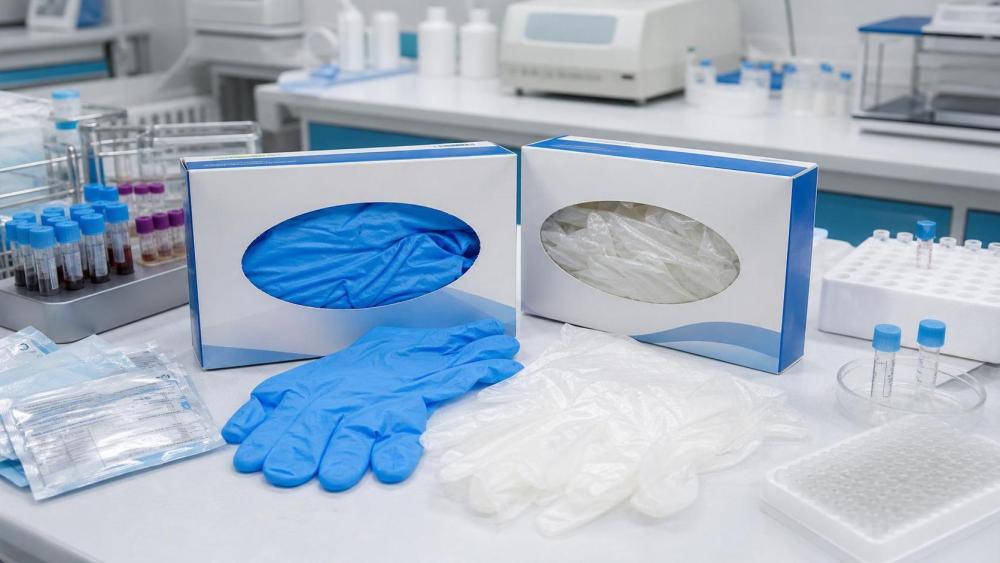
Disposable exam gloves are used in almost every clinical routine. They seem simple, but the wrong choice can affect protection, comfort, hand fatigue, and supply cost.
For daily tasks, the main comparison usually comes down to nitrile and vinyl. Both are common disposable exam gloves, yet they behave very differently during real work.
This matters in outpatient rooms, wards, laboratories, triage stations, and treatment areas. A glove is not only a barrier. It also shapes grip, speed, confidence, and compliance.
In practice, the better option depends on contact risk, task duration, touch sensitivity, and replacement frequency. Price matters, but daily usability matters just as much.
Why the Material Choice Matters
Disposable exam gloves are part of infection control, but they also support workflow. If a glove tears easily or feels awkward, staff may change pairs more often or lose efficiency.
Nitrile is a synthetic rubber material. Vinyl is usually made from PVC. That basic material difference drives performance in stretch, puncture resistance, and fit.
From a selection standpoint, one glove is not automatically better in every setting. The more useful question is where each type performs well, and where it creates risk.
Nitrile at a Glance
Nitrile disposable exam gloves are known for stronger barrier performance. They usually provide better puncture resistance, better elasticity, and a closer hand fit than vinyl.
That closer fit often improves tactile control. For tasks involving small instruments, specimen handling, or repeated hand movement, nitrile usually feels more secure and more stable.
Vinyl at a Glance
Vinyl disposable exam gloves are generally lower in cost. They are often selected for short, low-risk activities where gloves are changed frequently and durability is less critical.
However, vinyl tends to fit more loosely. It may feel less responsive during detailed work, and its resistance to tearing or stretching is usually more limited.
Nitrile vs Vinyl: Key Performance Differences
When comparing disposable exam gloves, clinical teams usually focus on five points: protection, comfort, dexterity, durability, and operating cost. These are the areas where the gap becomes clear.
1. Barrier Protection
Nitrile usually offers stronger protection against punctures and microtears. This makes it more reliable for blood contact, body fluids, specimen handling, and tasks with moderate contamination risk.
Vinyl is more suitable for low-risk contact. It can work for non-invasive, short-duration activities, but it is less reassuring when the exposure profile is uncertain.
2. Fit and Tactile Sensitivity
Nitrile disposable exam gloves usually conform better to the hand. That helps with palpation, device setup, tube handling, labeling, and opening sterile packaging.
Vinyl gloves often feel looser at the fingers. For quick routine use, that may be acceptable. For precision work, it can reduce speed and increase the need for readjustment.
3. Durability During Use
Nitrile performs better when the task lasts longer or involves repeated motion. It usually stretches more evenly and is less likely to fail during patient care or specimen processing.
Vinyl is often acceptable for short tasks, but frequent pulling, friction, or contact with edges may cause earlier failure. That can drive up change frequency during busy shifts.
4. Comfort Over a Shift
A glove that performs well on paper may still feel tiring after hours of use. Nitrile often gives a more glove-like fit, which many operators prefer for longer wear periods.
Vinyl can feel roomier and easier to don for some users. Still, that looser profile may become distracting when hands are active throughout the day.
5. Cost in Real Use
Vinyl often wins on unit price. But glove selection should not stop there. Real-use cost includes replacement rate, task suitability, waste, and possible workflow interruptions.
If a cheaper glove needs to be changed more often, total value may narrow quickly. In many departments, nitrile disposable exam gloves deliver better operational value despite higher purchase price.
Best Use Cases for Each Type
Selection becomes easier when glove choice is tied to task level. Instead of using one rule everywhere, match disposable exam gloves to the actual work.
Where Nitrile Usually Fits Better
- Blood draw, specimen collection, and laboratory handling
- Wound care and dressing changes
- Emergency, ICU, and high-contact patient care
- Tasks requiring better grip and finger control
- Longer procedures with repeated hand movement
Where Vinyl May Be Acceptable
- Brief, low-risk, non-invasive contact
- Basic housekeeping support in clinical areas
- Short administrative handling with contamination control needs
- High-volume tasks where gloves are changed very frequently
Even here, the local protocol still matters. If there is any meaningful chance of fluid exposure or glove stress, nitrile is usually the safer decision.
What to Check Before Choosing Disposable Exam Gloves
In actual procurement or department-level selection, glove choice should be based on use conditions, not assumptions. A short review can prevent recurring complaints later.
Review These Points First
- Task risk level: low contact, fluid contact, or uncertain exposure.
- Wear time: short changes or longer continuous use.
- Hand movement: basic handling or precision-dependent work.
- Breakage history: tearing, poor fit, or slippage complaints.
- Supply stability: sizes, reorder speed, and stock consistency.
- Total cost: not just price per box, but use efficiency.
This is where many teams change their view. A glove that looks economical in a quotation may be less efficient in a real clinical environment.
A Practical Comparison Table
Common Mistakes in Glove Selection
One common mistake is treating all disposable exam gloves as interchangeable. They are not. Material choice changes how the glove behaves under pressure, moisture, and repeated movement.
Another mistake is buying only by box price. That can work for non-clinical items, but glove performance affects safety and work continuity in a direct way.
A third issue is ignoring user feedback. If staff report tearing, poor touch sensitivity, or hand fatigue, that is operational data, not just personal preference.
Sizing also deserves attention. Even strong nitrile disposable exam gloves can underperform if the fit is too tight or too loose for actual users.
Final Decision: Which Disposable Exam Gloves Make More Sense?
For most routine clinical settings, nitrile is the more dependable choice. It offers better protection, better fit, and better durability for the demands of daily patient-facing work.
Vinyl still has a place, especially in low-risk, short-contact tasks where budget pressure and rapid glove turnover are important. But its limits should be understood clearly.
The most practical approach is not choosing one material for every room. It is creating a simple glove-use matrix based on task type, exposure risk, and wear duration.
When disposable exam gloves are matched to real workflow, teams usually see fewer interruptions, more consistent compliance, and better value over time. That is the decision standard that matters most.