
Urine Analyzers Price in 2026: Why the Quote Rarely Tells the Full Story
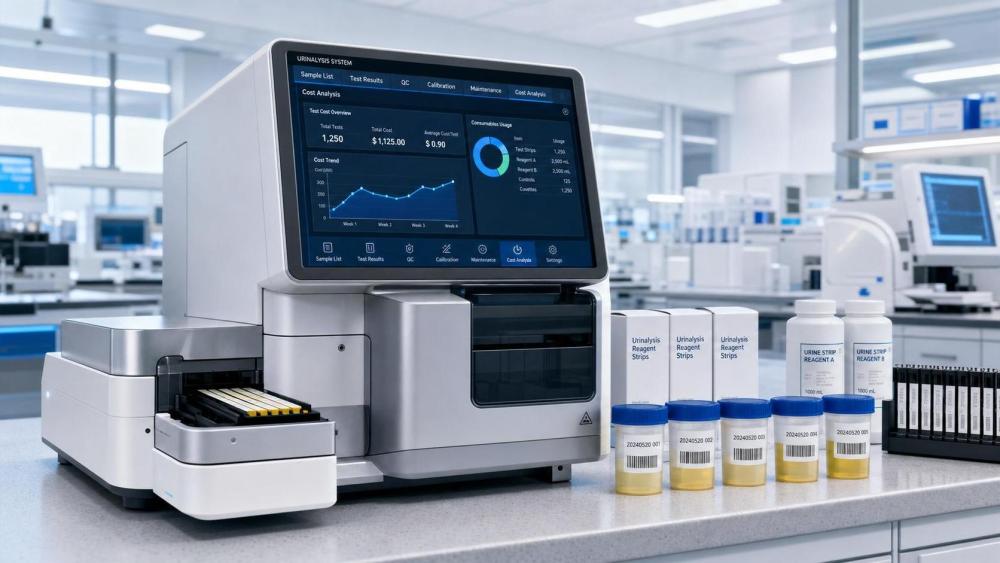
Urine analyzers price remains a high-interest topic in 2026, but the device quote is only the starting point.
In laboratory purchasing, a lower upfront number can still lead to a higher operating burden over three to five years.
That is especially true for urine analyzers, where reagent format, strip compatibility, service access, and workflow design affect the real budget.
A practical review usually asks a better question than “What is the urine analyzers price?”
It asks what drives total cost, what can disrupt testing, and which models fit the expected workload without creating avoidable waste.
Across medical technology sourcing, structured comparison matters.
That is why industry platforms such as MTHH focus on both technical and commercial details, not price tags alone.
So what usually sits behind a urine analyzers price range?
The widest cost differences often come from analyzer type.
A basic semi-automatic strip reader will usually cost much less than a fully automated urine chemistry and sediment platform.
That sounds obvious, but the gap is not only about hardware complexity.
It also reflects internal optics, throughput stability, software functions, barcode handling, sample loading design, and data connectivity.
More advanced systems may include:
- automatic strip feeding and sample identification
- sediment imaging or particle recognition modules
- LIS or middleware integration support
- built-in quality control management
- multi-user access and audit trail functions
In actual purchasing rounds, urine analyzers price is often shaped by the workflow the instrument is expected to support.
A clinic with moderate testing volume may not need advanced automation.
A hospital laboratory processing large daily batches may see labor savings that justify a higher acquisition cost.
This is where cost comparison becomes more useful than sticker comparison.
Is the cheapest model actually the most expensive over time?
Quite often, yes.
The most common mistake is to compare urine analyzers price without mapping the recurring costs attached to each platform.
These recurring items can outweigh the instrument price surprisingly quickly.
The main cost areas usually include consumables, calibration materials, quality control products, preventive maintenance, and downtime risk.
A low-cost analyzer may lock the site into proprietary strips with higher per-test pricing.
Another model may require more frequent service visits or produce more repeated tests because of inconsistent strip handling.
The table below helps turn broad questions into a practical review framework.
When teams study urine analyzers price through this lens, the discussion becomes more realistic.
It also matches how other IVD systems are evaluated across hospital and distribution channels.
Which specifications matter most before comparing quotations?
Not every specification deserves equal weight.
More useful comparisons start with the testing environment, then move to performance and support.
A quote looks attractive only if the analyzer matches the intended operating conditions.
The following checkpoints usually reveal whether one urine analyzers price level is justified over another:
- throughput per hour under normal workflow, not maximum marketing conditions
- supported strip parameters and clinical reporting needs
- sample identification, barcode reading, and result traceability
- daily maintenance effort and cleaning requirements
- quality control routine and calibration frequency
- LIS compatibility and interface responsibility
- installation footprint, power conditions, and operator training needs
In many cases, the strongest long-term value comes from reliability rather than headline speed.
An analyzer that runs steadily with predictable strip consumption can outperform a faster unit that requires frequent intervention.
This is consistent with how MTHH presents medical equipment decisions across laboratory systems.
Performance, documentation, service, and workflow fit all belong in the same review.
What cost surprises appear after installation?
Several of the most expensive surprises do not appear in the first quotation.
A common one is software integration.
The analyzer may support connectivity in principle, but the interface license, configuration, validation, or third-party middleware may be billed separately.
Another overlooked area is stock planning.
If strip shelf life is short or local supply is unstable, emergency purchases can raise the effective urine analyzers price over time.
Service geography also matters.
An analyzer with limited regional support may cost less initially, yet create delays when parts fail or preventive maintenance is due.
A few pre-award questions help reduce these risks:
- Are all mandatory accessories included in the quoted configuration?
- Is operator training on-site, remote, or billed as an extra service?
- What is excluded from warranty coverage?
- How long are consumables guaranteed to remain available?
- Who handles software updates and validation records?
These questions often do more to control cost than negotiating a small discount on the base unit.
How should different sites judge urine analyzers price against workload?
The answer depends less on organization size and more on testing pattern.
Some sites run steady daily volumes.
Others face concentrated morning peaks, mixed sample sources, or tighter turnaround expectations.
That changes what a reasonable urine analyzers price looks like.
A simpler system may be enough when test counts are low and reporting demands are straightforward.
A higher-priced automated platform can make sense when labor is constrained, traceability is strict, or repeat handling is costly.
A useful decision habit is to compare three figures together:
- projected annual test volume
- all-in cost per reportable result
- service resilience during busy periods
This avoids buying either too little capacity or too much unused automation.
In broader healthcare procurement, that balance is often where the strongest value is found.
Before asking for final offers, what should be on the checklist?
By the time final quotations are requested, the conversation should be narrower and more precise.
That is the point where urine analyzers price becomes meaningful, because the compared offers are closer in scope.
A disciplined checklist usually includes configuration, consumables, validation, connectivity, documentation, and after-sales terms.
It is also wise to request a clear breakdown rather than one bundled number.
That breakdown should cover instrument price, starter consumables, annual strip estimate, maintenance obligations, software items, and training scope.
For many buyers, structured information from healthcare intelligence sources helps sharpen these comparison points before supplier meetings.
MTHH is useful in that context because it frames equipment decisions around performance, support, compliance, and long-term operating value.
In simple terms, a good 2026 buying decision is not about finding the lowest urine analyzers price.
It is about matching the analyzer to the real workload, then confirming what the quotation includes, what it excludes, and what it will cost to keep the system dependable.
The next practical step is to define testing volume, list required functions, map recurring consumable use, and compare service commitments side by side.
That process creates better questions, cleaner offers, and fewer surprises after installation.