
On October 1, 2026, Singapore’s Health Sciences Authority (HSA) moved from notice to enforcement on updated radiation safety certification for dental imaging devices. The change matters directly to manufacturers, registration teams, distributors, testing partners, and dental equipment buyers involved with new registrations of CBCT systems, panoramic units, and intraoral X-ray machines, because market access now depends on full testing under IEC 62575:2026 and submission of original reports from HSA-recognized laboratories.
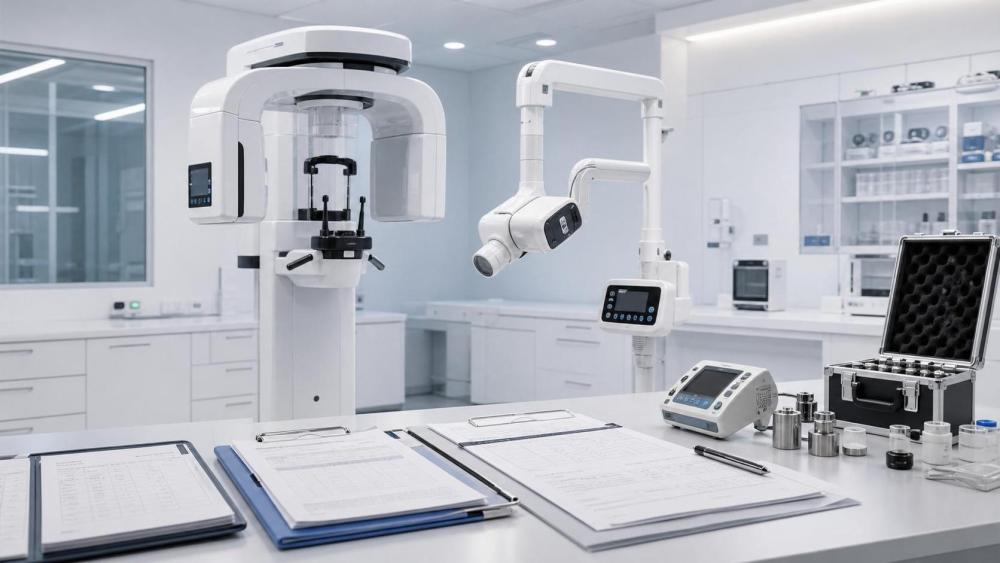
What the HSA Notice Requires
According to Technical Notice TN-DENT-2026-03, issued by HSA on July 2, 2026, all newly registered dental CBCT systems, panoramic machines, and intraoral X-ray devices must, from October 1, 2026, complete full testing under IEC 62575:2026, the standard covering radiation protection and performance testing for dental digital X-ray equipment.
The notice also states that applicants must submit the original test report issued by a laboratory recognized by HSA. At the same time, certification based on IEC 62575:2017 ceased to be valid after September 30, 2026.
Where the Immediate Pressure Falls
For device manufacturers and registration holders
From an industry perspective, this group is the most directly affected because the rule applies to new registrations. The practical impact is concentrated in product compliance preparation, testing file readiness, and registration timing. What deserves closer attention is whether existing certification files for targeted products are aligned with the 2026 version of the standard and whether the required original reports are already available from HSA-recognized laboratories.
For distributors and market-entry partners
Distributors and local commercial partners may be affected through product launch schedules and document coordination. Even when a device is commercially ready, registration cannot move forward if the supporting test package does not match the new requirement. The key business issue here is less about sales messaging and more about whether documentation and registration sequencing remain workable after the September 30 cutoff for the 2017 version.
For testing and compliance service providers
Analysis shows that laboratories and regulatory support providers sit at an important operational point in this change. Because HSA now requires original reports from recognized laboratories, the compliance workflow becomes more document-specific. The main area to watch is whether applicants and service partners can align on the exact form, source, and completeness of the submission package.
For dental clinics and procurement teams
End users are not the direct target of the notice, but they may still feel the effect through procurement planning and delivery timing for newly registered equipment. Observably, buyers considering new CBCT, panoramic, or intraoral X-ray systems in Singapore will need to pay closer attention to whether suppliers can support compliant registration under IEC 62575:2026 rather than relying on older certification references.
What Companies Should Check Now
Whether affected models are tied to new registration plans
The notice is specific to new registrations, so companies should first identify which CBCT, panoramic, and intraoral X-ray models are scheduled for registration or market entry after October 1, 2026. That distinction matters for prioritizing compliance work and avoiding confusion between legacy market presence and new application requirements.
Whether test evidence matches the new standard version
What deserves closer attention is not only the existence of prior testing, but whether testing has been completed in full under IEC 62575:2026. A file built around IEC 62575:2017 is no longer sufficient for new registrations after the cutoff date stated in the notice.
Whether laboratory recognition and report format are aligned
The requirement to submit original reports from HSA-recognized laboratories introduces a documentation control issue as well as a testing issue. Companies should therefore verify both the laboratory status and the availability of original reports early in the submission process, especially where multiple parties share responsibility for technical files.
Whether customer and channel communication reflects the rule change
For businesses already discussing launches, tenders, or procurement with local partners and buyers, the practical task is to keep communications precise. The relevant point is not a general statement about compliance, but whether the product’s new registration package can meet the IEC 62575:2026 and recognized-laboratory report requirements now in force.
Why This Reads as More Than a Routine Update
Analysis shows that this is not just a wording revision around standards references. HSA has linked new registration eligibility to the latest IEC 62575:2026 version and has also specified the evidence format by requiring original reports from recognized laboratories. That combination suggests a more exacting approach to both technical conformity and submission integrity.
At the same time, it is more appropriate to understand this as a clear regulatory implementation step rather than a complete market outcome. The notice establishes the rule for new registrations, but its wider commercial effect will depend on how manufacturers, registration holders, and channel partners adapt their testing and document workflows in practice.
How the Market Should Read the Signal
From an industry perspective, the immediate meaning of this update is straightforward: for new dental imaging registrations in Singapore, older IEC 62575:2017 certification is no longer enough, and compliance now turns on full IEC 62575:2026 testing plus original reports from HSA-recognized laboratories. The broader significance is as a regulatory quality signal, but the most rational current reading is still operational rather than speculative. This is best understood as an active compliance threshold with near-term execution consequences, while its longer-term market effects still require observation.
Basis of This Article
This article is based on the user-provided news title, event date, and event summary concerning Singapore HSA Technical Notice TN-DENT-2026-03, the October 1, 2026 implementation date, the IEC 62575:2026 full-testing requirement, the need for original reports from HSA-recognized laboratories, and the September 30, 2026 expiry of IEC 62575:2017 certification for this purpose.
For developments of this type, commonly relevant source categories include official regulatory notices, company compliance disclosures, industry association updates, standards-organization documents, and reporting by authoritative trade media. A specific official source link was not provided in the input, so the underlying notice text and any later clarification should continue to be verified. Continued attention should focus on whether HSA issues further wording, implementation guidance, or related compliance interpretation affecting new dental imaging registrations.