
Device Reliability Management: Key Metrics That Reduce Downtime
Device Reliability Management: Key Metrics That Reduce Downtime
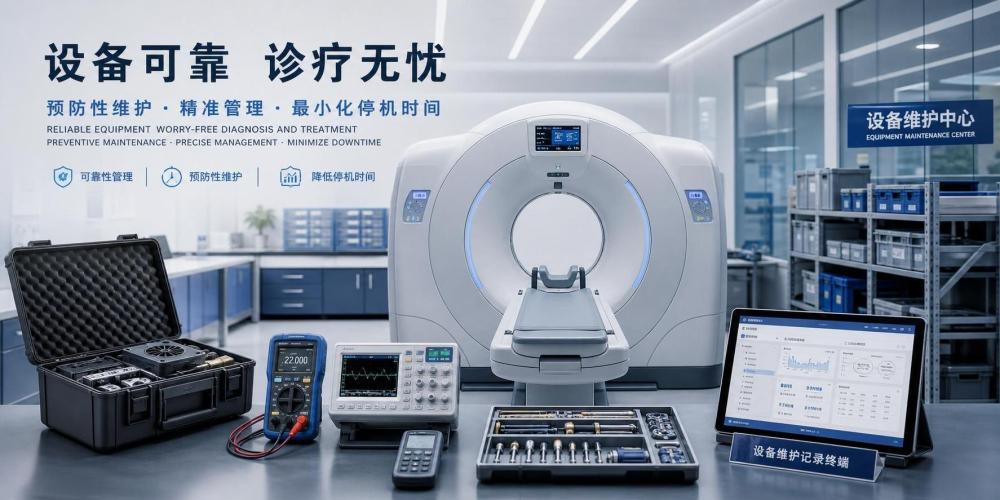
For after-sales maintenance teams, device reliability management is a daily operating discipline.
It connects service quality, spare parts planning, labor efficiency, and clinical continuity.
In healthcare settings, a delayed repair can affect diagnosis, treatment schedules, and patient flow.
That is why device reliability management should be measured, not guessed.
Strong teams do not only react to faults.
They track patterns, compare assets, and use evidence to prevent avoidable downtime.
For medical equipment, reliability is rarely about one number alone.
It depends on failure frequency, repair duration, maintenance compliance, and operating conditions.
This also means the most useful reliability metrics are the ones that support action.
A good dashboard should help teams decide what to inspect, replace, retrain, or escalate.
Why Device Reliability Management Matters in Healthcare Service
Medical devices operate in conditions where downtime has direct operational consequences.
An imaging system outage can delay appointments for hours or days.
A failed infusion pump or monitor can force urgent equipment substitution.
In laboratory environments, unreliable analyzers can slow sample turnaround and overload staff.
From a service perspective, device reliability management reduces these disruptions in a structured way.
It helps separate isolated incidents from recurring failure modes.
It also helps identify whether the main issue is hardware weakness, user behavior, software instability, or service delay.
For platforms like MTHH, this topic matters because procurement and maintenance are tightly linked.
A device with low purchase cost may still perform poorly over its full operating life.
When service teams document reliability clearly, buyers can judge total value more accurately.
The Core Metrics That Reveal Reliability Performance
Effective device reliability management starts with a focused metric set.
Too many indicators create noise.
Too few leave blind spots.
1. Mean Time Between Failures
MTBF shows how long a device typically runs before a failure occurs.
It is one of the most common indicators in device reliability management.
A declining MTBF often signals wear, unstable usage conditions, or incomplete preventive maintenance.
2. Mean Time To Repair
MTTR measures average repair duration from fault confirmation to restoration.
This metric reflects technician readiness, spare parts availability, and troubleshooting efficiency.
If MTTR stays high, downtime remains high even when failures are infrequent.
3. Uptime Percentage
Uptime shows the proportion of scheduled time when equipment remains operational.
In clinical service, this is often the clearest measure for management teams.
A high uptime target should still be paired with failure analysis.
Otherwise, short recurring outages may be hidden inside an acceptable average.
4. Failure Rate by Device Type
This metric compares how often faults appear across similar assets.
It is useful when managing mixed fleets across wards, labs, or imaging departments.
When one model underperforms, device reliability management can move from suspicion to evidence.
5. Preventive Maintenance Compliance
Scheduled maintenance only works when completion rates stay high and records stay accurate.
Low compliance usually leads to more emergency repairs later.
In device reliability management, this metric links planning discipline with failure prevention.
6. Repeat Failure Ratio
Repeat failures reveal whether repairs are solving root causes or only restoring short-term function.
A high repeat ratio often points to weak troubleshooting, poor parts quality, or unresolved user errors.
How to Read These Metrics in Real Operating Contexts
The same number can mean different things in different service environments.
That is why device reliability management should always include context.
For example, a portable ultrasound unit may show more faults than a stationary system.
That does not automatically mean it is worse designed.
It may simply face heavier movement, battery cycling, and wider operator variation.
More meaningful signals appear when reliability data is segmented by these factors:
- Device model and software version
- Department or installation site
- Age of equipment and service history
- Fault category, such as power, sensor, interface, or calibration
- Operator usage pattern and training status
In actual service work, this level of detail improves decision quality.
It helps teams decide whether to replace parts, adjust maintenance intervals, or request manufacturer support.
A Practical Table for Device Reliability Management Reviews
A simple review table can make reliability discussions faster and more objective.
Common Gaps That Weaken Reliability Results
Many teams collect data but still struggle to improve downtime.
Usually, the problem is not the metric itself.
The problem is inconsistent execution around device reliability management.
The most common gaps include:
- Fault descriptions are too vague for meaningful trend analysis.
- Downtime clocks start and stop at inconsistent points.
- Preventive maintenance records are closed without technical verification.
- Service teams track repairs, but not repeat calls by failure mode.
- Spare part delays are mixed with technical repair time.
- User-related issues are logged as hardware failures.
These issues distort reliability conclusions.
More importantly, they lead to weak maintenance decisions and repeated downtime events.
How to Build a More Actionable Reliability Process
Device reliability management works best when reporting and action stay connected.
That requires a process that is simple enough to maintain every month.
- Define clear failure categories across all supported device groups.
- Standardize downtime calculation from first outage to verified return to use.
- Separate logistics delay from technical repair time in reports.
- Review monthly trends by model, department, and age band.
- Flag repeated failures for root cause review within a fixed response period.
- Share major findings with procurement and equipment planning teams.
This last step is often missed.
However, it is where device reliability management creates long-term business value.
Reliable field data can influence supplier evaluation, contract terms, and replacement planning.
Turning Reliability Data Into Lower Downtime
The goal of device reliability management is not reporting for its own sake.
The goal is to keep essential equipment available, stable, and safe.
When teams track MTBF, MTTR, uptime, PM compliance, and repeat failures together, the picture becomes much clearer.
They can see where downtime starts, why it repeats, and how to reduce it.
For healthcare organizations, that creates practical gains across service operations.
It supports better equipment availability, more predictable maintenance workloads, and stronger lifecycle decisions.
In a market where clinical continuity matters every day, better device reliability management is a direct path to lower downtime.
A practical next step is to audit current service records and confirm whether the metrics already being tracked can truly guide action.
Have questions about the global trade trends discussed here, or planning your expansion and supply chain strategy? Leave a message below and let the trade experts at MTHH guide you.
We respect your privacy. Your information is strictly confidential.
Related News
- Hong Kong Outlines Medical Device Legislation and Plans for Statutory RegulatorNov 14, 2026Hong Kong medical device legislation could reshape regulatory oversight. Explore the proposed regulator and what businesses should monitor.
- AAMI Issues TIR115 Guidance on Public Cloud Use in Medical DevicesNov 13, 2026AAMI TIR115:2026 guides public cloud use in medical devices. Explore its focus on risk management, supplier assessment and device boundaries.
- How are critical care devices regulated in the United States?Nov 12, 2026Critical care devices face FDA requirements based on intended use and risk. Explore classifications, marketing pathways, and practical compliance checks.
- Hong Kong Drafts Medical Device Bill to Establish Statutory OversightNov 12, 2026Hong Kong's Medical Devices Bill could introduce risk-based statutory oversight. Discover what the proposed framework may mean for suppliers.