
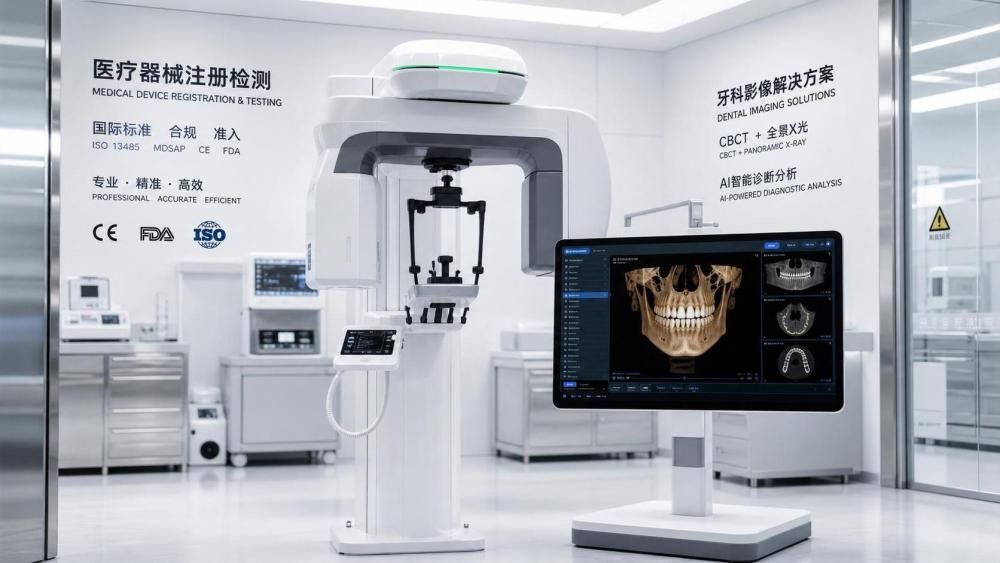
On July 13, 2026, Brazil’s health regulator ANVISA introduced an emergency adjustment to the registration route for dental imaging devices with AI-assisted diagnostic functions. The change directly affects dental CBCT systems, intraoral X-ray units, and digital panoramic systems, and is especially relevant to manufacturers, exporters, regulatory teams, distributors, and buyers following market access timelines for Brazil. The reason this matters is practical: the new requirement shifts AI from a supporting claim to a separately documented review item, with likely consequences for filing preparation and launch scheduling.
What the New Temporary Instruction Requires
According to the information provided, ANVISA issued Temporary Instruction RDC No. 48/2026 on July 13, 2026. From that date onward, any dental CBCT, intraoral X-ray device, or digital panoramic system that includes AI-assisted diagnostic functionality must submit a separate clinical equivalence study report for the AI module.
The same information states that this report must include either Brazilian local clinical data or validation from a recognized third party. ANVISA will no longer accept a filing approach based only on a declaration referencing ISO/IEC 23053 for the AI component.
The adjustment is described as one that significantly extends the registration cycle and affects the market-entry pace of Chinese dental imaging equipment exports to Brazil.
Where the Immediate Pressure Is Likely to Appear
Export and market access teams face a longer pre-approval path
From an industry perspective, companies exporting dental imaging equipment to Brazil may be affected first at the registration planning stage. The key issue is that AI-related documentation now requires a separate clinical equivalence package, which can alter filing readiness, product sequencing, and expected approval timing.
Manufacturers may need to revisit product registration scope
Analysis shows that manufacturers of dental CBCT, intraoral X-ray, and digital panoramic systems with AI-assisted diagnostic functions are likely to feel the impact in product classification, dossier assembly, and technical documentation review. What deserves closer attention is whether a device’s AI module had previously been treated as part of the overall product narrative rather than as a distinct evidence item in the registration path.
Distributors and channel partners may need to adjust delivery expectations
Observably, distributors and local commercial partners may be affected through launch timing, inventory planning, and customer communication. If registration timelines extend, the pressure is likely to appear in sales forecasting, rollout schedules, and discussions with clinics or procurement teams that are waiting for product availability.
Buyers and end-use institutions may see timing uncertainty rather than a product change
For procurement-side stakeholders, the immediate impact is less about device specifications and more about access timing. Analysis shows that buyers watching Brazilian approval progress may need to pay closer attention to whether AI-enabled models and non-AI configurations move through registration at different speeds.
What Companies Should Track Now
Watch for any further ANVISA clarification
The current instruction sets the immediate requirement, but companies should closely monitor whether ANVISA later clarifies the acceptable form of Brazilian local clinical data, the scope of recognized third-party validation, and any implementation details tied to the AI module review.
Check which product lines are directly exposed
What deserves closer attention is product-by-product exposure. Businesses should identify which dental CBCT, intraoral X-ray, and digital panoramic systems include AI-assisted diagnostic functions and therefore fall within the separate reporting requirement described in the provided information.
Separate policy language from filing execution risk
Analysis shows that the practical burden may depend not only on the text of the instruction but also on how dossiers are reviewed in implementation. Companies should distinguish between the formal rule change and the operational question of how quickly they can assemble compliant AI evidence for active or planned filings.
Prepare customer and partner communication around timing
For exporters, distributors, and account teams, a near-term priority is expectation management. The information provided already indicates a longer registration cycle, so delivery planning, contract discussions, and launch communication may need to reflect additional review time where AI-enabled products are involved.
How This Change May Be Best Understood
Observably, this development should be read as more than a wording adjustment in a filing checklist. It signals that, for the affected dental imaging categories, AI-assisted diagnostic functionality is being examined on a more standalone evidentiary basis rather than through a general standards declaration alone.
At the same time, it is more appropriate to understand this as a regulatory signal with immediate operational consequences, rather than as a fully settled long-term market outcome. The confirmed facts point to a stricter submission path and a slower registration rhythm, but the broader commercial effect will still depend on how companies adapt their evidence packages and how implementation unfolds in practice.
Why the Industry Should Treat This as an Active Development
For the dental imaging sector, the significance of this update lies in its direct effect on registration preparation for AI-enabled products entering Brazil. The current information supports a cautious reading: this is not merely a short-lived headline, because it changes what must be submitted now, but it is also not a basis for sweeping conclusions about the entire market without further regulatory follow-through.
It is more appropriate to understand this as an active industry development that deserves continued monitoring, particularly for businesses linking AI-enabled dental imaging exports to Brazilian approval schedules.
Basis of This Article
This article is based on the user-provided news title, event date, and event summary concerning ANVISA’s July 13, 2026 temporary instruction on registration requirements for AI-enabled dental imaging devices in Brazil.
For this type of industry update, relevant source categories typically include official regulatory notices, company announcements, industry association updates, authoritative media reporting, and standard-related documentation. The specific official source link was not provided in the input, so further verification remains necessary. Continued attention should focus on any additional ANVISA clarification and on how the separate clinical equivalence requirement for AI modules is applied in real registration practice.