
On July 9, 2026, the European Commission updated MDR implementation guidance in a way that directly affects rehabilitation devices with AI-assisted decision functions. For new CE registration applications submitted from that date onward, affected products will need an additional clinical algorithm validation report issued by an ISO/IEC 17025 accredited laboratory. For manufacturers, exporters, certification teams, testing partners, and buyers involved in EU-bound rehabilitation equipment, this is not just a wording change; it signals a higher compliance threshold and a likely longer path to market access.
What Changed in the MDR Filing Baseline
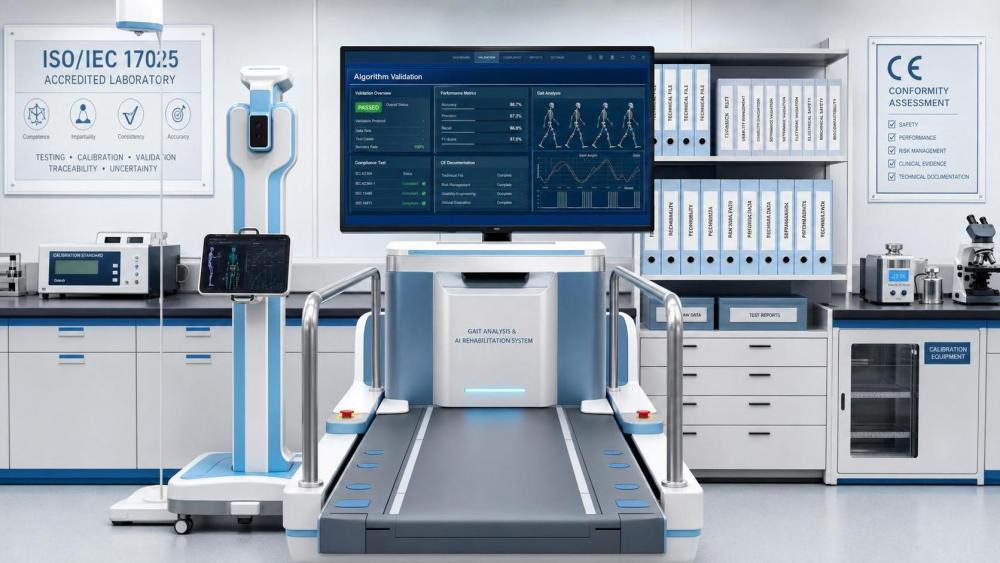
The confirmed update is tied to MDR Annex XVI and was issued on July 9, 2026 through revised implementation guidance from the European Commission. According to the provided information, the applicable scope now extends to rehabilitation devices that include AI-assisted decision functionality, with examples including intelligent gait analysis systems and neurofeedback training devices.
The same update also adds a new filing expectation for CE applications submitted on or after July 9, 2026. Those new applications must include a clinical algorithm validation report issued by a laboratory accredited to ISO/IEC 17025. The report is required to cover algorithm sensitivity and specificity of at least 92%, along with real-world scenario testing involving at least 500 cases.
The information provided further indicates that this change materially raises both the technical entry requirements and the registration timeline for Chinese rehabilitation equipment exported to the EU.
Where the Pressure Will Appear First
Export-facing device makers will face a higher documentation burden
From an industry perspective, manufacturers and exporters of rehabilitation devices with AI-assisted decision functions are likely to be affected first because the new requirement is attached to new CE registration submissions. The main impact is expected in pre-submission preparation, technical file readiness, and alignment between product claims and validation evidence. What deserves closer attention is whether existing document packages, testing plans, and regulatory timelines are still workable once the added algorithm validation report becomes a mandatory filing component.
Testing and certification coordination will become more time-sensitive
Analysis shows that certification-related teams and external testing service providers may face tighter sequencing requirements. Because the filing package must include a report issued by an ISO/IEC 17025 accredited laboratory, companies will need to pay closer attention to laboratory qualifications, test scope, report completeness, and the consistency of submitted evidence. In practical terms, this may affect booking schedules, document turnover, and the order in which technical and clinical materials are assembled for registration.
Procurement and channel decisions may need earlier compliance screening
For buyers, distributors, and channel partners handling EU-bound rehabilitation equipment, the change may shift attention upstream to product selection and supplier qualification. Devices that include AI-assisted decision functions may now require more rigorous confirmation of registration readiness before purchase commitments, launch schedules, or channel onboarding. The operational effect is less about routine commercial terms and more about whether the product can clear the revised compliance gate within planned delivery windows.
Delivery and after-sales planning may be affected by longer approval pacing
Observably, supply-chain service teams and after-sales planners may also need to monitor the change because a longer registration cycle can influence shipment timing, inventory planning, and service launch coordination. The provided information does not define how broadly this timing impact will unfold in practice, but it does indicate that registration duration is likely to increase, which makes execution planning more sensitive for cross-border deliveries.
What Companies Should Review Now
Recheck whether AI-assisted functions change product filing assumptions
Analysis shows that companies should first reassess whether specific rehabilitation products fall within the expanded Annex XVI scope because the trigger is tied to AI-assisted decision functionality. This matters particularly for products such as intelligent gait analysis systems and neurofeedback training devices, which are explicitly referenced in the provided information.
Prepare for stricter validation evidence in technical files
What deserves closer attention is the evidentiary standard attached to new applications. Companies preparing submissions after July 9, 2026 should review whether their technical documentation strategy can support a clinical algorithm validation report covering both the stated performance thresholds and the required scale of real-world scenario testing. This should be understood as a documentation and evidence issue, not merely a formatting update.
Check laboratory qualification and report readiness early
Observably, the requirement that the report be issued by an ISO/IEC 17025 accredited laboratory adds a procedural checkpoint that companies should not leave to the end of the filing process. In practice, businesses should pay attention to laboratory qualification status, report issuance timing, and whether supporting materials can be synchronized with the broader CE application package. The provided information does not specify detailed implementation procedures, so this remains an area that requires close monitoring.
Adjust procurement and delivery schedules with more caution
From an industry perspective, teams handling export contracts, procurement plans, and delivery commitments should review whether their timelines still reflect the higher filing burden and the likely extension of registration cycles. It is more appropriate to understand this as a planning risk that should be priced into internal schedules and customer communication, rather than as a confirmed outcome for every affected product.
Why This Looks Like an Execution Signal
Analysis shows that this update is better understood as an execution-level compliance signal rather than a broad policy statement with unclear relevance. The change is tied to new CE registration applications from a stated date, it identifies the type of products affected, and it defines concrete validation conditions for the required report. At the same time, it would be premature to treat all downstream effects as settled, because the provided information does not include additional detail on how certification bodies, procurement documents, or market participants will apply the change in day-to-day practice.
What deserves closer attention is the next layer of implementation: how filing expectations are interpreted, how consistently report requirements are applied, and whether market participants begin adjusting tender documents, supplier screening, or delivery schedules in response.
How the Market Should Read This Update
At this stage, the update points to a real increase in compliance requirements for rehabilitation devices with AI-assisted decision functions entering the EU through new CE filings. The immediate significance lies in stricter evidence expectations, a higher technical access threshold, and more pressure on registration timing. It is more appropriate to understand this as a landed rule change with practical filing consequences, while still keeping watch on how the detailed execution standard develops across certification, procurement, and market practice.
Basis of This Article and What Still Needs Verification
This article is generated based on the user-provided news title, event date, and event summary. For developments of this type, relevant source categories often include official notices, publications from regulatory authorities, customs or trade administration information, industry association updates, standards organization documents, and reporting from authoritative media. A specific official source link was not provided in the input, so that link still needs to be verified on an ongoing basis.
Further observation is also needed on detailed implementation language, certification application practice, changes in tender or procurement documents, industry feedback, and how companies adjust their filing and execution plans in response to the updated requirement.