
On June 24, 2026, the 2026 Shanghai International Medical Devices Exhibition opened in Shanghai, bringing together more than 1,500 exhibitors and placing AI imaging, portable IVD and rehabilitation equipment at the center of global sourcing discussions. For manufacturers, distributors, overseas buyers and OEM/ODM partners, the event is worth watching not only because of the product mix on display, but because it combines on-site product inspection, technical verification and cross-border business matching in one setting.
What the exhibition is putting on the table
The exhibition runs from June 24 to June 26 at the Shanghai World Expo Exhibition and Convention Center. According to the provided event information, exhibitors include GE, Mindray, United Imaging and Roche Diagnostics, alongside more than 1,500 participating companies.
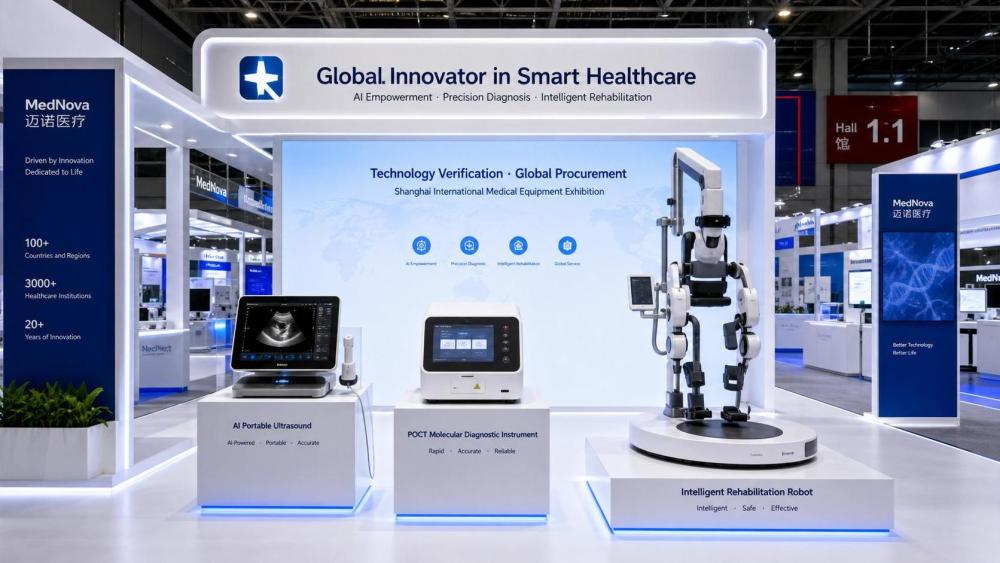
The featured products include AI-enabled portable ultrasound systems, POCT molecular diagnostics platforms and intelligent rehabilitation robots. The show also includes dedicated areas for medical artificial intelligence, operating room solutions and cross-border cooperation talks.
A dedicated sourcing session for the Middle East and Southeast Asia has also been arranged. The event information states that overseas distributors can conduct on-site product inspection, technical validation and ODM/OEM contract discussions during the exhibition.
Why different market participants may pay attention
Device manufacturers face a clearer export-oriented comparison point
From an industry perspective, companies producing imaging, IVD and rehabilitation devices may be affected because the exhibition places these categories in direct comparison before international buyers. The immediate business impact is likely to fall on product demonstration, technical communication and partner matching rather than on confirmed long-term sales outcomes.
What deserves closer attention is whether a company can translate product features into verifiable use cases during buyer discussions, especially when overseas distributors are evaluating products on site before moving into ODM/OEM talks.
Distributors and channel partners are pushed toward faster screening
For distributors, the combination of on-site inspection and technical verification may compress the early screening stage of supplier selection. The main effect is on supplier assessment, category prioritization and the pace of commercial negotiation.
Observably, channel partners should pay attention to how product readiness, documentation completeness and communication efficiency influence discussions when multiple suppliers in similar categories are present at the same exhibition.
Cross-border service providers may see more execution-focused demand
Service providers involved in cross-border trade support may also be affected because the exhibition includes a dedicated cooperation area and region-specific sourcing sessions. The likely pressure points are not abstract market sentiment, but practical issues around verification support, contract preparation and coordination between buyers and manufacturers.
From an industry perspective, the value here lies in shortening the path from first contact to technical and commercial review, even if final cooperation outcomes still require further follow-up after the event.
Operational issues companies should not overlook
Focus on categories drawing direct buyer validation
Analysis shows that AI-enabled portable ultrasound, POCT molecular diagnostics and intelligent rehabilitation devices are the categories most visibly tied to this exhibition's business agenda. Companies active in these segments should watch how buyer questions cluster around performance demonstration, application fit and cooperation format.
Prepare for OEM and ODM conversations with fewer assumptions
Because the event explicitly supports ODM/OEM cooperation discussions, manufacturers should pay closer attention to how they present cooperation boundaries, technical capabilities and delivery-related materials in buyer meetings. This is less about broad branding and more about whether negotiation can move efficiently from interest to verification.
Track region-specific demand signals carefully
The dedicated sourcing session for the Middle East and Southeast Asia makes those markets especially relevant within this event context. What deserves closer attention is not to treat this as a confirmed market shift, but to observe whether inquiries, product preferences and cooperation requests around those regions become more concentrated during and after the exhibition.
Separate exhibition momentum from actual execution
Analysis shows that on-site matching can accelerate discussions, but it does not by itself confirm completed orders or durable channel expansion. Companies should therefore focus on follow-up documentation, technical clarification and communication continuity after initial meetings, rather than reading exhibition traffic as a finished commercial result.
How this development is best interpreted for now
Observably, this event points to a practical convergence of three themes already visible within the provided information: AI-linked device positioning, portability in diagnostics and imaging, and export-oriented business matching. That said, it is more appropriate to understand the exhibition as a near-term market signal and transaction gateway rather than as proof that these segments have already secured broad international conversion.
From an industry perspective, the presence of dedicated technical verification and regional sourcing sessions matters because it shifts attention from display alone to business feasibility. The part that still requires observation is what follows after the exhibition in terms of sustained partnerships and repeat procurement discussions.
What this event suggests without overstating it
This exhibition is best read as a concentrated indicator of where supplier attention and buyer engagement are meeting in mid-2026: AI-enabled imaging, portable IVD and rehabilitation equipment, combined with a stronger emphasis on cross-border validation and cooperation. It does not by itself establish long-term market outcomes, but it does show where companies may need to sharpen product presentation, partner readiness and follow-up execution.
At this stage, the most balanced conclusion is that the event signals active commercial testing of export-facing medical device categories, with the strongest implications falling on manufacturers, distributors and service partners involved in verification-led international cooperation.
Basis of this article and what still needs verification
This article is generated based on the user-provided news title, event date and event summary. The specific official source link was not provided in the input, so the underlying details should continue to be checked against materials such as official exhibition announcements, company statements, industry association releases, authoritative media coverage and other formal documentation where available.
For ongoing observation, the main areas to track are whether the highlighted product categories remain central in follow-up communications, whether the Middle East and Southeast Asia sourcing focus continues beyond the exhibition period, and whether on-site technical validation leads to disclosed cooperation progress.