
Advanced imaging systems do not deliver consistent value through hardware alone. In daily practice, image quality, dose control, workflow speed, and repeatability often depend on what happens after installation.
That is why medical equipment training radiology remains a practical issue, not a formality. When training stops at startup steps, small gaps begin to affect positioning, protocol use, communication, and routine checks.
These gaps matter across X-ray, CT, MRI, C-arm, mammography, and dental imaging. They also matter to procurement, service planning, and long-term equipment performance, which is why MTHH treats operator training as part of equipment evaluation.
Where Training Gaps Usually Start
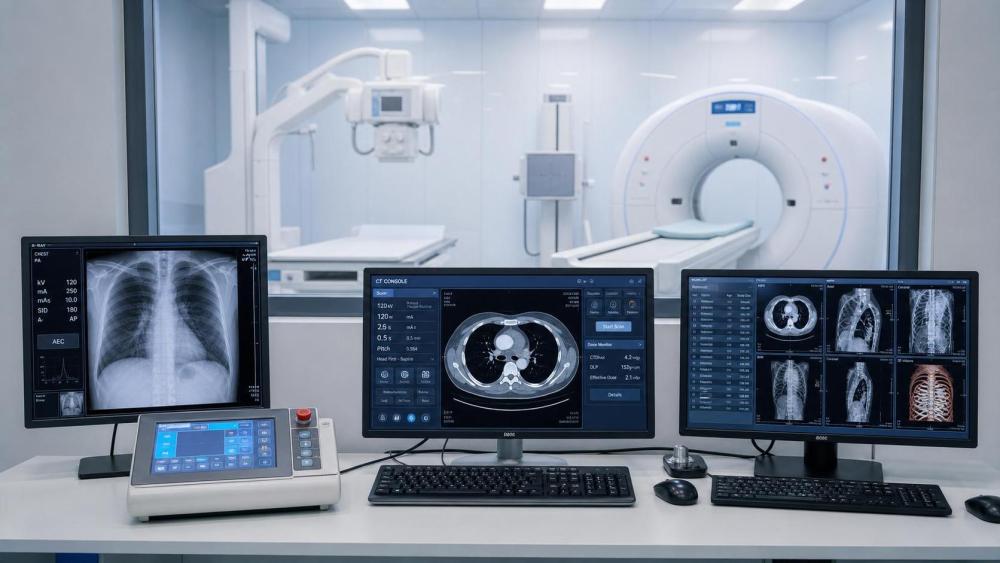
Most sites receive some form of onboarding from the supplier. The problem is that initial instruction often focuses on basic navigation, not on the decisions that shape everyday imaging results.
In medical equipment training radiology, users may learn how to open studies, select presets, and complete scans. They may not fully learn why one setting is better for a specific body type, condition, or workload.
This difference is important. A machine can be technically operational while the department still struggles with repeats, longer exam times, uneven image quality, or inconsistent dose habits.
From an industry perspective, that weakens the real return on capital investment. It also affects maintenance pressure, patient throughput, and confidence in the system itself.
Daily Use Problems That Training Often Misses
The most common weaknesses are rarely dramatic. They appear in ordinary tasks repeated many times each day, which is exactly why they deserve closer attention.
Positioning and patient setup
Poor positioning remains one of the biggest causes of repeat imaging. Even capable systems cannot compensate for avoidable alignment errors, poor centering, incomplete immobilization, or weak communication during setup.
Training should go beyond textbook positioning. Daily users need practice with difficult cases, limited mobility, pediatric cooperation, larger body sizes, and emergency workflow constraints.
Protocol selection and dose awareness
Another common issue is reliance on default protocols. Operators may follow presets without fully understanding exposure adjustments, anatomical variation, or how software choices affect dose and diagnostic usefulness.
In medical equipment training radiology, dose awareness should be practical. It should connect exposure choices with image sufficiency, not only with abstract safety language.
Software features that stay underused
Many imaging platforms include tools for stitching, post-processing, reconstruction, dose tracking, worklist handling, and image annotation. In reality, some teams use only a narrow subset of those functions.
That underuse can slow reporting, create manual workarounds, and reduce consistency between shifts. It may also create the false impression that the equipment is limited when the actual issue is incomplete training.
Routine checks and small warning signs
Users are not expected to perform engineering tasks, but they should know what normal daily operation looks like. Detector behavior, artifact patterns, table movement, coil handling, calibration prompts, and warm-up routines all matter.
When these signs are missed, minor performance drift may continue until it becomes a larger service issue. Good medical equipment training radiology helps teams recognize when to stop, document, and escalate.
Why This Matters Beyond the Scan Room
Training quality affects more than user confidence. It changes how the whole imaging investment performs over time.
For healthcare organizations, weak operator preparation can lead to higher repeat rates, slower throughput, avoidable patient delays, and inconsistent study quality. Those issues are operational, financial, and clinical at the same time.
For distributors and suppliers, training quality influences customer satisfaction, support requests, and the credibility of the installed base. A technically sound device can still generate complaints if users never reach stable daily performance.
This is one reason structured industry platforms such as MTHH look beyond brochure specifications. In imaging procurement, software support, documentation readiness, and operator training are part of the total value picture.
How Gaps Differ Across Imaging Modalities
Not every gap looks the same in every modality. The training priorities change with workflow, patient condition, and system complexity.
This variation is why medical equipment training radiology should not be treated as one generic session. Effective programs reflect the actual modality, case mix, and clinical workflow.
What Practical Training Should Include
Better training is usually more focused, not more theoretical. It should concentrate on recurring decisions that shape image quality and safety in routine work.
- Scenario-based positioning practice for standard and difficult patients.
- Clear explanation of protocol logic, not only button sequences.
- Dose optimization habits linked to anatomy, indication, and patient size.
- Use of post-processing and workstation tools that reduce rework.
- Recognition of common artifacts and early equipment warning signs.
- Escalation rules for service, calibration, and documentation issues.
The strongest programs also include follow-up after the first installation phase. That is often when real questions appear, after the team has handled actual case volume.
What to Review When Assessing Training Quality
In practice, training quality can be judged with a few concrete questions. These are useful during equipment selection, acceptance, or post-installation review.
Look at workflow evidence
Are repeat studies decreasing? Are exam times stabilizing? Are image rejection reasons being tracked? Good medical equipment training radiology should produce visible operational improvement.
Check whether software is actually being used
Many sites buy advanced functionality but rely on manual habits. If key tools remain untouched, the training model may be too shallow.
Review documentation and refresh plans
High staff turnover, shift rotation, and software updates make one-time training insufficient. Refresher schedules, quick references, and escalation contacts should be available and current.
Connect training with service and procurement
MTHH consistently emphasizes that equipment value depends on use conditions, maintenance readiness, and support quality. Training should be evaluated alongside warranty scope, service response, and installation support.
A More Reliable Next Step
Radiology performance problems are not always caused by technology limits. Many begin in routine use, where incomplete habits slowly affect image consistency, workflow, and safety.
A useful next step is to map the imaging process from patient setup to image review, then identify where hesitation, repeats, workarounds, or avoidable dose decisions appear. That reveals whether the gap is technical, procedural, or training-related.
From there, medical equipment training radiology becomes easier to evaluate with real criteria: modality-specific practice, software depth, dose awareness, routine checks, and ongoing support. That is a stronger basis for improving daily use and for judging future imaging investments.