
How to Evaluate an Ultrasound Equipment Manufacturer Beyond Price
Choosing an ultrasound equipment manufacturer should never be based on price alone.
The first quotation is easy to compare. The long-term consequences are not.
In real procurement work, a lower purchase price can hide higher service cost, weaker imaging consistency, and slower clinical adoption.
That is why selecting an ultrasound equipment manufacturer requires a broader evaluation framework.
You need to look at image quality, workflow fit, service response, software support, training, compliance, and lifetime operating cost.
A supplier that looks competitive on paper may still become expensive after installation.
A stronger ultrasound equipment manufacturer usually proves its value through stability, documentation, and support structure.
This guide explains how to compare manufacturers in a practical, decision-focused way.
Start With Clinical Performance, Not Commercial Claims
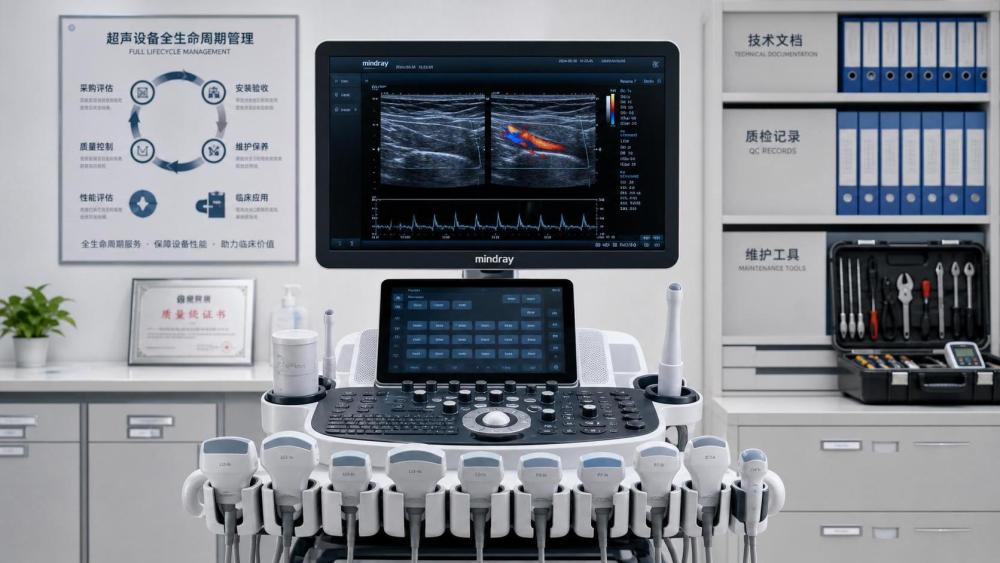
Every ultrasound equipment manufacturer will highlight technology, versatility, and pricing flexibility.
What matters first is whether the system performs well in the intended clinical environment.
Ask which departments will use the equipment.
General imaging, OB/GYN, cardiology, emergency care, point-of-care, and vascular applications create very different performance expectations.
A manufacturer that is strong in one segment may be average in another.
Request evidence that matches your use case.
- Image clarity across superficial and deep structures
- Doppler sensitivity and motion handling
- Probe performance in high-volume scanning
- Preset quality for target specialties
- Workflow speed from startup to report export
This is where on-site demonstration matters more than brochures.
A serious ultrasound equipment manufacturer should be able to support live scanning evaluation under realistic conditions.
If image quality looks good only in controlled presentations, treat that as a warning sign.
Check Whether the Product Line Is Built for Continuity
One machine is rarely the whole story.
In many healthcare settings, future expansion, fleet standardization, and parts support matter just as much as current features.
A dependable ultrasound equipment manufacturer usually has a structured product portfolio.
That includes entry-level systems, mid-range units, premium platforms, portable models, and compatible transducers.
This matters for several reasons.
- Training becomes easier across similar interfaces.
- Procurement planning stays more consistent.
- Accessory and probe compatibility may improve.
- Software updates are often managed more efficiently.
Ask how long each model is expected to stay in active support.
Also ask what happens when a model is discontinued.
A manufacturer with weak product continuity can create avoidable replacement pressure within a few years.
Evaluate Service Capacity Before You Sign
Service quality often separates a usable supplier from a risky one.
An ultrasound equipment manufacturer should explain its service model in clear operational terms.
Do not stop at general promises like “fast support” or “global coverage.”
Ask for measurable details.
- Local engineer availability
- Average response and resolution times
- Spare parts inventory strategy
- Remote diagnostics capability
- Preventive maintenance schedule
- Probe repair or replacement policy
In practice, probes and peripherals are frequent pain points.
If a supplier cannot support them quickly, downtime spreads into scheduling delays and clinician frustration.
That is a direct operational cost, even if the original quotation was attractive.
It is also worth checking whether service is handled directly or through distributors.
The answer affects accountability, escalation speed, and parts access.
Review Training, Usability, and Workflow Fit
A technically capable machine still fails if users cannot adopt it smoothly.
This is especially important when staffing varies by shift, department, or site.
A reliable ultrasound equipment manufacturer should provide structured training, not just initial installation support.
Review the user interface with real operators.
Check exam preset logic, control layout, measurement tools, reporting flow, and data export options.
Small usability gaps become large productivity issues over time.
Good questions to raise include:
- How many training sessions are included?
- Are refresher sessions available after go-live?
- Is application support separate from technical service?
- Can the system integrate with PACS, RIS, or HIS?
- How easy is software navigation for multi-user environments?
An ultrasound equipment manufacturer with strong application support usually reduces the adjustment period after installation.
That can improve utilization much faster than a lower upfront discount.
Do Not Overlook Compliance, Documentation, and Quality Systems
For procurement decisions, technical performance is only one side of the review.
The other side is whether the ultrasound equipment manufacturer can support regulatory and documentation needs properly.
This becomes more important in cross-border supply, public tenders, and multi-site deployment.
Review the following points carefully.
A capable ultrasound equipment manufacturer will answer these questions with documents, not vague assurances.
That level of readiness usually reflects stronger internal discipline.
Compare Total Cost of Ownership, Not Just Unit Price
Price still matters. It just should not stand alone.
A more useful method is to compare total cost of ownership over the expected service life.
This gives a clearer view of which ultrasound equipment manufacturer is actually more economical.
Key cost elements often include:
- Base system and transducer package
- Warranty scope and extension pricing
- Annual maintenance and calibration
- Software license or upgrade fees
- Consumables and accessories
- Replacement probe costs
- Expected downtime impact
- Training and retraining requirements
From a decision-making perspective, this is often where the cheapest offer starts to lose its advantage.
A better-supported system may deliver more scans, fewer interruptions, and a longer useful life.
That creates measurable value beyond procurement day.
Use a Structured Supplier Scorecard
When several offers look similar, a scorecard helps keep the comparison objective.
It also makes internal discussion easier across procurement, biomedical engineering, and clinical teams.
A practical ultrasound equipment manufacturer scorecard can include weighted categories such as:
- Clinical image performance
- System reliability
- Usability and workflow fit
- Service network quality
- Documentation and compliance readiness
- Product roadmap and upgrade path
- Total cost of ownership
This approach reduces the influence of sales pressure and headline pricing.
More importantly, it creates a documented basis for supplier selection.
That is useful for tenders, approvals, and future review cycles.
Final Decision: Choose the Manufacturer That Can Still Perform After Delivery
A strong ultrasound equipment manufacturer does more than ship a system at an acceptable price.
It supports clinical quality, operational continuity, documentation needs, and long-term service confidence.
That is the real benchmark behind a sound equipment decision.
Before choosing an ultrasound equipment manufacturer, verify live performance, confirm support capability, review compliance files, and calculate total ownership cost.
When these factors are reviewed together, price becomes one criterion instead of the whole decision.
That usually leads to a more stable purchase, fewer surprises, and better long-term value.