
Medical Imaging Equipment Vendor Comparison: Cost, Service, and Uptime
A reliable medical imaging equipment vendor comparison goes far beyond headline price.
The real decision sits in service coverage, uptime, training, installation support, and operating cost over years.
In medical imaging procurement, a cheaper system can become the more expensive choice very quickly.
That usually happens when spare parts are slow, applications training is weak, or downtime disrupts clinical scheduling.
This guide makes medical imaging equipment vendor comparison more practical, especially when cost pressure is high.
Start With Total Cost, Not Purchase Price
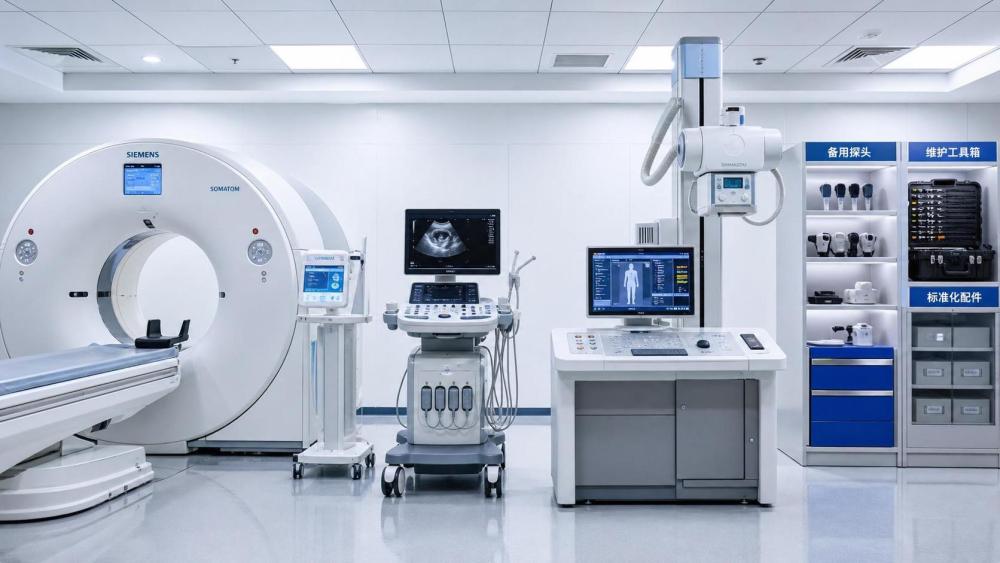
A strong medical imaging equipment vendor comparison begins with total cost of ownership.
That means looking beyond the machine and into the full operating lifecycle.
For CT, MRI, ultrasound, mammography, or digital X-ray, cost drivers are different.
Still, most buyers should compare the same commercial categories before shortlisting vendors.
- Equipment base price and included standard configuration
- Installation, shielding, HVAC, power, and room preparation costs
- Software licenses, workstation options, and annual upgrade fees
- Warranty length, preventive maintenance scope, and exclusions
- Consumables, contrast accessories, probes, coils, or detector replacements
- Operator training, application support, and refresher sessions
- Service contract pricing after warranty expires
- Expected downtime cost based on patient volume
From a procurement view, these items matter because they shape budget exposure after acceptance.
A medical imaging equipment vendor comparison that ignores lifecycle cost often creates avoidable financial surprises.
Measure Service Capability in Operational Terms
Service quality is where many imaging contracts start to separate.
A vendor may promise support, but procurement teams need measurable commitments.
In practice, service capability should be reviewed like an operating risk issue.
Questions That Clarify Real Service Strength
- What is the guaranteed remote response time?
- What is the guaranteed onsite response time by modality?
- Which spare parts are stocked locally?
- How many field engineers support this region?
- Are applications specialists available after installation?
- Is preventive maintenance included or charged separately?
- What uptime target is written into the contract?
This is where medical imaging equipment vendor comparison becomes more grounded and less marketing-driven.
A vendor with slightly higher pricing may still offer lower operational risk.
That becomes more obvious in hospitals where imaging schedules are tight and rescheduling is disruptive.
Uptime Is a Financial Metric, Not Just a Technical One
Uptime is often discussed by engineers, but it should also sit in commercial evaluation.
Every lost scanning hour affects revenue, patient flow, physician confidence, and backlog management.
That is why a medical imaging equipment vendor comparison must ask how uptime is defined and measured.
What to Review in Uptime Claims
- Check whether uptime excludes planned maintenance.
- Ask if software failures count as downtime.
- Confirm whether accessories are included in uptime responsibility.
- Review penalty clauses for missed uptime targets.
- Request site references with similar workload and modality mix.
A credible vendor should share uptime methodology without hesitation.
More importantly, they should connect uptime to spare parts, remote diagnostics, and engineer coverage.
That combination gives medical imaging equipment vendor comparison real decision value.
Compare Installation and Workflow Readiness
Equipment selection should also include implementation readiness.
A technically strong scanner can still underperform if installation planning is weak.
This matters even more for MRI, CT, and fixed radiography projects.
Operational Factors That Affect Readiness
- Room design support and site planning documents
- Electrical load, cooling, vibration, and shielding requirements
- PACS, RIS, HIS, and DICOM integration support
- Acceptance testing and documentation readiness
- Training schedule for radiographers, engineers, and administrators
- Go-live support during the first clinical period
In actual procurement work, delays often come from coordination gaps rather than device defects.
So medical imaging equipment vendor comparison should include implementation discipline, not only product brochures.
Use a Vendor Scorecard for Shortlisting
A scorecard helps keep medical imaging equipment vendor comparison consistent across multiple bidders.
It also reduces bias from brand familiarity or aggressive discounting.
Once weighted, this scorecard turns medical imaging equipment vendor comparison into a clearer business case.
Watch the Common Procurement Risks
Several risk points appear repeatedly across imaging tenders and direct purchases.
Spotting them early makes medical imaging equipment vendor comparison more accurate.
- Low entry price with expensive post-warranty service
- Broad uptime promises without contract definitions
- Limited local engineers for high-complexity modalities
- Software options quoted separately after award
- Weak user training that reduces clinical adoption
- Unclear responsibility for third-party integration issues
More recently, software dependency has become a bigger factor in imaging uptime.
That means upgrade policy, cybersecurity support, and compatibility review deserve more attention.
These are no longer secondary points in a medical imaging equipment vendor comparison.
Build Better Vendor Questions Before Final Negotiation
Final negotiation should test evidence, not just discount flexibility.
The best medical imaging equipment vendor comparison usually ends with sharper questions.
- Provide three reference sites with similar workload and service contract scope.
- Confirm average parts lead time for major failure categories.
- List all mandatory software modules required for full clinical use.
- Define uptime formula and remedy if SLA is missed.
- State who owns training responsibility during staff turnover.
- Clarify upgrade path over the next three to five years.
Questions like these help convert vendor claims into decision-grade information.
They also support stronger internal alignment between procurement, radiology, IT, and clinical engineering.
That alignment is often the difference between a smooth project and a costly correction later.
Make the Final Choice on Sustainable Value
A useful medical imaging equipment vendor comparison should lead to one clear conclusion.
Choose the vendor that can support reliable imaging operations over time, not just the lowest bid today.
When cost, service, and uptime are reviewed together, weak offers become easier to identify.
That is especially important in imaging environments where every interruption affects care delivery and departmental performance.
For better procurement outcomes, use a structured scorecard, verify service evidence, and challenge uptime claims early.
A disciplined medical imaging equipment vendor comparison creates better leverage before purchase and fewer problems after installation.