
Mammography Equipment Biopsy: When Accuracy Depends on System Design
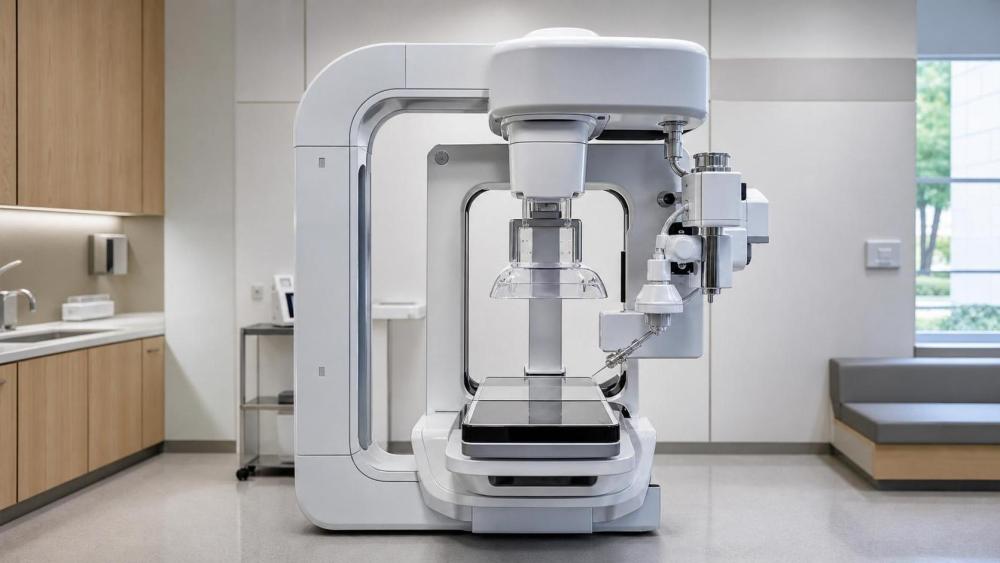
In mammography equipment biopsy, image sharpness matters, but it is only one part of the result.
Targeting accuracy also depends on gantry stability, compression control, detector response, software logic, and operator workflow.
That is why technical evaluation often goes beyond image samples and into system design.
For a hospital or distributor, the real question is practical.
Can the mammography equipment biopsy platform hit the intended lesion consistently under daily clinical conditions?
This becomes even more important in dense breast cases, small calcification clusters, and repeated positioning attempts.
A strong system reduces repeat exposure, lowers procedure delays, and supports more confident pathology correlation.
From a procurement angle, this also affects service burden, training time, room planning, and long-term value.
Why System Design Matters in Mammography Equipment Biopsy
A biopsy system is not simply a mammography unit with an added accessory.
Its architecture shapes how coordinates are calculated, how the breast remains immobilized, and how the needle path is executed.
If one part underperforms, the whole mammography equipment biopsy workflow becomes less reliable.
In practical selection work, several design layers deserve attention:
- mechanical rigidity during compression and needle insertion
- detector performance under stereotactic or tomosynthesis-guided acquisition
- coordinate generation accuracy and software correction logic
- biopsy attachment design and access flexibility
- patient positioning options for seated, decubitus, or upright procedures
- workflow safeguards that prevent setup or targeting errors
When these elements are integrated well, mammography equipment biopsy becomes more predictable.
When they are not, even good images may not translate into precise tissue sampling.
Core Technical Factors That Influence Biopsy Accuracy
1. Geometric precision
Geometric precision sits at the center of every mammography equipment biopsy system.
The platform must convert image coordinates into a real needle position without drift.
Even small mechanical deviations can matter when the target is tiny or faint.
Teams should review published targeting tolerance, calibration method, and quality control frequency.
2. Compression stability
Breast motion changes targeting confidence quickly.
A mammography equipment biopsy unit needs controlled compression that stays stable throughout imaging and sampling.
Uneven paddle pressure or weak locking can shift the target before the needle advances.
That risk increases during long procedures or when patients are uncomfortable.
3. Detector and imaging mode
Detector quality affects lesion visibility and targeting confidence.
In mammography equipment biopsy, low-contrast detail, pixel resolution, and motion handling are especially relevant.
If the system supports tomosynthesis-guided biopsy, evaluation should include slice clarity and targeting speed.
This is useful when lesions are hard to localize on standard stereotactic views.
4. Needle guidance integration
The biopsy device must work as part of the system, not beside it.
An integrated mammography equipment biopsy design reduces setup variation and simplifies operator steps.
Check needle depth control, approach angles, firing clearance, and post-fire verification support.
These details affect both sample quality and patient safety.
Workflow Design and Human Factors
A technically advanced unit can still underperform if the workflow is awkward.
In real facilities, mammography equipment biopsy must support repeatable work across different operators and patient conditions.
This is where interface design and procedural ergonomics become important.
Useful evaluation points include:
- How many steps are needed from localization to needle deployment?
- Can the software clearly display target coordinates and warnings?
- Is patient access comfortable for the operator on both sides?
- Can the system handle difficult lesion locations near the chest wall?
- How easily can staff confirm marker placement after sampling?
Shorter workflows usually reduce error opportunity, but speed alone is not the goal.
The better goal is consistent execution with fewer manual corrections.
From recent market changes, this is also why vendors emphasize software-guided positioning and automated verification features.
What Technical Evaluation Teams Should Compare
When comparing mammography equipment biopsy solutions, broad feature lists are not enough.
A more useful approach is to match technical specifications with operational reality.
The following table highlights practical review points.
This method keeps the review tied to measurable performance instead of marketing language.
It also helps explain why one mammography equipment biopsy platform may cost more yet create lower operational risk.
Installation, Quality Control, and Long-Term Reliability
Accuracy does not end at factory specifications.
A mammography equipment biopsy system must keep its performance after installation, calibration, and daily use.
That makes site readiness and quality assurance part of the technical decision.
Before procurement approval, it is worth checking:
- room size, shielding, power quality, and environmental conditions
- acceptance testing protocol for biopsy targeting and image performance
- routine QC tools for alignment, compression, and detector verification
- software update policy and cybersecurity support
- documentation for service records, traceability, and user training
More clearly than before, buyers now look at uptime as part of diagnostic quality.
If a mammography equipment biopsy unit needs frequent recalibration or delayed service response, clinical scheduling suffers quickly.
That operational cost often outweighs a lower purchase price.
A Practical Selection View
The best mammography equipment biopsy choice is usually the one with balanced system design.
It should combine targeting precision, patient stability, workflow clarity, and maintainable performance.
For technical review, that means asking harder questions early.
How does the system behave with subtle calcifications, difficult anatomy, and multi-operator use?
How stable is mammography equipment biopsy accuracy after months of routine operation?
How much support is needed to keep that accuracy dependable?
These questions lead to better comparisons and fewer surprises after installation.
In the end, mammography equipment biopsy is a system-level decision.
When accuracy depends on system design, evaluation should do the same.