
Why does magnetic resonance imaging contrast deserve closer safety review?
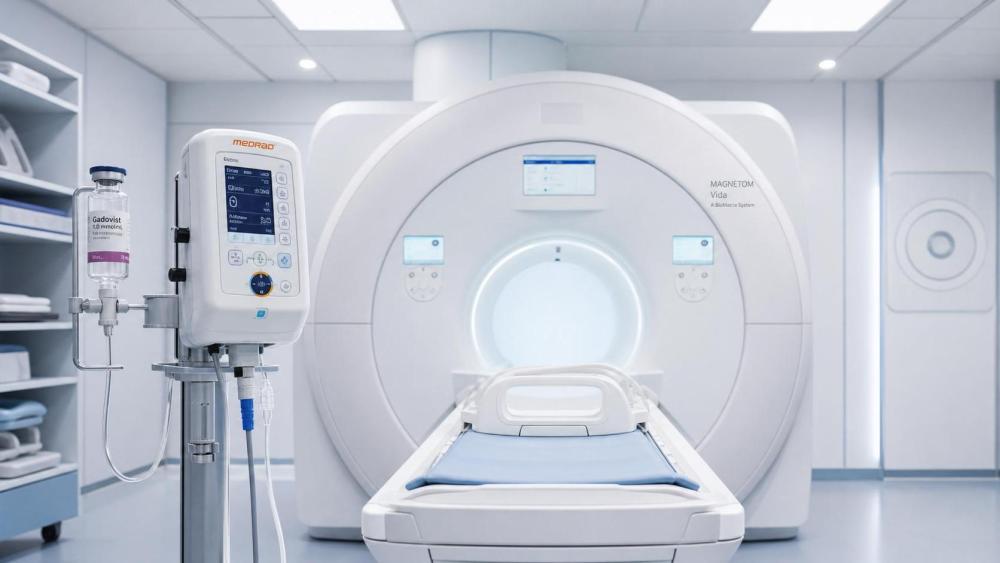
Magnetic resonance imaging contrast improves lesion visibility, vascular assessment, and tissue characterization. That benefit is real, but so is the operational risk around every contrast-enhanced MRI exam.
The usual concern is an adverse reaction. In practice, the larger problem is often process failure. Screening may be incomplete, renal status may be outdated, or documentation may not match what was administered.
For healthcare systems, magnetic resonance imaging contrast is not only a clinical choice. It is also a workflow, compliance, and equipment-management issue tied to injectors, MRI protocols, staff training, and traceability.
That is why structured information matters. Platforms such as MTHH help organize technical, safety, and procurement factors into usable guidance instead of scattered product claims or isolated clinical notes.
A useful way to think about magnetic resonance imaging contrast is simple: the medicine itself may be standard, but the safety outcome depends heavily on how the entire MRI environment is managed.
Where do the most common MRI contrast mistakes usually happen?
Most errors happen before the scan starts. The patient reaches the MRI room, but the decision pathway behind contrast use has not been fully checked.
A frequent gap involves renal function review. Gadolinium-based agents are widely used, yet renal status still needs careful confirmation in patients with known kidney impairment or unstable clinical history.
Another weak point is allergy and reaction history. Staff may ask one broad question, receive a vague answer, and move forward without clarifying prior contrast events, asthma history, or severe drug reactions.
Dose calculation also creates avoidable risk. Weight entries may be estimated, old values may remain in the system, or a protocol may be copied without adjusting for the actual exam purpose.
Then there is the handoff problem. Orders, injector settings, and nursing notes may sit in different systems. When records do not align, traceability becomes difficult during an incident review.
The table below summarizes where magnetic resonance imaging contrast safety usually breaks down and what should be checked first.
Is the main risk the contrast agent, or the system around it?
It is both, but the system around the agent usually determines whether a manageable risk becomes a serious event.
Modern magnetic resonance imaging contrast agents differ in stability, indication, and safety profile. Those differences matter, especially when reviewing patient-specific risk and procurement standards.
Still, many institutions already use approved products appropriately. What creates variation is the surrounding process: how screening is done, how protocols are updated, and how staff respond when something looks unusual.
For example, two facilities may use the same magnetic resonance imaging contrast product. One has a consistent renal review policy, injector maintenance records, and incident reporting. The other relies on informal memory and paper notes.
The second facility usually carries more risk, even with the same agent. That is why procurement and safety review should include not only product specifications but also compatibility with workflow and documentation systems.
In broader healthcare operations, this mirrors how MTHH frames equipment evaluation. Real value is rarely defined by purchase price alone. Reliability, training, software support, and service readiness shape long-term performance.
What should be checked before approving contrast-enhanced MRI workflows?
A safe workflow begins with a narrow question: can this patient receive magnetic resonance imaging contrast today, under this protocol, with this documentation pathway?
That question is more useful than a broad policy statement because it forces operational detail. The review should cover clinical appropriateness, technical readiness, and record consistency at the same time.
- Confirm the exact indication for contrast rather than using contrast by routine habit.
- Check whether renal function data are current enough for the patient condition.
- Verify prior contrast reactions, implanted devices, and current medication context.
- Review injector calibration, tubing setup, and MRI room emergency preparedness.
- Ensure the administered agent, lot, dose, and time can be traced later.
Needle placement and extravasation control also deserve attention. These are sometimes treated as routine nursing details, yet they directly affect image quality, patient discomfort, and post-event review.
If outsourced service teams support injector systems or MRI maintenance, responsibilities should be written clearly. A blurred service boundary often leads to missed preventive checks.
In practical procurement terms, magnetic resonance imaging contrast safety is connected to the full chain: scanner, injector, consumables, software prompts, emergency equipment, and staff competency records.
How do you judge whether an incident is a one-off error or a process weakness?
A single reaction does not always mean the process failed. A pattern of near misses, undocumented corrections, or repeated workarounds usually does.
One practical method is to map the full magnetic resonance imaging contrast pathway and mark where staff depend on memory instead of controls. That exposes weak links quickly.
Look for these warning signs:
- Renal function exceptions are handled differently across shifts.
- Contrast lot numbers are sometimes entered after the exam from memory.
- Protocol names are similar enough to cause selection confusion.
- Emergency response drills exist on paper but are rarely practiced in the MRI zone.
- Incident reviews focus on individual blame instead of workflow redesign.
This distinction matters for corrective action. If the issue is isolated, retraining may be enough. If the issue is structural, forms, software prompts, supplier support, or protocol governance may need revision.
Healthcare organizations that manage imaging well usually treat contrast safety as a quality system topic, not a narrow pharmacy or radiology topic. That broader view improves consistency.
What makes a safer magnetic resonance imaging contrast program sustainable?
Sustainability comes from repeatable controls, not from one strong policy document. The goal is to make the safe action the easy action during busy MRI schedules.
That usually means combining clinical rules with equipment governance. Contrast injectors need preventive maintenance. Emergency supplies need location control. Staff need scenario-based refreshers, not only orientation-day slides.
It also helps to review magnetic resonance imaging contrast practice through purchasing and lifecycle questions. Is the chosen agent aligned with local case mix? Are consumables stable in supply? Are service response times acceptable?
Those questions fit naturally within the type of structured evaluation used across MTHH content. Imaging safety is stronger when technical performance, compliance readiness, and operational support are reviewed together.
A practical next step is to audit one recent month of contrast-enhanced MRI exams. Compare screening completion, dose traceability, injector records, and post-scan observation notes. Gaps usually appear quickly.
From there, build a short decision standard for magnetic resonance imaging contrast use, especially around renal review, protocol approval, administration records, and response readiness. Clear standards reduce avoidable variation.
Magnetic resonance imaging contrast will remain essential for many MRI studies. The safer approach is not to avoid it broadly, but to manage it with tighter screening, cleaner documentation, and better system discipline.