
Why does the lease vs buy question matter so much for capital medical equipment?
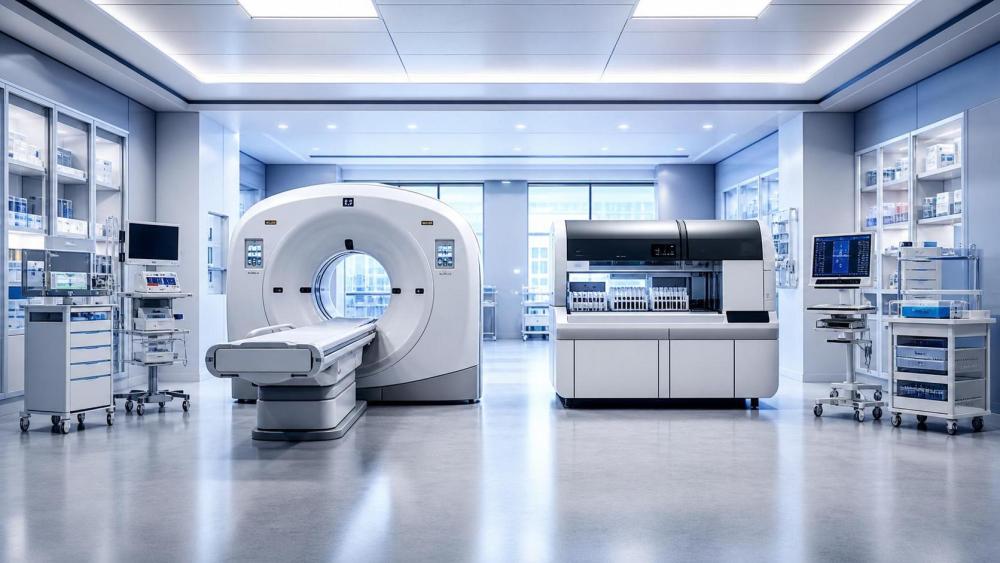
Capital medical equipment decisions rarely fail because of price alone. They fail when cash flow, uptime, service exposure, and replacement timing were not modeled early enough.
That is why the lease versus purchase debate keeps appearing in searches around capital medical equipment. The funding method changes more than the payment schedule.
It affects depreciation, borrowing capacity, maintenance responsibility, upgrade flexibility, and how quickly an organization can respond to clinical demand.
In healthcare, the stakes are higher than in standard industrial procurement. A CT scanner, anesthesia machine, lab analyzer, or sterilizer must perform reliably under regulated conditions.
A lower upfront quote can still become the more expensive route if service delays, consumable dependency, software fees, or installation changes were underestimated.
This is where structured industry platforms such as MTHH add value. They help decision teams compare technical performance with commercial realities, rather than reviewing cost in isolation.
So the real question is not simply, “Is leasing cheaper?” It is, “Which funding model creates the lowest practical cost over the equipment’s useful life?”
Is leasing capital medical equipment actually cheaper than buying?
Sometimes yes, but often only in the short term. Leasing usually reduces upfront pressure, while buying may reduce total financing cost over a longer horizon.
A lease can look attractive when budgets are tight, when utilization is still uncertain, or when technology may become outdated before the asset is fully depreciated.
That pattern is common in imaging, molecular diagnostics, and digital systems with frequent software or workflow upgrades.
Buying tends to make more financial sense when the equipment has a long usable life, stable service support, predictable demand, and good residual value.
Examples often include hospital beds, operating tables, sterilization systems, and some monitoring infrastructure where the refresh cycle is slower.
The main mistake is comparing monthly lease payments with purchase price alone. A proper capital medical equipment cost breakdown must include all related charges.
In other words, leasing improves affordability first. Buying may improve lifetime economics. The answer depends on equipment class, expected utilization, and service complexity.
What costs are usually missed in a capital medical equipment comparison?
Several line items are routinely missed because they sit outside the supplier’s headline quotation. Yet they can materially change lease versus buy results.
The first is site readiness. Imaging rooms, medical gas connections, shielding, HVAC upgrades, electrical work, and IT integration can equal a significant share of project cost.
The second is service structure. One quote may include preventive maintenance, software updates, and parts coverage, while another covers only labor or remote support.
The third is operator adoption. Training time, workflow interruption, calibration, validation, and downtime during installation all carry economic impact, even if they do not appear on an invoice.
For laboratory systems, reagent lock-in is another major issue. A lower instrument cost can be offset by higher reagent pricing over five to seven years.
For digital hospital infrastructure, recurring license charges and cybersecurity support should be reviewed in the same model as the equipment itself.
- Installation and room modification costs
- Preventive maintenance and emergency repair terms
- Software licensing, upgrades, and interface fees
- Training, validation, and changeover downtime
- Consumables, reagents, and spare parts dependency
- Deinstallation, return, or disposal charges at end of term
MTHH’s structured approach is useful here because capital medical equipment should be reviewed as a technical-commercial package, not as a standalone asset line.
When does leasing make more sense than ownership?
Leasing is often the stronger option when uncertainty is high. That may mean uncertain patient volume, uncertain reimbursement, or uncertain technology direction.
A good example is advanced diagnostic equipment where software capability, image quality expectations, or integration standards may change within a few years.
In that setting, preserving cash and keeping upgrade options open can be more valuable than owning the asset outright.
Leasing can also work well when service coverage is bundled into one predictable payment. This reduces budgeting volatility and makes lifecycle planning easier.
Another practical case is project-based expansion. A temporary facility upgrade, specialty clinic launch, or phased hospital development may not justify full ownership on day one.
Still, lease terms must be read carefully. Early termination penalties, usage caps, mandatory maintenance clauses, and end-of-term return conditions can erase the expected flexibility.
When is buying the better call for capital medical equipment?
Buying becomes more compelling when the equipment supports a core service line and is expected to remain clinically relevant for many years.
That is especially true when utilization is high and stable. The more consistently the asset is used, the easier it becomes to absorb upfront cost.
Ownership also creates more control over maintenance provider choice, replacement timing, and secondary market disposal, depending on local regulation and equipment category.
For capital medical equipment with modest technology disruption, purchase can produce a cleaner cost base after the initial financing period ends.
This matters in environments where long-term budget predictability is stronger than short-term cash constraints.
The key is not just owning, but owning the right asset at the right specification. Overbuying capacity or features can weaken the financial logic of purchase.
What are the most common mistakes in lease vs buy evaluations?
One frequent error is treating all capital medical equipment as financially similar. A patient monitor fleet does not behave like an MRI, and an analyzer does not behave like hospital furniture.
Another mistake is ignoring uptime risk. If service response is weak, lost clinical capacity can cost more than financing differences.
A third issue is separating technical review from financial review. That often produces a false economy, especially when software support or consumable dependency is material.
There is also a tendency to rely on vendor assumptions for utilization. Actual throughput, exam mix, maintenance intervals, and operator readiness should be stress-tested internally.
More careful evaluations usually ask for lifecycle scenarios, not one forecast. Base case, high-use case, and delayed-ramp case can reveal very different outcomes.
- Model cost over the full contract or useful-life period
- Check what service, software, and consumables are included
- Review room readiness and installation dependencies early
- Test assumptions against realistic clinical utilization
- Compare upgrade paths, buyout terms, and disposal obligations
How should the final decision be made?
A sound decision framework starts with service need, not funding preference. First confirm what the equipment must achieve clinically and operationally.
Then build a side-by-side capital medical equipment model covering acquisition cost, financing cost, service cost, consumables, IT support, installation, and end-of-life handling.
After that, test how each option performs under realistic changes in volume, downtime, upgrade timing, and reimbursement pressure.
This is where industry reference content matters. MTHH helps teams understand whether the equipment category itself carries fast obsolescence, heavy reagent dependence, complex installation, or service sensitivity.
The best lease vs buy choice is the one that supports reliable care delivery while keeping long-term economics visible and manageable.
Before moving forward, document expected utilization, required uptime, support scope, software obligations, and replacement horizon. Those five inputs usually clarify the funding path faster than headline price ever will.
If the next step is still unclear, compare two or three capital medical equipment scenarios using the same assumptions. That usually turns a difficult debate into a practical decision.