
What Interoperability Gaps Still Slow Digital Hospital Systems?
What Interoperability Gaps Still Slow Digital Hospital Systems?
As hospitals invest in smarter workflows, digital hospital systems interoperability remains a major barrier to efficiency, safety, and scalable care delivery.
From disconnected imaging platforms to fragmented lab, monitoring, and procurement data, these gaps slow decisions and raise operational risk.
The issue is no longer whether hospitals are becoming digital.
The real question is whether their systems can actually work together.
In many facilities, core systems were added over time, not designed as one connected environment.
That leaves hidden friction across clinical, technical, and procurement workflows.
For hospital leaders, understanding digital hospital systems interoperability is now a planning requirement, not a technical afterthought.
Why digital hospital systems interoperability still breaks down
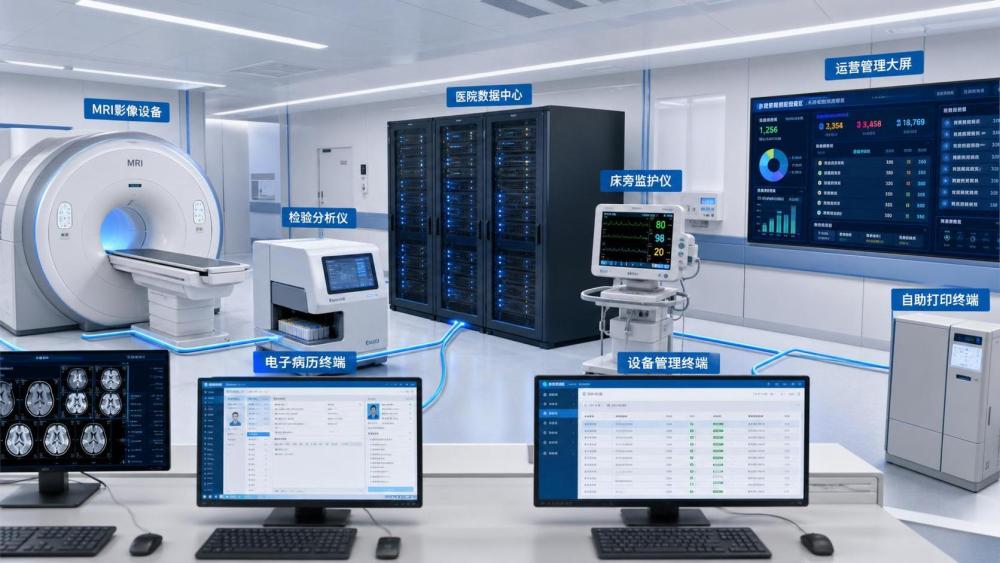
Most hospitals do not suffer from a single technology failure.
They deal with many small interoperability failures that add up across the day.
A monitor sends data, but not in a usable format.
A lab system exports results, but they arrive late or without context.
An imaging platform stores studies, but downstream access is limited by vendor-specific rules.
From a business view, four causes appear again and again.
- Legacy systems remain critical, yet were built before current integration expectations.
- Different vendors support standards unevenly, even when they claim compatibility.
- Data structures differ across departments, making exchange possible but not truly useful.
- Governance is often weak, so interfaces grow without a long-term architecture.
This is where digital hospital systems interoperability becomes a strategic issue.
Poor connectivity affects not only data flow, but staffing, service quality, and future procurement flexibility.
The biggest interoperability gaps inside hospital operations
The most costly gaps usually appear in daily operational handoffs.
They are rarely dramatic, but they quietly slow every department.
1. Imaging data does not move cleanly across systems
Radiology often uses DICOM-based workflows, but that does not guarantee seamless exchange.
Images may transfer, while metadata, reports, or scheduling context remain fragmented.
That creates repeat entry, reporting delays, and inconsistent patient records.
2. Lab systems and clinical records are not synchronized enough
A laboratory information system may produce accurate results quickly.
Still, clinicians lose time when results appear in separate portals or different timelines.
When digital hospital systems interoperability is weak here, treatment decisions can slow noticeably.
3. Bedside devices generate data that stays trapped
Patient monitors, ventilators, infusion pumps, and anesthesia machines create valuable real-time information.
But many hospitals still rely on manual transcription or partial integration.
That increases charting workload and raises the chance of missed or mismatched values.
4. Procurement and asset data live outside clinical systems
This gap gets less attention, yet it matters for long-term performance.
Equipment records, warranties, maintenance schedules, spare parts data, and service histories often sit apart.
As a result, replacement planning becomes reactive and lifecycle visibility stays weak.
Why these digital hospital systems interoperability gaps matter financially
Interoperability is often discussed as an IT topic.
In practice, it shapes cost, risk, and investment returns across the hospital.
When systems do not connect well, hospitals pay for the gap in several ways.
- Higher labor costs from duplicate entry and manual reconciliation.
- Slower patient throughput in imaging, labs, and perioperative workflows.
- More service dependency on vendors for custom interfaces.
- Lower value from digital investments that cannot scale across departments.
- Greater compliance risk when data lineage is unclear.
This also affects capital planning.
A lower-priced device may become more expensive if it requires custom integration, extra middleware, or repeated staff workarounds.
That is why digital hospital systems interoperability should be reviewed as part of total operating cost.
Where hospital leaders should look first
The fastest progress usually comes from mapping the most painful interfaces first.
That means focusing on operational bottlenecks, not abstract architecture diagrams.
- Track where staff re-enter data between systems.
- Review which devices still depend on one-way data export.
- Check whether imaging, lab, and monitoring data align with patient context.
- Audit service contracts for interface limitations and upgrade restrictions.
- Compare procurement records with maintenance and utilization data.
This approach helps turn digital hospital systems interoperability into a measurable business program.
It also exposes which vendors support openness in practice, not just in sales documents.
Questions to ask before buying new medical technology
Interoperability problems often enter the hospital during procurement.
A strong purchasing process can reduce that risk early.
Before selecting equipment or software, these questions are worth asking.
- Which standards are supported, and at what functional depth?
- Are interfaces included, licensed separately, or dependent on third parties?
- Can the system exchange structured data, not just files or images?
- What is required for integration testing before go-live?
- How are software updates handled without breaking existing connections?
- Can service teams provide integration documentation and response timelines?
These questions support better digital hospital systems interoperability over the full equipment lifecycle.
They also help procurement teams compare vendors on operational fit, not only purchase price.
A practical framework for closing interoperability gaps
Hospitals do not need to fix everything at once.
They need a staged model that matches operational priorities and budget reality.
The important point is consistency.
Digital hospital systems interoperability improves when standards, governance, and procurement rules move together.
What a more connected digital hospital should look like
A future-ready hospital is not defined by how many systems it owns.
It is defined by how smoothly information moves between them.
Imaging, diagnostics, patient monitoring, clinical documentation, and equipment management should support one another.
That reduces delay, lowers manual effort, and improves visibility for both care delivery and capital planning.
The remaining digital hospital systems interoperability gaps are not minor technical details.
They directly affect efficiency, patient safety, equipment value, and strategic flexibility.
Hospitals that assess these gaps early can make better technology decisions with fewer downstream compromises.
In the current market, stronger digital hospital systems interoperability is one of the clearest paths to more resilient hospital infrastructure.
Have questions about the global trade trends discussed here, or planning your expansion and supply chain strategy? Leave a message below and let the trade experts at MTHH guide you.
We respect your privacy. Your information is strictly confidential.
Related News
- FDA Issues Benefit-Risk Discussion Paper on Robotic Medical DevicesNov 07, 2026Explore the FDA discussion paper on robotic medical devices, its potential benefit-risk implications, and what manufacturers and purchasers should monitor.
- How to select ISO standards for medical device performance evaluationNov 06, 2026Choose medical device performance evaluation ISO standards with confidence. Learn to match claims, test methods, and regulatory requirements to reliable evidence.
- FDA Updates QMSR FAQs and Medical Device Cybersecurity GuidanceNov 06, 2026FDA QMSR FAQs and medical device cybersecurity guidance: Explore potential implications for ISO 13485 alignment, compliance planning and supplier coordination.
- Philips Reaches €288 Million Settlement in US Respiratory Device Recall ProbeNov 05, 2026Philips reaches a €288 million US settlement over its respiratory device recall. Explore the financial impact and implications for manufacturers.