
Capital Medical Equipment Cost: What Drives Budget Risk in 2026
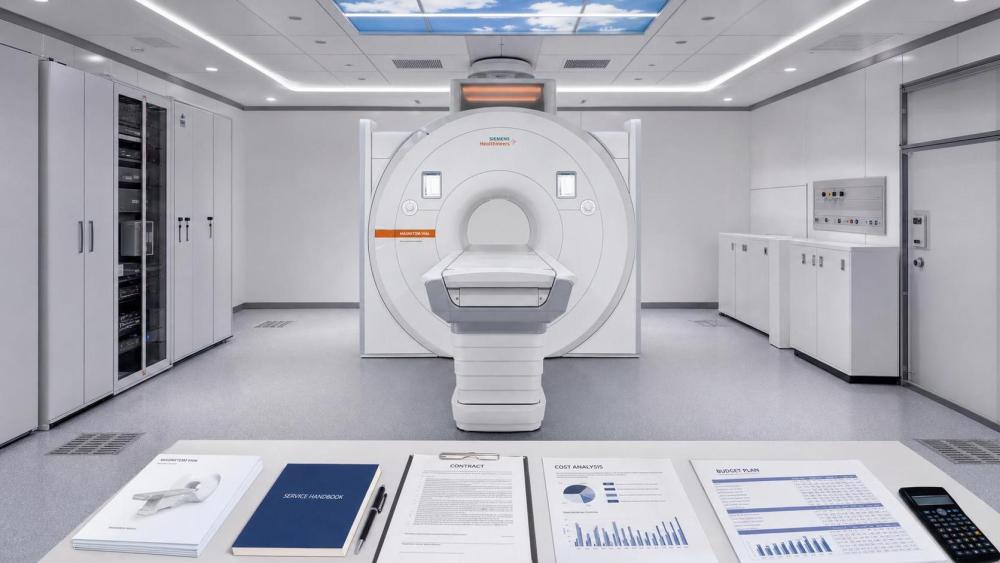
Capital medical equipment cost is getting harder to model in 2026.
Purchase price still matters, but it no longer tells the full financial story.
Hospitals now face inflation, software dependency, compliance upgrades, and slower global supply recovery.
That combination creates budget risk before equipment is even installed.
For larger assets, capital medical equipment cost also includes service structure, site readiness, training demand, and replacement timing.
In practice, financial exposure often shows up after approval, not before it.
That is why many procurement reviews are shifting from price comparison to lifecycle cost analysis.
The key question is simple: what can still move the budget after the PO is signed?
Why capital medical equipment cost is less stable now
Several cost layers have become more variable over the last two years.
Base equipment prices are moving, but hidden cost lines are moving faster.
Software licensing is a clear example.
Many imaging, monitoring, and lab systems now depend on annual subscriptions, feature unlocks, and cybersecurity updates.
These fees may look modest at approval stage.
Over five to seven years, they materially change capital medical equipment cost.
Service contracts have also changed.
Vendors increasingly separate preventive maintenance, remote monitoring, uptime guarantees, and parts coverage into different tiers.
That makes direct quotation comparison harder.
A lower-priced system can become the higher-cost option once service exposure is included.
Regulatory pressure is another factor.
Data security, software validation, traceability, and electrical safety expectations continue to rise across many markets.
Even if the product is compliant today, future updates may carry extra cost.
The main drivers behind budget risk
A useful review starts by separating price from exposure.
The most common drivers behind capital medical equipment cost risk include:
- Installation works, including shielding, HVAC, electrical upgrades, and room redesign.
- Software modules sold separately after initial configuration.
- Consumables or reagents tied to one supplier.
- Long lead-time spare parts and imported components.
- Operator training, competency refresh, and workflow onboarding.
- Cybersecurity support and integration with hospital systems.
- Downtime cost when the device supports a critical service line.
- Contract clauses linked to currency movement or freight adjustment.
These drivers do not affect every category equally.
MRI and CT projects are heavily exposed to site readiness and service terms.
IVD systems often carry stronger reagent dependency.
Patient monitors may appear straightforward, yet network integration and fleet standardization can shift total cost quickly.
The practical point is to identify which cost line is most likely to move later.
Where capital medical equipment cost is often underestimated
Underestimation usually starts with scope assumptions.
A quotation may cover the machine, but not the full operating environment.
This happens frequently in imaging rooms, operating theatres, sterilization projects, and laboratory automation upgrades.
Another blind spot is data connectivity.
Interfaces with PACS, HIS, LIS, EMR, or alarm systems often require middleware, validation, and IT hours.
Those costs may sit outside the equipment budget, but they still affect the same business case.
Training is also undervalued.
If adoption is slow, utilization drops, error rates rise, and the expected return gets pushed back.
That affects capital medical equipment cost in a very real way.
A final issue is end-of-support timing.
When a platform has a short software roadmap, replacement can arrive earlier than planned.
That shortens depreciation value and raises long-term cost exposure.
A practical way to evaluate total financial exposure
A stronger approval process uses a structured cost review before supplier selection is finalized.
At minimum, review capital medical equipment cost across five layers:
- Acquisition cost: base unit, accessories, mandatory options, taxes, freight, and commissioning.
- Facility cost: room changes, utilities, shielding, network points, and safety infrastructure.
- Operational cost: consumables, reagents, calibration, energy use, and staffing impact.
- Service cost: warranty terms, PM coverage, parts replacement, response time, and software support.
- Risk cost: downtime, delayed go-live, compliance gaps, and premature obsolescence.
This framework helps compare vendors beyond headline pricing.
It also makes internal review more disciplined.
When one category looks unusually low, that is usually where more questions are needed.
In actual procurement, the biggest savings often come from scope clarity, not aggressive price pressure.
Questions that improve approval quality
Good budget decisions usually come from better supplier questions.
Before approval, ask for written clarification on these points:
- Which functions are standard, and which require future paid activation?
- What is excluded from installation scope?
- How long are software updates included?
- What are the annual service price adjustment rules?
- Which consumables are proprietary, and what is their five-year price history?
- What is the expected end-of-support date for this platform?
- What is the guaranteed response time for major faults?
- What documentation is provided for validation, training, and compliance review?
These answers help convert uncertain capital medical equipment cost into a more defendable forecast.
They also reduce internal disagreement later, especially when operations and finance view value differently.
Simple comparison model for 2026 procurement
A simple comparison table can make supplier differences easier to see.
This kind of scoring does not replace technical review.
It improves transparency around capital medical equipment cost and highlights where negotiation should focus.
What better decisions look like
In 2026, the safest equipment approval is rarely the cheapest quote.
It is the option with the clearest lifecycle, the most predictable support model, and the lowest surprise exposure.
Capital medical equipment cost should be reviewed as a long-term operating commitment, not a one-time asset purchase.
That shift changes how budgets are defended and how procurement decisions are prioritized.
A practical next step is to require every major equipment proposal to show five-year cost exposure, support assumptions, and upgrade obligations in one review sheet.
Once that discipline is in place, capital medical equipment cost becomes easier to compare, justify, and control.