
Ultrasound Gel Distributor Selection: Supply Stability, Pricing, and Compliance
Choosing the right ultrasound gel distributor affects more than routine supply.
For procurement teams, stable availability, transparent pricing, product consistency, and compliance documentation all influence operational continuity and supplier risk.
This article outlines the key factors to compare before selecting a distributor, helping buyers make practical decisions that support clinical workflows, cost control, and long-term procurement reliability.
Why an Ultrasound Gel Distributor Matters More Than It Seems
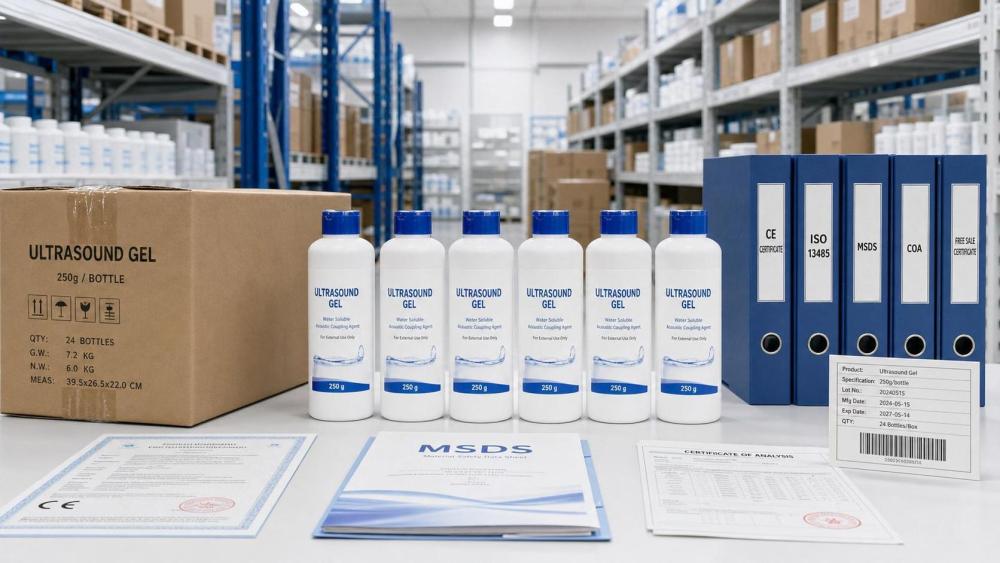
Ultrasound gel looks simple, but its supply chain has real operational impact.
Hospitals, imaging centers, clinics, and distributors use it daily across high-frequency workflows.
When supply becomes unstable, routine scanning can slow down immediately.
That makes the ultrasound gel distributor a practical procurement decision, not just a low-value consumables choice.
In actual purchasing work, the strongest distributors do three things well.
- They maintain consistent stock across bottle sizes and packaging formats.
- They provide clear commercial terms without hidden freight or shortage adjustments.
- They support documentation, traceability, and regulatory alignment.
A weak ultrasound gel distributor usually fails in one of those areas first.
From recent market shifts, a more visible signal is regional stock imbalance.
Some suppliers quote attractive prices, then extend delivery after purchase orders are confirmed.
That creates avoidable disruption, especially for centralized purchasing systems.
Start With Supply Stability and Fulfillment Capability
Supply stability should be the first screening factor for any ultrasound gel distributor.
Price matters, but interrupted supply often costs more than a slightly higher unit rate.
A reliable distributor should explain stock policy in practical terms.
- Average lead time for standard and peak periods
- Warehouse locations and backup inventory arrangements
- Minimum order quantity and replenishment cycle
- Support for urgent orders or emergency allocation
- Batch continuity across recurring deliveries
These points reveal whether the ultrasound gel distributor can support operational demand, not just sell product.
This is especially important when gel is used across radiology, cardiology, obstetrics, emergency care, and outpatient departments.
Volume may appear predictable, but usage can rise quickly during expansion or seasonal peaks.
An experienced ultrasound gel distributor should already have a response model for that.
Ask for fill-rate history where possible.
Even if exact customer data cannot be shared, percentage-based delivery performance is useful.
A supplier that avoids this discussion may not have stable planning discipline.
Compare Pricing Beyond the Quoted Unit Cost
Many buyers begin with unit price, but that is only the starting point.
The real cost of an ultrasound gel distributor includes logistics, packaging efficiency, and contract flexibility.
A low quote can lose value quickly if freight terms are unclear or pack sizes do not match usage.
The most useful cost review usually includes these elements.
This approach helps compare one ultrasound gel distributor against another on total procurement cost.
It also reduces the chance of choosing a supplier based only on headline pricing.
In practice, package size often affects cost more than expected.
Large bottles may reduce per-unit cost, but they may not fit all departments or infection control routines.
That means a pricing review should stay linked to actual use conditions.
Check Compliance, Documentation, and Product Traceability
Compliance review is where many supplier comparisons become more realistic.
An ultrasound gel distributor should be able to provide documentation quickly and consistently.
Required files vary by market, but the working checklist is usually straightforward.
- Product specification sheet
- Material safety or safety data documentation
- Regulatory registration status for the target market
- Manufacturer details and authorized distribution status
- Batch number traceability and expiry labeling
- Storage and transport conditions
This matters because compliance gaps can delay receiving, internal approval, or onward distribution.
For importers and multi-site procurement groups, traceability is especially important.
If a quality issue appears, every batch must be identified quickly.
A capable ultrasound gel distributor should explain recall communication steps before any issue occurs.
This is also where distributor maturity becomes visible.
Suppliers with strong documentation habits usually respond faster across tenders, audits, and contract renewals.
Evaluate Product Consistency and Clinical Fit
Not every ultrasound gel distributor manages product consistency equally well.
Even when core specifications look similar, usability can differ in daily practice.
Procurement review should include input from the departments that use the gel most often.
Typical comparison points include the following.
- Viscosity and spreadability during scanning
- Ease of cleanup from skin and probes
- Skin tolerance for repeated or sensitive use
- Compatibility with routine clinical applications
- Package design for one-hand dispensing or cart use
This does not need to become an overly technical exercise.
A short product trial often reveals whether the proposed solution fits workflow expectations.
The better ultrasound gel distributor will usually support sampling and structured feedback.
That also helps confirm whether the quoted product is the same product that will be supplied long term.
Consistency across batches and purchase cycles is a practical quality issue, not a minor preference.
Assess Service Response and Commercial Reliability
A strong ultrasound gel distributor should be easy to work with after contract award.
This sounds basic, but service quality often separates acceptable suppliers from dependable ones.
Look at response speed across common scenarios.
- Quotation revision and contract clarification
- Delivery exception handling
- Document reissue or batch confirmation
- Complaint handling and corrective action
- Communication during forecast changes
A distributor may have the right product, yet still create friction through poor coordination.
This becomes costly when there are multiple delivery points or tender deadlines.
It helps to review their account structure as well.
If one ultrasound gel distributor uses separate contacts for sales, logistics, and quality, escalation paths should still be clear.
Simple communication discipline often prevents larger supply issues later.
A Practical Selection Framework for Procurement Decisions
A useful procurement decision combines commercial comparison with operational evidence.
When comparing each ultrasound gel distributor, keep the review simple and measurable.
- Confirm supply capacity, lead time, and stock backup.
- Calculate total landed cost, not only unit price.
- Verify compliance documents and traceability readiness.
- Run a small product evaluation with end users.
- Check service responsiveness before signing a long contract.
This framework keeps the evaluation grounded in real procurement risk.
It also helps avoid overvaluing one attractive quote from an unproven supplier.
The best ultrasound gel distributor is rarely the one with the lowest price alone.
It is the one that can support stable delivery, documentation control, and predictable cost over time.
That is what protects workflow continuity and purchasing confidence.
Before the next sourcing round, build a shortlist around these factors and request evidence for each one. That turns supplier selection into a clearer, lower-risk decision.