
Stainless Steel Needles Explained: Gauge, Tip Design, and Corrosion Risks
Stainless steel needles appear simple, yet selection errors often start with that assumption.
Across healthcare, laboratory work, and controlled industrial processes, needle performance is shaped by gauge, tip geometry, alloy choice, surface finish, and corrosion behavior.
That matters in procurement because a needle is rarely evaluated in isolation.
It affects sample quality, puncture force, user control, sterility assurance, compatibility with syringes or automated systems, and replacement frequency over time.
For platforms such as MTHH, where medical technology decisions are reviewed through both technical and operational lenses, stainless steel needles are a small component with outsized downstream impact.
What stainless steel needles really need to deliver
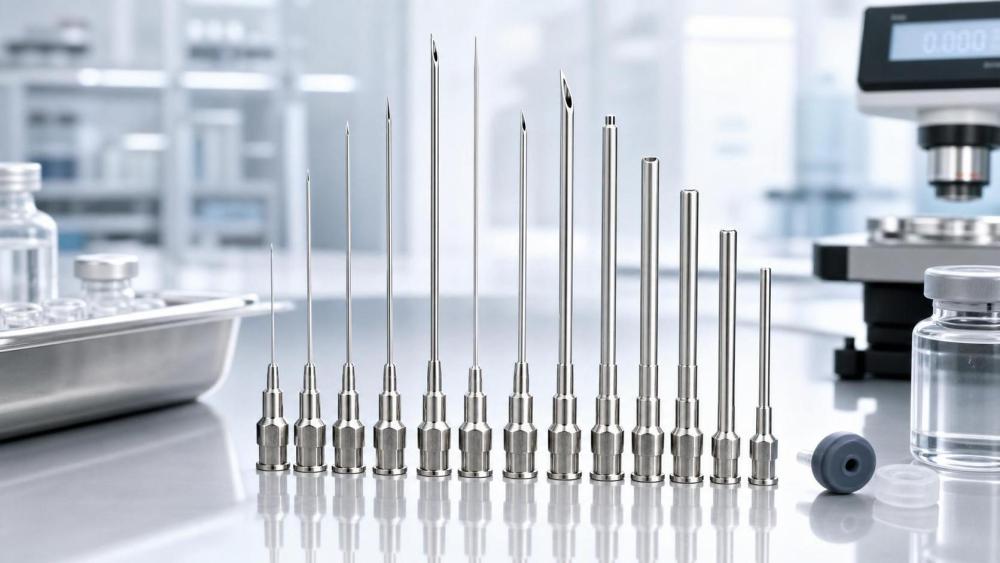
A stainless steel needle is a precision tube or formed shaft designed to enter, transfer, aspirate, inject, dispense, or probe without losing structural integrity.
In clinical settings, that may involve injections, biopsy access, spinal procedures, blood collection, or irrigation.
In laboratories, stainless steel needles may be used in sample handling, reagent transfer, septum piercing, chromatography, or automated dispensing.
The basic expectation is not only penetration.
The needle must maintain lumen consistency, resist bending, minimize particulate generation, and avoid chemical degradation during storage or use.
This is why technical evaluation should connect dimensions with the real operating environment.
A needle suited for one fluid, one tissue type, or one sterilization method may underperform in another scenario.
Gauge is more than a size label
Gauge is often the first filter when comparing stainless steel needles, but it is also one of the most misunderstood parameters.
In standard needle systems, a higher gauge means a smaller outer diameter.
That simple rule influences several tradeoffs at once.
Wall thickness adds another layer.
Two stainless steel needles with the same gauge may not deliver the same inner diameter if one uses thin-wall tubing and the other uses regular-wall construction.
That difference changes pressure, aspiration speed, and compatibility with viscous fluids.
In practical terms, gauge should be checked together with inner diameter, wall type, usable length, and intended media.
Why gauge decisions often fail in procurement
Some specifications stop at nominal gauge and overlook tolerance control.
For automated systems, even small variation can affect alignment, penetration depth, and repeatable dosing.
In healthcare use, the consequences can appear as inconsistent flow, user dissatisfaction, or higher waste rates.
Tip design changes performance at the point of contact
Tip design determines how stainless steel needles interact with tissue, packaging, stoppers, membranes, or test materials.
A needle can have the correct gauge and still perform poorly if the bevel or point style is mismatched.
Common designs include lancet points, regular bevels, short bevels, blunt ends, trocar-style points, and specialized dispensing tips.
- Regular bevels are widely used where smooth penetration and broad compatibility are needed.
- Short bevels may improve control and reduce over-penetration in selected procedures.
- Blunt needles are common for aspiration from vials, fluid transfer, and non-patient contact tasks.
- Non-coring or huber-style tips help preserve stopper integrity in repeated vial access.
The point is not to rank one design above another.
The question is whether the tip reduces force, damage, leakage, coring, or contamination in the intended workflow.
This is especially relevant in hospitals and laboratories where consumable quality affects adjacent devices, sample stability, and infection control routines.
Surface finish and burr control
Tip sharpness alone is not enough.
Grinding quality, polishing, siliconization, and burr removal directly influence insertion force and particle shedding.
For stainless steel needles used with drug delivery or analytical sampling, poor finishing can create avoidable quality deviations.
Material grade and corrosion risk deserve closer review
Not all stainless steel needles are made from the same alloy family.
Grades such as 304 and 316 are common references, while specialized applications may require tighter controls on inclusions, hardness, or passivation quality.
Corrosion risk is often underestimated because stainless steel is assumed to be inherently stable.
In reality, resistance depends on chloride exposure, cleaning chemistry, humidity, sterilization cycles, contact time, and storage conditions.
Pitting, surface discoloration, rouging, and micro-cracking may start subtly.
Once they appear, the effect may extend beyond appearance to include contamination risk, weakened mechanical strength, or reduced shelf confidence.
Typical corrosion triggers
- Residual chlorides from cleaning agents or saline-rich environments.
- Insufficient passivation after fabrication or grinding.
- Repeated exposure to aggressive sterilization or disinfection chemicals.
- Packaging damage that allows moisture ingress during storage.
- Galvanic interaction with dissimilar metals in assemblies or fittings.
From a technical review standpoint, corrosion data should be requested rather than assumed.
Material certificates, passivation records, and biocompatibility or chemical compatibility documentation can reveal meaningful differences between seemingly similar products.
Where evaluation priorities change by application
The same stainless steel needles cannot be judged by one universal checklist.
Application context changes what matters most.
This application-based view aligns with how MTHH interprets healthcare equipment decisions.
Technical details become useful only when tied to workflow, maintenance, safety, and lifecycle cost.
What to check before comparing suppliers
A practical comparison of stainless steel needles should go beyond catalog descriptions.
Useful review points usually include the following.
- Dimensional tolerances for outer diameter, inner diameter, length, and concentricity.
- Needle grade, hardness condition, and passivation method.
- Tip geometry drawings or validated performance data.
- Sterile barrier integrity, shelf life, and packaging resistance to moisture damage.
- Compatibility with syringes, catheters, analyzers, robotic arms, or fluid paths.
- Traceability, lot consistency, and defect response procedures.
- Regulatory and quality records relevant to the destination market.
Cost should still be reviewed, but only after performance thresholds are clearly defined.
A lower-priced needle may create higher total cost through failure rates, product waste, interrupted procedures, or extra inspection steps.
A more useful next step
The best way to assess stainless steel needles is to build a short decision matrix around real use conditions.
Start with fluid type, access target, required flow, exposure to chemicals, sterilization pathway, and allowable dimensional variation.
Then compare gauge, tip style, alloy, finish, and documentation against those conditions.
Where uncertainty remains, sample testing under actual workflow conditions usually reveals more than a catalog sheet.
That approach makes stainless steel needles easier to judge as technical components, not just consumables, and it supports clearer procurement decisions with fewer surprises after deployment.
Have questions about the global trade trends discussed here, or planning your expansion and supply chain strategy? Leave a message below and let the trade experts at MTHH guide you.
We respect your privacy. Your information is strictly confidential.
Related News
- How does order volume affect disposable medical supplies cost?Nov 07, 2026Discover how order volume affects disposable medical supplies cost and learn to balance bulk discounts, storage, expiry risk, and reliable supply.
- How to choose suction consumables in South Africa that fit your pumpOct 29, 2026Buying suction consumables South Africa suppliers offer? Learn how to verify pump compatibility, compare system costs and choose the right fit before ordering.
- How to assess a bandage manufacturer's batch-to-batch consistencyOct 25, 2026Choosing a bandages manufacturer? Learn how to compare production lots, verify test data, and check traceability to reduce sourcing risks and buy with confidence.
- How to verify a surgical gown manufacturer’s barrier level claimsOct 24, 2026Evaluating a surgical gowns manufacturer? Learn how to verify barrier level claims, review test reports, and confirm critical-zone protection before approving your next supplier.