
Why do infusion pump consumables cause so many daily use problems?
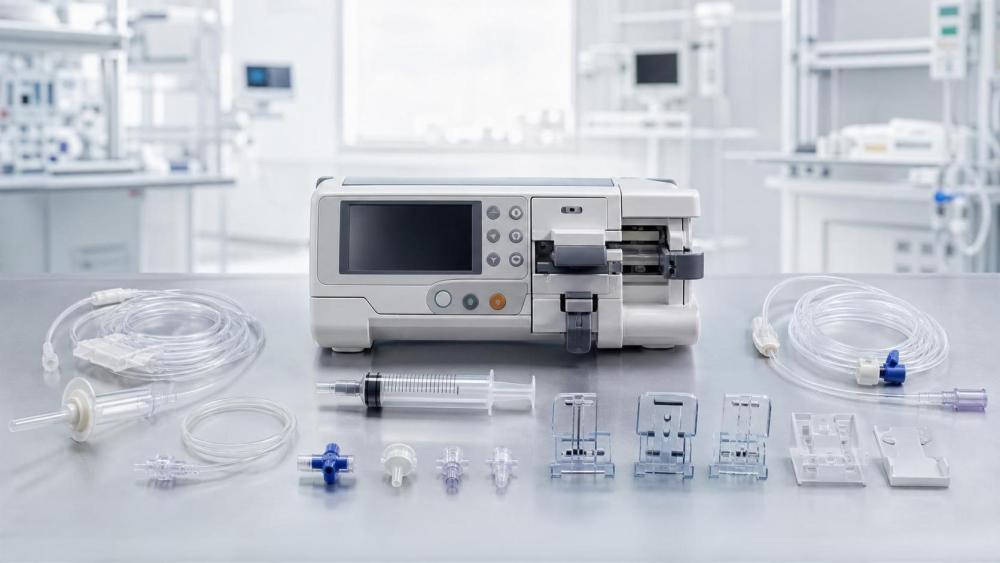
Infusion pump consumables often look similar on the shelf. In practice, small design differences change how the pump behaves.
That is why one tubing set runs smoothly, while another triggers repeated occlusion alarms, air-in-line alerts, or unstable flow messages.
The issue is not only brand matching. It also involves tubing elasticity, chamber shape, connector fit, syringe dimensions, and sensor recognition.
In daily wards, time pressure makes these details easy to overlook. Yet infusion pump consumables directly affect setup speed, medication continuity, and troubleshooting workload.
A practical review usually starts with one question: does the consumable fit the pump mechanically, electronically, and clinically for the intended infusion task?
This is also why structured healthcare information platforms such as MTHH keep focusing on compatibility, maintenance context, and total operating value rather than price alone.
When are “compatible” infusion pump consumables not truly compatible?
A label may say compatible, but that can mean different things. Sometimes it only means the line can be physically installed.
True compatibility is broader. The pump must recognize the consumable correctly and maintain expected flow performance during routine use.
More importantly, the consumable should behave predictably during priming, bolus delivery, low-rate infusion, and long-duration operation.
Several situations usually reveal hidden mismatch:
- The tubing diameter differs slightly from the pump’s calibration assumption.
- The drip chamber or cassette does not align well with the sensor area.
- The syringe barrel brand is accepted, but plunger resistance is outside normal range.
- The connector fits, but leaks or loosens during movement.
- The anti-free-flow feature does not interact correctly with the pump door.
In other words, physical fit is only the first checkpoint. Reliable infusion pump consumables must also support the pump’s sensing and control logic.
This matters even more in settings where multiple pump models coexist. Similar-looking sets can behave very differently across departments.
What parts should be checked before connecting a new set?
A quick visual check prevents many avoidable interruptions. It is faster to inspect first than to solve repeated alarms later.
The most useful approach is to separate the review into four points: pump fit, fluid path, connection security, and labeling clarity.
This kind of checklist is especially useful when stock substitutions happen or when a facility receives consumables from different approved suppliers.
It also supports clearer communication with service teams, because recurring faults can be traced back to a specific consumable model.
Why do alarms increase after switching tubing sets or syringes?
This is one of the most searched daily-use questions, and the answer is rarely just “operator error.”
Different infusion pump consumables create different pressure behavior inside the fluid path. The pump reacts to those changes through its alarm thresholds.
A stiffer tube may raise pressure earlier. A softer tube may delay occlusion detection. A different syringe friction level may affect startup smoothness.
More subtle changes also matter. Chamber geometry can affect bubble visibility. Sensor window clarity can affect air detection. Poorly controlled tolerances can amplify both issues.
When alarms rise after a switch, a useful review includes:
- Whether the new consumable is on the approved compatibility list.
- Whether the pump software version has model-specific settings.
- Whether the line routing adds bends, tension, or patient-side back pressure.
- Whether the reported problem appears on one pump or across a batch.
In actual use, rising alarm frequency often signals a system mismatch, not an isolated handling mistake. That distinction matters for patient safety.
Can infusion pump consumables change flow accuracy enough to matter?
Yes, especially at low flow rates, neonatal applications, vasoactive drug delivery, and long infusions where small deviations accumulate over time.
The pump may be technically functional, but the consumable still influences how quickly pressure builds, how consistently fluid advances, and how the system responds after occlusion release.
This does not mean every non-original set causes inaccuracy. It means verification should be evidence-based, not assumed.
A sensible comparison looks at more than nominal flow rate. It should also consider startup delay, bolus overshoot risk, residual volume, and restart behavior.
Healthcare technology evaluation platforms often stress these operating details because they affect total use value more than a simple unit price difference.
Where documentation is available, check validation data, approved syringe brand lists, alarm performance records, and instructions for use linked to the exact pump model.
How should infusion pump consumables be chosen when several options are available?
The better question is not which set is cheapest. It is which set stays stable across daily workflows with the fewest avoidable interventions.
In practical selection, four filters usually help narrow the choice.
Start with verified compatibility
Use model-specific approval lists whenever possible. A generic claim is weaker than a documented pump-and-consumable pairing.
Look at workflow, not only specifications
Short priming time, clear markings, secure clamps, and easy loading reduce interruption risk during busy administration periods.
Review supply consistency
Even a suitable product becomes problematic if packaging, part codes, or lot-to-lot behavior vary too much.
Include service and documentation
A strong choice includes traceable labeling, user instructions, complaint handling, and clear escalation support when compatibility questions arise.
This is where broader industry resources become useful. MTHH-style content helps connect consumable decisions with maintenance, compliance, and long-term operational planning.
What mistakes lead to repeated compatibility problems, and how can they be reduced?
Most recurring issues come from routine shortcuts rather than rare technical failures. The pattern is usually visible after a few incidents.
- Assuming all infusion pump consumables within one size range behave the same.
- Mixing approved and non-approved syringes in the same storage area.
- Replacing one accessory without checking the whole fluid path.
- Ignoring small alarm increases until they become a department-wide problem.
- Focusing on purchase price without reviewing flow performance and support records.
A more reliable approach is to standardize approved consumable lists, separate look-alike products, and log alarm patterns by product code.
It also helps to keep a short local reference showing which tubing sets, syringes, and extension lines match each pump family.
When a new item is introduced, confirm not only fit, but also observed performance during routine shifts. Daily use reveals issues that bench claims may miss.
What is the best next step if compatibility remains uncertain?
Do not rely on visual similarity or informal habit. Uncertain infusion pump consumables should be checked against approved documentation first.
Then review actual use conditions: pump model, software version, drug type, flow rate, accessory chain, and alarm history.
If the issue appears repeatedly, compare product codes and lot details before assuming the pump itself is faulty.
A structured review usually saves time. It reduces unnecessary pump replacement, avoids repeated setup interruptions, and supports safer infusion continuity.
The main takeaway is straightforward: infusion pump consumables are part of system performance, not disposable details around it.
For the next step, build a simple compatibility checklist, compare approved options by real-use behavior, and keep records that link alarms to exact consumable models.
That approach supports better selection, clearer troubleshooting, and more dependable infusion practice over time.