
How Medical Device Process Validation Supports Consistent Sterile Barrier Seals
Medical device process validation is essential for maintaining consistent sterile barrier seals that protect product sterility from packaging through clinical use.
For quality control and safety teams, a validated sealing process provides documented evidence that materials, equipment, parameters, and operating conditions reliably produce compliant packages.
The central question is not whether a package can pass one seal-strength test. It is whether the manufacturing process repeatedly creates seals that remain intact until use.
When validation is planned correctly, manufacturers reduce seal failures, improve regulatory readiness, protect patients from contamination risks, and make investigations more efficient when deviations occur.
What Quality and Safety Teams Need to Prove
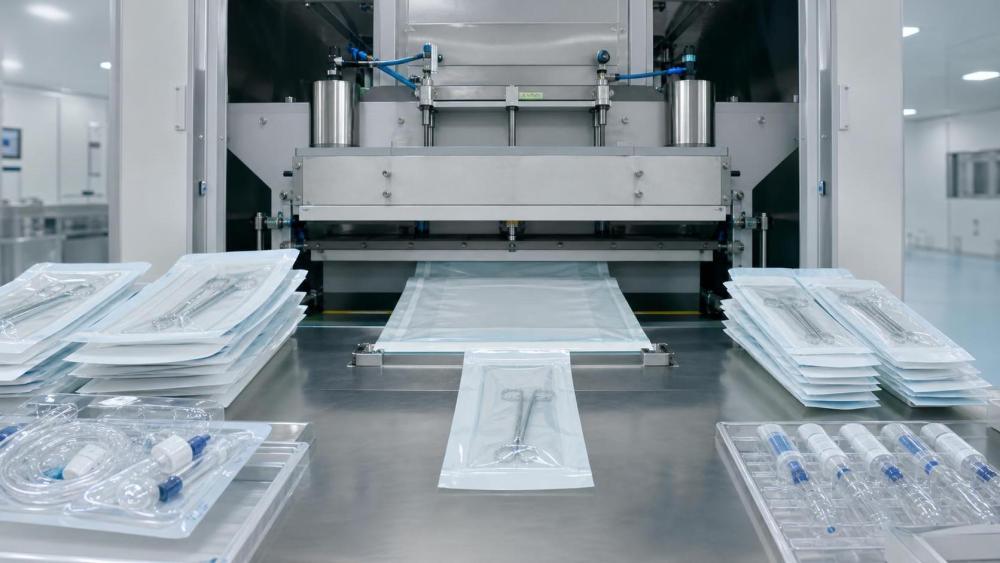
A sterile barrier system must preserve sterility after sterilization, distribution, storage, handling, and opening. Its seal is therefore a critical element of product safety.
Quality teams must demonstrate that the sealing process consistently produces a package with adequate integrity, strength, and peel performance across normal operating conditions.
This requires more than documenting a target temperature, pressure, and dwell time. It requires evidence that the chosen parameter ranges are scientifically justified.
A seal may look acceptable immediately after production while containing channels, incomplete bonding, wrinkles, contamination, or material damage that becomes important later.
Medical device process validation establishes the relationship between process inputs and seal outputs. It identifies which variables must be controlled to prevent unacceptable packaging defects.
For sterile products, the consequences of poor control can include microbial ingress, loss of sterility assurance, product recalls, field corrective actions, and patient harm.
The appropriate validation conclusion is practical: under defined and controlled conditions, the packaging operation can repeatedly produce seals meeting predetermined acceptance requirements.
Why Consistent Seals Depend on a Validated Process
Heat sealing joins packaging materials through a combination of heat, pressure, and time. Small changes in any of these variables can alter seal quality.
Too little heat or dwell time may create weak, discontinuous seals. Excessive heat may damage coatings, distort materials, or create seals that tear unpredictably.
Pressure must also be controlled. Uneven pressure can create localized weak areas, especially near package corners, textured materials, or regions affected by wrinkles.
Sealing equipment introduces additional variation through jaw alignment, surface condition, temperature uniformity, control-system accuracy, and the repeatability of pneumatic or mechanical movement.
Material variation matters equally. Changes in pouch substrate, coating weight, Tyvek grade, film structure, tray flange geometry, or supplier processing can affect sealing behavior.
Environmental factors may also influence results. Particulates, humidity, operator handling, product placement, and packaging cleanliness can interfere with the intended bond.
Medical device process validation brings these variables into one controlled system, ensuring that seal performance does not depend on favorable circumstances or individual operator technique.
Start with the Sterile Barrier System, Not the Sealer
Validation should begin with the complete sterile barrier system rather than the sealing machine alone. The package design defines what the process must achieve.
Document the packaging configuration, including the medical device, protective components, pouch or tray materials, lid material, labels, inserts, and sterilization method.
Each component can affect seal formation or package stress. A heavier device, sharp accessory, or poorly positioned insert may create handling and distribution risks.
The intended sterilization modality is particularly important. Ethylene oxide, radiation, steam, and other methods can affect package materials and seal properties differently.
Quality teams should define critical quality attributes before setting process ranges. These commonly include seal continuity, seal strength, package integrity, and aseptic presentation.
Aseptic presentation deserves separate attention. A seal can be strong enough to protect sterility yet open poorly, shedding fibers or tearing packaging during clinical use.
Risk management should connect packaging failures to their clinical consequences. This helps teams prioritize controls where an integrity failure could compromise patient safety.
Define Critical Process Parameters and Acceptance Criteria
Critical process parameters are variables whose variation can affect a critical packaging quality attribute. They should be identified through knowledge, trials, risk analysis, and data.
For thermal sealing, likely parameters include jaw temperature, dwell time, sealing pressure, cooling time, machine speed, and the alignment of package materials.
Not every recorded setting is necessarily critical. The validation rationale should explain why each parameter requires control and how its limits were selected.
Acceptance criteria should be measurable, product-specific, and linked to the packaging function. Generic assumptions about acceptable seals are weak substitutes for objective requirements.
Visual criteria may address incomplete seals, channels, wrinkles, folds, contamination, delamination, and areas where the seal width is inconsistent or interrupted.
Mechanical criteria often include minimum or target seal strength, but strength values should reflect package design, material behavior, distribution demands, and opening requirements.
Integrity criteria may use validated test methods capable of detecting relevant leaks or defects. The method must be appropriate for the package materials and suspected failure mode.
Build Validation Around IQ, OQ, and PQ Evidence
Installation qualification confirms that the sealing equipment is installed according to approved specifications and can operate within its intended production environment.
IQ records typically cover equipment identification, utilities, software or controller versions, calibration status, safety features, manuals, preventive maintenance, and approved operating procedures.
Operational qualification evaluates whether the process works across defined parameter ranges. It is where teams establish the operating window rather than relying on nominal settings.
A useful OQ examines combinations near lower and upper limits for critical parameters. This demonstrates whether acceptable seals can be achieved under credible worst-case conditions.
Experimental design can improve OQ efficiency by showing interactions between temperature, pressure, and dwell time. It also provides stronger justification for selected limits.
Performance qualification confirms that trained personnel can produce acceptable packages during routine manufacturing using approved materials, equipment, procedures, and production conditions.
PQ should represent routine operations, including normal shifts, expected operators, typical product loading, and production-scale conditions. It must not resemble an artificial laboratory exercise.
Use Seal Strength and Integrity Testing for Different Questions
Seal-strength testing evaluates the force needed to separate a seal. It can help demonstrate bonding consistency and reveal weak seals or undesirable opening behavior.
ASTM F88 is commonly used for flexible barrier materials, but the selected configuration, sample preparation, peel direction, and data interpretation require documented justification.
A high strength result does not automatically prove package integrity. A package may resist peeling while still containing a channel or localized defect.
Visual inspection methods, including ASTM F1886 where applicable, can identify channels and unsealed areas in transparent package configurations. Inspection conditions should be controlled.
Dye penetration testing, such as ASTM F1929 for suitable porous materials, may detect channels. Its applicability depends on package design and must be carefully evaluated.
Bubble emission testing under ASTM F2096 can identify gross leaks in certain flexible packages. It is useful, but it may not represent all defects relevant to a product.
For some package systems, burst or creep testing may support assessment of seal robustness. Teams should avoid choosing methods simply because they are familiar or available.
Control Routine Production After Validation Is Complete
Validation does not eliminate the need for ongoing process control. It establishes the evidence base for a manufacturing system that must remain in a validated state.
Production procedures should specify approved parameter ranges, setup verification, material identification, cleaning expectations, in-process checks, and actions required when limits are exceeded.
Operators need training on both equipment settings and defect recognition. A skilled operator can identify material folds, contamination, or misalignment before defective packages accumulate.
Calibration and preventive maintenance are essential because temperature sensors, pressure controls, timers, and sealing surfaces can drift or degrade over time.
Statistical process monitoring can reveal gradual deterioration before a nonconforming trend becomes a batch-level quality event. Trending should focus on meaningful process indicators.
Useful records may include actual sealing parameters, lot numbers, inspection results, seal-strength data, maintenance activities, deviations, and corrective actions linked to process performance.
When routine monitoring detects an out-of-trend result, teams should investigate the process, materials, test method, and package handling rather than immediately assuming operator error.
Manage Changes Without Losing Validation Status
Many sterile barrier failures emerge after apparently minor changes. A new material supplier, revised coating, replacement heating element, or software update can alter sealing results.
A formal change-control process should assess whether the change affects critical process parameters, package materials, sealing geometry, sterilization compatibility, or validated acceptance criteria.
Supplier changes require particular scrutiny. A material may retain the same commercial description while its formulation, thickness, surface treatment, or coating characteristics change.
Equipment maintenance can also trigger reassessment. Replacing jaws, controllers, thermocouples, pressure regulators, or tooling may affect heat transfer, alignment, or force distribution.
Changes should be classified according to risk. Some need documented review only, while others require engineering studies, partial requalification, or full validation activities.
Quality teams should define revalidation triggers in advance. This avoids inconsistent decisions and provides a defendable basis for determining the amount of verification needed.
A well-maintained validation file links change assessments, test evidence, approvals, deviations, and conclusions. This structure supports inspections and internal quality decisions.
Common Validation Weaknesses That Create Seal Risk
One common weakness is validating only a nominal setting. A process that works at one point may fail when normal variation moves parameters toward practical operating limits.
Another weakness is relying exclusively on seal strength. This can miss integrity defects, poor visual appearance, or peel characteristics that impair aseptic presentation.
Teams also sometimes test materials that are not representative of routine production. Qualification samples should reflect approved suppliers, lots, dimensions, and product configurations.
Inadequate sample rationale is another concern. Sample size, locations, production runs, and test selection should be justified according to risk and process variability.
Failure investigations become difficult when batch records lack actual settings, material traceability, or clear identification of the equipment and sealing tooling used.
Overly broad operating ranges can appear operationally convenient, but they may conceal process instability. Limits should be supported by OQ data, not preference alone.
Finally, validation reports should state limitations clearly. Transparent boundaries help production, quality, and regulatory teams understand what conditions the evidence actually supports.
How to Make Validation Useful for Procurement and Safety Decisions
For quality and safety managers, packaging validation evidence is a practical indicator of a manufacturer’s process maturity, not merely a regulatory document.
When evaluating suppliers, ask whether they can explain their sterile barrier system, critical sealing parameters, validation approach, routine monitoring, and change-control process.
Requesting only a certificate is rarely enough. A meaningful review considers the relevance of the evidence to the specific device, package configuration, sterilization method, and market.
Hospital procurement and distributor teams may not audit every validation detail, but they can identify warning signs when packaging documentation is vague or inconsistent.
Manufacturers should communicate seal-control practices clearly because package reliability influences storage confidence, transport performance, complaint risk, and clinical user trust.
For safety teams, the key is traceability from patient risk to packaging requirement, process control, test evidence, and response procedures when nonconformities are detected.
This connection turns medical device process validation into an operational safety tool rather than a report prepared only to satisfy an inspection requirement.
Conclusion: Validation Is Evidence of Repeatable Sterile Barrier Protection
Consistent sterile barrier seals are achieved through controlled systems, not isolated successful test results. Packaging materials, sealing equipment, operators, and procedures must work together reliably.
Effective medical device process validation establishes critical parameters, proves an operating window, confirms routine performance, and defines controls that maintain package quality over time.
Quality control and safety teams should evaluate both seal strength and package integrity while considering sterilization, distribution, storage, opening performance, and patient-facing risk.
The strongest validation programs are risk-based, traceable, and responsive to change. They provide confidence that sterile medical devices remain protected until the point of use.