
Why does one bandages manufacturer quote look low at first, then rise later?
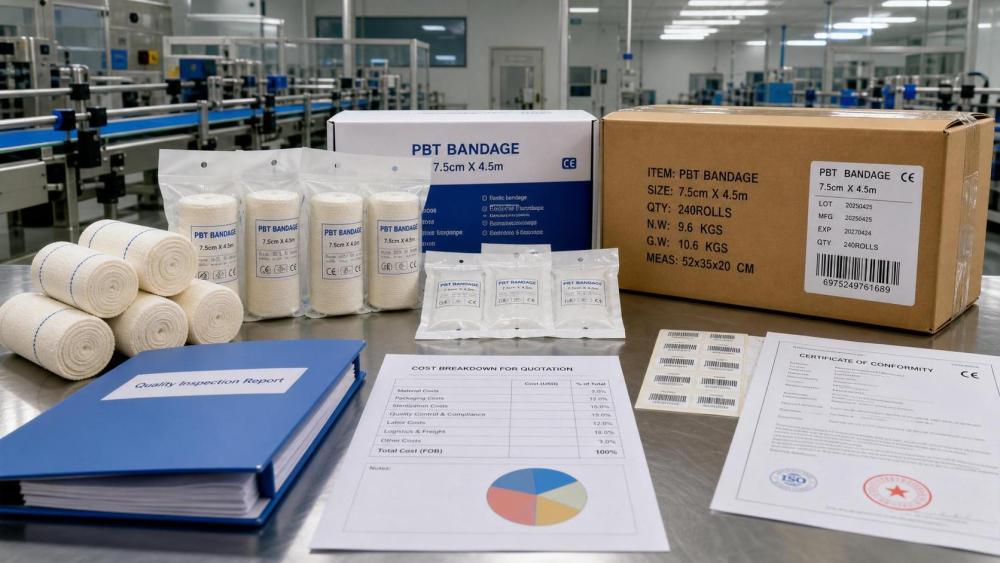
A bandages manufacturer rarely prices by unit alone. The visible number is only the opening line of the cost story.
In healthcare supply, small differences in material, packaging, and compliance can change the final order value more than expected.
That matters because bandages sit inside a broader medical procurement system. Cost control must still protect safety, usability, and supply continuity.
A low quote may exclude sterilization method, private labeling, carton configuration, testing documents, or export paperwork.
In practical terms, the right comparison starts with total landed cost, not ex-factory price.
This is why structured healthcare platforms such as MTHH often emphasize technical and commercial review together.
Medical consumables may look simple, yet buying decisions still depend on documentation readiness, quality consistency, and operational fit.
Which cost drivers usually have the biggest impact on a bandages manufacturer order?
The biggest drivers are usually raw material grade, order volume, packaging design, compliance scope, and production timing.
Material grade comes first because cotton purity, absorbency level, elasticity, adhesive performance, and skin-contact safety all affect input cost.
A bandages manufacturer using medical-grade certified materials will usually quote higher than one using general-purpose alternatives.
Volume also changes the economics. Larger runs spread setup cost, labeling preparation, and packaging line adjustment across more units.
However, very low minimum order quantities often push the unit price upward because production efficiency falls.
Packaging is another silent cost. Bulk hospital packs, retail boxes, sterile pouches, barcoding, and multilingual labels do not cost the same.
Compliance requirements can be even more decisive when the bandages manufacturer must support CE, FDA-related files, ISO systems, or local registration documents.
Lead time matters too. Urgent orders may require overtime, priority scheduling, expedited raw material purchase, or split shipment.
A bandages manufacturer should be able to break these elements out clearly. If not, quote comparison becomes unreliable.
How do material and packaging choices affect cost beyond the headline unit price?
Material and packaging often decide whether a quote stays stable after review.
For example, woven versus non-woven structures may change strength, comfort, and manufacturing complexity.
Latex-free requirements can also shift sourcing cost. The same applies to cohesive bandages, compression types, and skin-sensitive variants.
Then comes packaging. A bandages manufacturer supplying public tenders may need exact label content, traceability codes, and transport-ready secondary cartons.
Those details support inventory control and regulatory review, but they also add print, inspection, and packing cost.
More importantly, packaging affects waste and handling efficiency. A cheaper pack can create higher internal distribution cost later.
MTHH often frames medical purchasing this way: price only becomes meaningful when linked to workflow, safety, and long-term operating value.
- Bulk packs usually reduce unit price but may not fit every storage or dispensing model.
- Individual sterile packs raise cost but improve traceability and point-of-use control.
- Private label packaging adds artwork, approval cycles, and inventory complexity.
When does compliance make a bandages manufacturer more expensive, and when is it worth paying?
Compliance usually becomes expensive when documentation expectations are vague at the quoting stage.
A bandages manufacturer may initially price standard production, while the buyer later requests test reports, technical files, or market-specific labeling changes.
That gap causes revisions, delays, and extra charges. In regulated healthcare channels, it can also create approval risk.
Paying more is usually justified when compliance reduces import friction, supports tender participation, or lowers the chance of rejected batches.
This is especially relevant for cross-border supply. One missing document can delay customs clearance longer than any material shortage.
The stronger bandages manufacturer is not always the cheapest one. Often it is the one with reliable quality systems and complete paperwork.
That broader view is common across medical technology procurement. Whether buying imaging systems or consumables, documentation quality influences commercial risk.
A practical compliance check before approval
- Confirm which certificates are already available and which require a new application.
- Check whether labeling rules differ by destination market.
- Review batch traceability, shelf-life data, and sterilization validation where relevant.
- Ask whether document support is included in the quote or billed separately.
Is a lower MOQ always better when comparing a bandages manufacturer?
Not necessarily. A lower MOQ gives flexibility, but it can increase unit cost, freight cost, and replenishment frequency.
In many cases, the better question is whether the order structure matches expected usage and inventory risk.
A bandages manufacturer offering a very low MOQ may still be less economical if each shipment carries repeated setup and logistics overhead.
On the other hand, oversized orders can tie up cash, create expiry exposure, and increase storage pressure.
The useful middle ground is often annual volume planning with staged deliveries.
That approach gives the bandages manufacturer a clearer production forecast while keeping stock levels more manageable.
It also improves quote transparency because price breaks, shipment timing, and reserve capacity can be discussed together.
Quick judgment table for MOQ decisions
What mistakes make bandages manufacturer quotes hard to compare?
The most common mistake is comparing unlike specifications under one price line.
One bandages manufacturer may quote non-sterile bulk supply, while another includes sterile single packs and multilingual labeling.
Another mistake is ignoring service reliability. Production capacity, defect handling, batch consistency, and complaint response all influence real cost.
Freight terms also distort comparisons. Ex works, FOB, and delivered pricing produce very different totals.
Some reviews also miss the hidden cost of delays. A lower-cost bandages manufacturer can become expensive if replenishment is unreliable.
This is where a structured checklist helps more than a generic quote summary.
- Match product specification line by line.
- Confirm packaging level and carton quantity.
- Check included certificates and testing support.
- Review lead time under normal and urgent demand.
- Calculate landed cost, not factory price only.
What is the smartest next step before approving a bandages manufacturer order?
The smartest next step is to turn the quote into a decision sheet with cost, compliance, and continuity on one page.
That makes discussions clearer and reduces the risk of approving a price that later changes.
A bandages manufacturer should be assessed against the real use case, not a generic purchasing template.
In healthcare supply, even a basic consumable affects workflow, traceability, safety expectations, and replenishment planning.
MTHH’s broader procurement logic is useful here: evaluate technical fit, commercial structure, and operational risk together.
Before final approval, align specification, annual demand, compliance documents, packaging format, lead time, and freight terms.
If those points are clear, a bandages manufacturer quote becomes easier to compare, defend, and manage over time.
The final decision is rarely about finding the lowest number. It is about buying predictable supply at a cost that remains predictable after the order is placed.