
PCR Molecular Diagnostic Instruments: Key Specs That Affect Test Accuracy
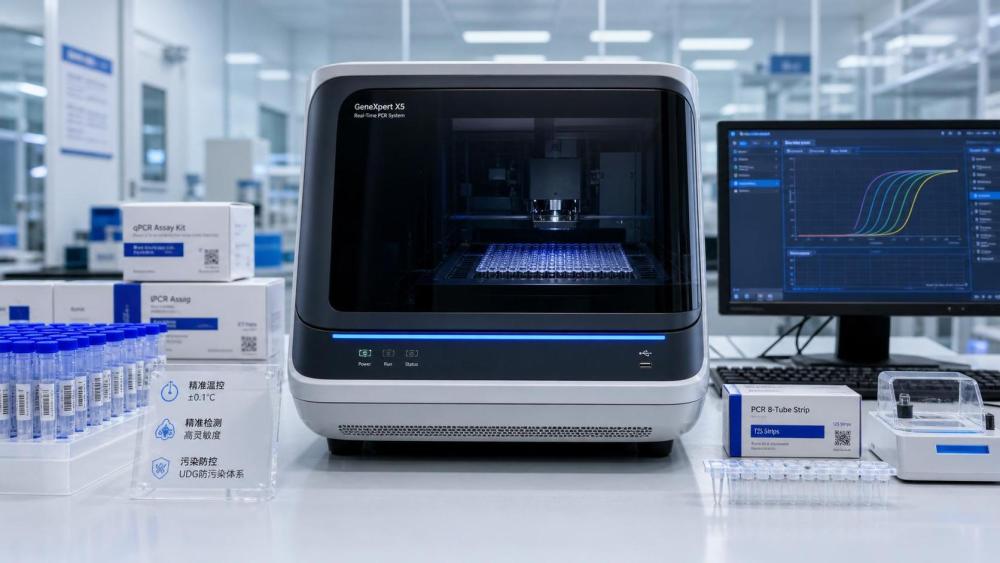
PCR molecular diagnostic instruments are often judged by assay menus or speed.
Yet test accuracy depends on instrument design just as much as reagent performance.
That matters when results support infection control, treatment decisions, and public health reporting.
For procurement, validation, and compliance teams, the real question is simple.
Which specifications in PCR molecular diagnostic instruments directly affect result consistency?
The answer usually starts with thermal control, optical precision, contamination prevention, and software traceability.
But in actual laboratory operations, workflow fit and maintenance stability also shape accuracy over time.
This is why comparing PCR molecular diagnostic instruments only by price creates avoidable risk.
Why Instrument Specs Matter More Than Many Buyers Expect
PCR technology amplifies nucleic acid targets through tightly controlled temperature cycling.
If the instrument cannot hold those conditions precisely, assay chemistry cannot fully compensate.
Small deviations may shift Ct values, lower sensitivity, or increase repeat testing.
Over weeks or months, that becomes a quality issue, not just a technical detail.
Modern PCR molecular diagnostic instruments also handle data, user access, and audit records.
So accuracy now includes analytical performance and documentation integrity.
This is especially relevant where ISO 15189, CAP, CLIA, or local accreditation rules apply.
Thermal Performance: The Core Accuracy Driver
Among all PCR molecular diagnostic instruments, thermal specifications deserve the closest review.
Three items matter most: accuracy, uniformity, and ramp rate stability.
1. Temperature Accuracy
Temperature accuracy shows how close the actual block temperature is to the programmed value.
Poor accuracy can alter denaturation, annealing, and extension efficiency.
That is more visible in low-copy targets and multiplex assays.
2. Thermal Uniformity
Uniformity describes temperature consistency across all wells or reaction positions.
If edge wells behave differently from center wells, reproducibility declines.
This issue often appears during high-throughput runs or comparative batch analysis.
3. Ramp Rate Stability
Fast ramp rates look attractive, but speed alone is not the real goal.
Stable transitions between temperatures are more important than headline cycle speed.
Inconsistent ramp behavior can shift amplification profiles across runs.
- Ask for thermal mapping data, not only brochure specifications.
- Review uniformity values under full-load operating conditions.
- Check whether verification procedures are documented for routine service intervals.
Optical Detection Precision in Real-Time PCR Molecular Diagnostic Instruments
For real-time PCR molecular diagnostic instruments, optical performance directly affects signal interpretation.
Weak fluorescence detection can mask low-level targets or distort multiplex separation.
This becomes critical in respiratory panels, oncology markers, and resistance gene testing.
Key Optical Specs to Review
- Excitation and emission channel design.
- Sensitivity at low fluorescence intensity.
- Cross-talk control between dye channels.
- Baseline correction and threshold setting logic.
- Calibration stability over time.
A system may support many fluorophores on paper, yet still struggle with clean channel separation.
That can lead to false positives, false negatives, or unstable Ct interpretation.
When evaluating PCR molecular diagnostic instruments, request multiplex validation evidence with clinically relevant samples.
Contamination Control Is an Accuracy Spec, Not Just a Workflow Feature
Contamination remains one of the biggest operational risks in molecular testing.
Even high-performing PCR molecular diagnostic instruments can produce unreliable results without strong contamination control.
From recent market changes, this has become a stronger procurement focus.
Labs now expect design features that reduce aerosol spread, carryover, and operator error.
Useful Design Controls
- Closed-tube amplification and detection.
- Physical separation of sample preparation and amplification areas.
- Sealed consumable paths or cartridge-based handling.
- UV decontamination options where appropriate.
- Clear cleaning validation instructions.
In practical terms, contamination control reduces repeat testing, invalid runs, and incident investigation workload.
That means accuracy and operational efficiency move together.
Software, Traceability, and Data Integrity
Accuracy is also affected by how results are captured, reviewed, and released.
Software in PCR molecular diagnostic instruments should support controlled, traceable decision-making.
This is where technical quality meets compliance confidence.
Look for These Functions
- User access levels and password controls.
- Complete audit trail for parameter changes.
- Lot, run, and operator traceability.
- Automatic flagging of invalid controls.
- LIS or middleware integration support.
- Secure backup and data export procedures.
Without these controls, result review becomes vulnerable to undocumented changes.
That creates risk during audits, complaint handling, and retrospective quality investigations.
For many buyers, this is now a decisive factor when comparing PCR molecular diagnostic instruments.
Sample-to-Answer Workflow and Human Error Reduction
Not every accuracy problem comes from core hardware.
Some come from difficult setup steps, unclear prompts, or excessive manual transfer points.
PCR molecular diagnostic instruments with simpler workflows often produce more consistent results in routine use.
This is especially true across shift changes or multi-operator laboratories.
Maintenance, Calibration, and Long-Term Stability
A common buying mistake is focusing on day-one performance only.
However, PCR molecular diagnostic instruments must stay stable across daily use, preventive maintenance, and software updates.
If calibration drifts or service support is weak, accuracy can slowly degrade.
That trend may remain hidden until external quality assessment results reveal it.
Procurement Questions Worth Asking
- How often are thermal and optical calibrations required?
- What downtime should be expected during preventive maintenance?
- Are calibration tools proprietary and locally available?
- How are software changes validated after updates?
- What evidence supports performance consistency after service events?
These points influence total operating value as much as the original purchase price.
How to Compare PCR Molecular Diagnostic Instruments More Effectively
A useful comparison framework combines analytical, operational, and compliance criteria.
That approach gives a more realistic view of instrument suitability.
When reviewing PCR molecular diagnostic instruments, prioritize evidence in this order.
- Thermal mapping and reproducibility data.
- Optical sensitivity and multiplex validation.
- Contamination control design and cleaning procedures.
- Audit trail, user control, and data integrity functions.
- Maintenance burden, service response, and calibration support.
- Workflow simplicity under routine staffing conditions.
This also helps teams separate marketing claims from practical laboratory performance.
Final Takeaway
The best PCR molecular diagnostic instruments are not simply the fastest or cheapest models.
They are the systems that protect accuracy through stable thermal control, precise optics, contamination resistance, and reliable traceability.
In daily operations, those specifications reduce uncertainty, strengthen compliance readiness, and support dependable reporting.
Before selecting PCR molecular diagnostic instruments, build your review around verified performance data, workflow risk, and long-term serviceability.
That is usually where better decisions begin, and where test accuracy is most effectively protected.