
How Automated Molecular Testing Systems Improve Lab Turnaround Time
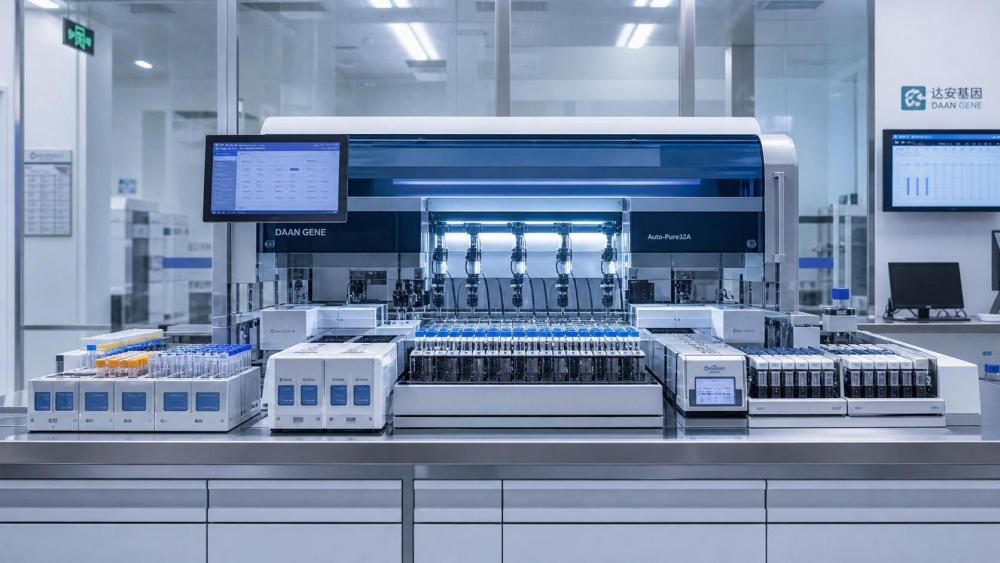
For many laboratories, turnaround time is no longer a simple speed metric.
It shapes clinical response, reporting reliability, staffing pressure, and daily instrument utilization.
That is why automated molecular testing systems matter well beyond automation headlines.
They reduce manual handoffs, standardize critical steps, and make workflows more predictable under routine and surge conditions.
In practical evaluation, the main question is not whether automation helps.
The real question is how automated molecular testing systems improve turnaround time without creating new bottlenecks elsewhere.
This matters in hospital labs, reference centers, public health facilities, and integrated diagnostic networks.
From a technical assessment view, system value depends on workflow fit, throughput stability, maintenance burden, and reporting integration.
Why Turnaround Time Is Still a Lab Performance Pressure Point
Molecular testing demand has expanded across infectious disease, oncology, screening, and targeted therapy support.
At the same time, staffing remains uneven, sample volumes fluctuate, and result expectations keep getting tighter.
Many labs still lose time before amplification even begins.
Manual accessioning, batching decisions, extraction preparation, reagent handling, and repeat checks often slow the process.
When these steps depend on operator timing, turnaround becomes inconsistent across shifts.
That inconsistency is expensive because delayed release affects treatment decisions, bed management, and clinician confidence.
Automated molecular testing systems address this by compressing pre-analytic and analytic delays into a controlled workflow.
The biggest gain often comes from removing small repeated delays, not only from faster run cycles.
How Automated Molecular Testing Systems Shorten the Workflow
A typical molecular workflow includes sample receipt, preparation, nucleic acid extraction, reaction setup, amplification, detection, and reporting.
Each transition creates an opportunity for delay.
Automated molecular testing systems improve lab turnaround time by reducing those transitions and making them more uniform.
1. Fewer Manual Preparation Steps
Integrated platforms can automate extraction, pipetting, reagent dispensing, and reaction loading.
That removes repetitive bench work and lowers waiting time between steps.
It also helps standardize sample handling when multiple operators share one workflow.
2. Less Batch Dependency
Older setups often wait for enough samples to justify a run.
That improves reagent economics, but it stretches reporting time.
Many automated molecular testing systems support random access or more flexible loading patterns.
This allows urgent samples to move faster without disrupting the entire queue.
3. Built-In Process Control
Automated monitoring of temperature, reagent position, cartridge status, and process timing reduces avoidable reruns.
That directly protects turnaround time because repeats consume both time and operator attention.
4. Faster Data Transfer
When instrument software connects cleanly with LIS or middleware, result release becomes much faster.
Without that connection, labs still lose time on review queues and manual transcription steps.
Operational Benefits Beyond Pure Speed
A faster result is useful, but operational stability is usually the stronger long-term benefit.
Automated molecular testing systems improve lab turnaround time because they reduce variability across people, shifts, and sample peaks.
That makes daily performance easier to forecast and easier to manage.
- More stable reporting windows for inpatient and outpatient requests
- Lower dependence on highly specialized manual operators
- Reduced contamination risk from repeated open handling steps
- Better allocation of staff toward exceptions, QC review, and urgent cases
- Improved scalability during outbreak testing or seasonal surges
In real procurement discussions, these points often matter as much as analytical speed claims.
A system that runs fast but creates downtime, software friction, or consumable delays can still weaken true turnaround performance.
What Technical Evaluators Should Check Before Selection
The phrase automated molecular testing systems covers very different architectures.
Some systems are compact sample-to-answer units.
Others are modular platforms designed for higher volume and broader menu expansion.
Selection should focus on real workflow behavior, not only brochure throughput.
Key Evaluation Points
- Hands-on time per sample or per run
- Maximum and practical throughput under routine staffing
- Time to first result, not only time to batch completion
- Urgent sample handling capability
- Reagent loading logic and storage requirements
- Downtime patterns, maintenance intervals, and failure recovery steps
- LIS connectivity, middleware support, and result validation workflow
- Contamination control design and cleaning burden
A strong assessment also compares expected turnaround gains against reagent dependency and service access.
If a platform depends on single-source consumables with unstable supply, reported speed may not translate into stable operations.
Common Bottlenecks That Automation Does Not Solve Alone
Automation is powerful, but it is not a complete turnaround strategy by itself.
Some delays remain outside the instrument.
This is where many projects succeed or fail.
Automated molecular testing systems improve lab turnaround time best when the surrounding process is also disciplined.
Where the Best Fit Usually Appears
The strongest value often appears in workflows with high repeatability, urgent reporting needs, or fluctuating volume.
Examples include respiratory panels, infectious disease screening, transplant monitoring, and oncology marker support.
In these settings, automated molecular testing systems can improve response speed while protecting consistency.
The fit is also strong where staffing coverage changes across shifts.
Automation reduces reliance on a few highly experienced operators and supports more even performance across the day.
A Practical Decision Framework
Before final selection, map the current workflow in minutes, not assumptions.
Measure sample receipt delay, preparation time, run frequency, repeat rate, verification time, and average release time.
Then compare that baseline with the proposed automated pathway.
- Define the target turnaround time by assay type and urgency.
- Identify which delays are manual, software-related, or supply-driven.
- Test whether automated molecular testing systems remove those exact delays.
- Confirm service support, consumable continuity, and interface readiness.
- Run a pilot using real sample flow, not ideal vendor scenarios.
That approach gives a much clearer picture of sustainable turnaround improvement.
It also helps separate true workflow value from headline automation claims.
Closing Perspective
Automated molecular testing systems improve lab turnaround time by doing several things at once.
They reduce hands-on steps, limit workflow variation, support faster reporting, and make capacity easier to manage.
Still, the best results come from matching system design to actual laboratory operations.
When evaluation includes throughput realism, integration readiness, service resilience, and staffing fit, automation becomes a practical solution rather than a simple feature upgrade.
For decision-making, focus on where automated molecular testing systems remove the most time, the most repeats, and the most avoidable uncertainty.