
On July 10, 2026, a new FDA implementation requirement for exported IVD products took effect, introducing a more specific traceability obligation for Chinese manufacturers shipping in vitro diagnostic reagents to the United States. At the export declaration stage, manufacturers must now submit a batch-level UDI electronic log aligned with ISO/IEC 15459-3. Because the required data covers production, sterilization, shelf life, and logistics nodes, the change deserves attention not only from exporters, but also from importers, distributors, and laboratory end users whose clearance timing, inventory handling, and compliant product use may be affected.
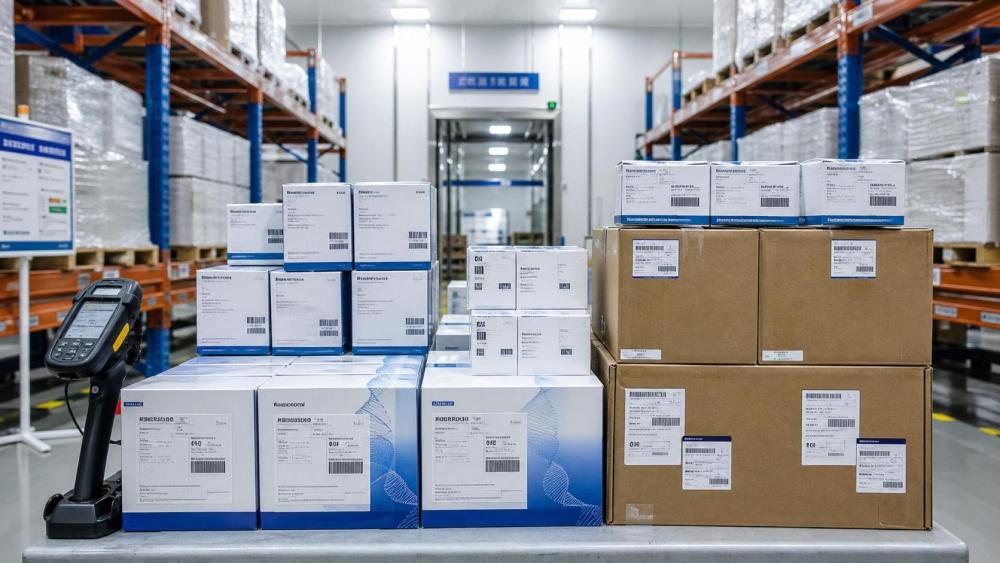
What the new requirement formally changes
The confirmed information is clear on several points. The FDA formally brought into effect the Implementation Guide for Electronic Traceability of Exported IVD Products on July 10, 2026. The rule applies to Chinese manufacturers exporting in vitro diagnostic reagents to the U.S. market.
Under the new requirement, the export declaration process must include a UDI batch-level electronic log that complies with ISO/IEC 15459-3. The electronic log is required to contain production batch numbers, sterilization dates, expiration dates, and logistics node data.
The stated operational impact is also specific: the requirement directly affects importer customs clearance efficiency, distributor inventory management, and compliant use by end laboratories. Products that do not meet the requirement may face automatic FDA interception or return risk.
Where the pressure is likely to appear across the chain
Export declarations move from document completion to traceability completion
For exporting manufacturers, the immediate impact is tied to whether export filing materials can be synchronized with a compliant batch-level UDI electronic log. The issue is not limited to labeling or product identity alone; it extends to whether batch information and logistics node records are organized in a form that can support declaration requirements. What deserves closer attention is the alignment between export documentation, internal batch records, and the traceability fields required by the new guide.
Import-side timing may become more sensitive to data readiness
For importers and trade operators, the rule matters because customs clearance timing may now depend more directly on the completeness and consistency of traceability records submitted upstream. Analysis shows that even when product movement plans remain unchanged, missing or nonconforming electronic log content could become a practical obstacle in shipment release, receipt planning, or exception handling.
Distribution and inventory control face a tighter data link
For distributors and channel operators, the requirement points to closer linkage between inventory status and batch-level traceability data. Since the confirmed scope includes expiration and logistics node information, stock management may need to pay closer attention to whether incoming shipments are supported by records that can be matched clearly at the batch level. From an industry perspective, this is relevant not only for storage and rotation, but also for handling product flows when downstream customers request traceability verification.
Laboratory use is touched through compliance visibility
For end laboratories and procurement-side users, the change matters because compliant use is explicitly referenced in the event summary. Observably, this does not automatically define new laboratory procedures on its own, but it does indicate that traceability data attached to exported IVD reagents is becoming more material to downstream compliance review. Buyers may therefore need to watch more closely whether supplied products arrive with documentation that is complete enough to support internal control and acceptance checks.
What companies should review now
Check whether batch records can support the required data fields
Companies involved in export should first review whether existing batch documentation can reliably produce the required production batch number, sterilization date, expiration date, and logistics node data in a structured electronic form. Where these records exist but are maintained across disconnected systems or manual files, the practical compliance risk may arise from inconsistency rather than absence.
Recheck export-facing documentation and handoff points
Another practical focus is the point at which internal records become export declaration materials. Analysis shows that firms should pay attention to handoffs between manufacturing, quality, logistics, and export operations, because the new requirement attaches compliance significance to the timing and completeness of traceability submission at declaration stage.
Review distributor and customer documentation expectations
Because the confirmed impact reaches importers, distributors, and end laboratories, companies should also watch whether counterparties begin requesting clearer batch-level traceability files, supporting documentation, or standardized record formats as part of ordering, delivery, or receipt processes. This should be treated as a compliance and delivery coordination issue rather than only an internal regulatory matter.
Continue monitoring the execution approach
The input does not provide more detailed enforcement procedures, so it would be premature to describe fixed implementation outcomes beyond the confirmed rule change. What deserves closer attention is whether later official communication, market practice, or trading counterpart requirements clarify how the electronic log will be checked in practice and how exceptions may be handled.
Why this reads as an execution signal, not just a policy headline
Observably, this development is better understood as a rule now entering operational use rather than a broad policy statement awaiting activation, because the effective date is explicit and the submission requirement is tied to a specific export step. At the same time, Analysis shows that the market still needs to observe how consistently the requirement is applied in shipment handling, documentation review, and downstream acceptance expectations. In that sense, the signal is concrete, but the full execution texture still requires monitoring.
How the market is likely to interpret this shift
From an industry perspective, the core meaning of this update is that traceability for exported IVD reagents is being expressed more directly through batch-level electronic submission requirements. The immediate significance lies less in abstract compliance language and more in its effect on shipment readiness, clearance rhythm, inventory handling, and downstream documentation confidence. It is more appropriate to understand this as a landed compliance change with practical execution consequences, while still recognizing that the detailed market response and enforcement rhythm remain matters to watch.
Basis of this article and what still needs verification
This article is based on the user-provided news title, event date, and event summary. For developments of this type, relevant source categories usually include official regulatory notices, releases from supervisory authorities, customs or trade administration information, industry association updates, standards organization documents, and reporting from authoritative trade media.
No specific official source link was provided in the input, so the exact official publication path still needs to be verified on an ongoing basis. Further observation is also needed regarding detailed implementation language, certification or compliance interpretation, changes in tender or procurement documents, market feedback, and how affected companies carry out the requirement in practice.