
On July 4, 2026, the European Commission adopted Regulation (EU) 2026/1389 to urgently revise MDR Annex XVI, introducing a new compliance requirement for rehabilitation devices that integrate AI algorithms. For manufacturers of products such as intelligent gait training systems and neurofeedback rehabilitation platforms, as well as notified bodies and product teams managing upgrades, this development deserves close attention because it changes how AI functions must be assessed and may affect CE certification timing and product update plans.
What the July 4 amendment formally changes
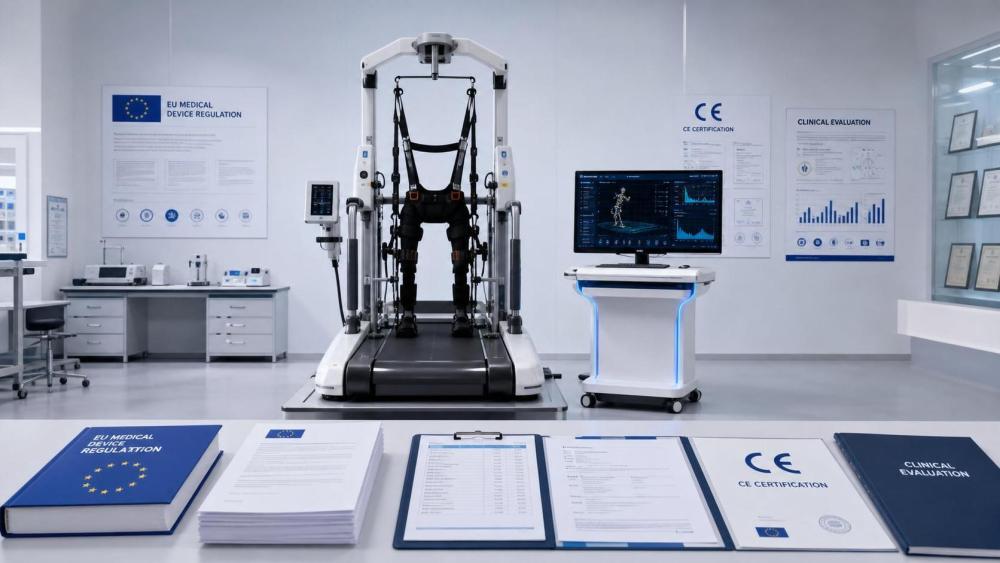
According to the information provided, the amendment classifies AI-enabled functions in rehabilitation devices as a “high-risk additional function” under the revised MDR Annex XVI framework. From October 1, 2026, manufacturers will be required to complete a separate clinical evaluation for the AI module and submit that evaluation to a notified body. The information provided also states that this change is expected to extend CE certification timelines and affect the upgrade path for existing products.
Where the pressure is likely to appear first
Product manufacturers face a more segmented approval path
From an industry perspective, manufacturers of rehabilitation equipment with integrated AI features are the most directly affected group because the new requirement separates the AI module from the broader device assessment workflow. The main impact is likely to appear in regulatory preparation, technical documentation planning, and the scheduling of product submissions or updates. What deserves closer attention is whether current development and certification plans already assume one combined pathway that may no longer be sufficient after October 1, 2026.
Notified body submissions may become more complex
Observably, the change also matters for the interface between manufacturers and notified bodies. If AI modules now require their own clinical evaluation package, the submission process may involve more documentation review and additional coordination around the AI-related portion of the product. The key issue for market participants is not only whether a device contains AI, but how that function is positioned within the compliance file and the product’s certification timeline.
Existing product upgrades may need to be reconsidered
Analysis shows that companies managing installed products or planned feature upgrades should pay particular attention to the statement that existing product upgrade paths may be affected. The business impact is likely to be most visible in release planning, customer communication, and decisions about whether an AI-related upgrade can proceed on the original timeline once a separate clinical evaluation is required for the module.
What companies should monitor now
The exact scope of products and functions under review
Companies should first focus on whether their rehabilitation products include AI-enabled functions comparable to the examples cited in the provided information, such as intelligent gait training systems or neurofeedback rehabilitation platforms. The practical question is whether the AI component will be treated as part of routine product enhancement or as a separately scrutinized function under the revised rule.
Submission timing ahead of the October 1, 2026 requirement
What deserves closer attention is the implementation date. With the separate clinical evaluation requirement starting on October 1, 2026, manufacturers will need to review whether current CE certification schedules, ongoing submissions, or planned product modifications intersect with that date. This is especially relevant where internal teams are still assuming previously planned certification windows.
Documentation readiness for AI-specific review
Analysis shows that the immediate operational issue is not only regulatory interpretation but documentation readiness. Where an AI module must be submitted separately, companies should examine whether their current evidence package, internal review process, and submission materials are organized in a way that supports stand-alone assessment of that module.
Customer and partner communication around upgrade timing
For companies already planning AI-related updates, communication may become a practical risk point. Observably, if certification cycles lengthen, downstream expectations on delivery, launch sequencing, or upgrade availability may need to be reset. The priority here is not to assume delay in every case, but to prepare for timetable changes where the AI element is central to the planned update.
Why this looks like more than a procedural clarification
Analysis shows that this development is better understood as both a near-term compliance change and a longer-term policy signal. In the short term, the rule introduces a clear additional requirement with a defined start date. In the longer term, it indicates closer regulatory attention to AI functions within rehabilitation equipment, especially where those functions are no longer treated as a minor embedded feature. At the same time, it remains important to keep the interpretation bounded to the information provided: the confirmed fact is the revised requirement itself, while the full operational impact across product categories still needs continued observation.
How the market should read this update
At this stage, it is more appropriate to understand the amendment as a concrete regulatory shift with immediate planning consequences rather than as a fully settled picture of market outcomes. The confirmed change is narrow but material: AI modules in certain rehabilitation devices will require separate clinical evaluation submissions from October 1, 2026. For the industry, the significance lies less in headline effect and more in how certification sequencing, product upgrades, and submission preparation may now need to be reorganized.
Basis of this article and what still needs verification
This article is based on the user-provided news title, event date, and event summary concerning the July 4, 2026 adoption of Regulation (EU) 2026/1389 and the urgent revision to MDR Annex XVI. For this type of industry update, relevant source categories would usually include official regulatory notices, company disclosures, industry association releases, authoritative media reporting, and standards-related documents. A specific official source link was not provided in the input, so the underlying text and any subsequent interpretive guidance still require ongoing verification. Continued attention should be paid to any later official clarification on implementation scope, submission expectations, and how the rule will affect product upgrade pathways in practice.