
On July 15, 2026, the revised MDR Annex XVI provisions entered into force in the EU, bringing active rehabilitation devices such as electric wheelchairs, smart walking aids, and neuromuscular electrical stimulators into the Class IIa/IIb regulatory scope. For manufacturers, exporters, importers, and compliance teams connected to these products, the change matters because it adds mandatory clinical evaluation reporting and PMPF planning, with direct consequences for CE documentation structure, registration timing, supplier review, and overall compliance cost.
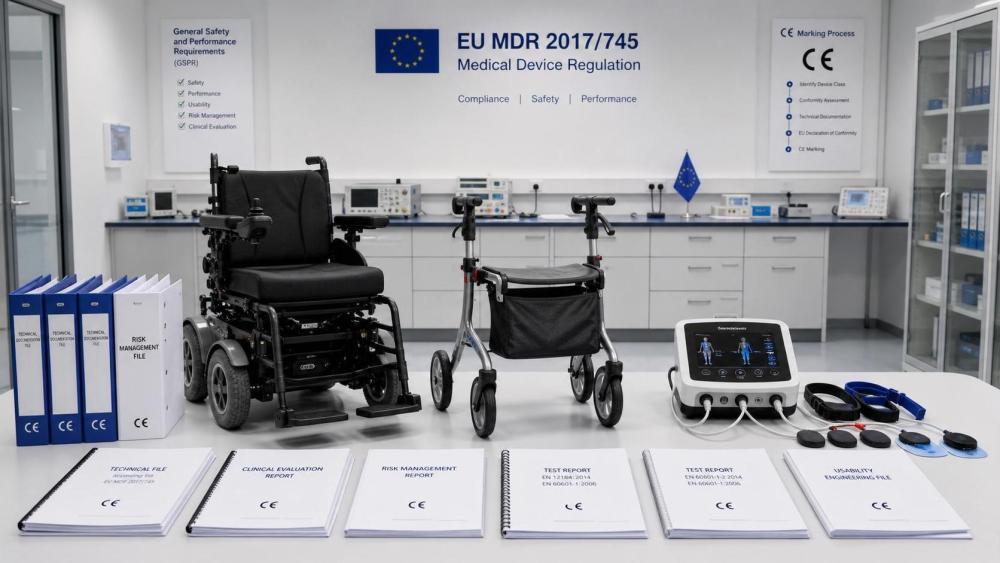
What the rule change now covers
The confirmed change is that the EU has formally implemented revised MDR Annex XVI provisions as of July 15, 2026. Under this change, active rehabilitation devices including electric wheelchairs, smart walking aids, and neuromuscular electrical stimulators are explicitly brought under Class IIa/IIb supervision. The rule now requires a clinical evaluation report and a post-market performance follow-up (PMPF) plan. The information provided also indicates that this directly affects the CE technical documentation structure, registration cycle, and compliance costs of Chinese rehabilitation equipment exporters, while importers must re-examine the completeness of suppliers' clinical evidence chains.
Where pressure is likely to appear across the business chain
For exporters preparing CE files
From an industry perspective, exporters are likely to feel the impact first in the technical documentation and registration workflow. Because the rule explicitly adds clinical evaluation and PMPF-related expectations for the covered device categories, the immediate point of attention is whether existing CE file structures and supporting records can still meet the revised regulatory scope. The business effect is less about a single filing action and more about how product evidence, document logic, and submission preparation are organized.
For importers reviewing supply-side evidence
Importers are directly mentioned in the event summary, and the practical issue for them is supplier qualification review. What deserves closer attention is the completeness of the supplier clinical evidence chain, because the new requirement is not limited to product description or basic certification status. In procurement and market access discussions, import-side teams may need to pay closer attention to whether clinical evaluation materials and PMPF planning are available, internally consistent, and aligned with the covered product category.
For certification and testing support functions
Analysis shows that organizations involved in certification preparation, documentation support, and related testing or assessment work may face changes in workload and review focus. The impact is likely to show up in document preparation, evidence collation, and review sequencing rather than in a purely administrative update. For companies relying on external compliance support, this raises the importance of checking whether technical files, reports, and supporting materials are still structured for the newly applicable classification pathway.
For delivery and procurement coordination
Observably, the rule change may also affect planning around delivery and purchasing decisions. The event summary already points to changes in registration cycle and compliance cost, so procurement teams and supply chain coordinators should pay attention to whether current delivery expectations, vendor onboarding, and contract preparation still match the updated compliance path. This is especially relevant where purchasing decisions depend on CE file readiness or supplier documentation completeness.
What companies should review now
Check whether the product category has moved into a new compliance path
Companies dealing in electric wheelchairs, smart walking aids, or neuromuscular electrical stimulators should first verify whether the product is now clearly treated within the Class IIa/IIb scope described in the update. Analysis shows that this is a threshold question for all later work, because documentation, review depth, and filing expectations follow from the applicable classification route.
Rebuild the evidence structure around clinical evaluation
The event summary makes clear that a clinical evaluation report is now mandatory for the covered devices. What deserves closer attention is not only whether such a report exists, but whether the broader evidence chain is complete enough to support it in a CE documentation context. Exporters and importers should therefore review document consistency, supporting materials, and any gaps that could affect regulatory review or supplier acceptance.
Prepare for PMPF-related follow-up obligations
The addition of a PMPF plan means companies should not treat compliance as a one-time submission exercise. Observably, the practical focus now shifts toward whether post-market performance follow-up has been planned in a way that can be presented coherently within the product file. Since the input does not provide detailed implementation mechanics, this should be treated as a monitoring point rather than as a settled execution model.
Adjust timelines and supplier review expectations
The provided information states that registration cycles and compliance costs are directly affected. From an industry perspective, companies should therefore pay attention to project scheduling, procurement timing, and supplier review standards. Importers in particular should reassess whether current onboarding and document review practices are sufficient when clinical evidence chain completeness becomes a more explicit checkpoint.
How this change is best understood at this stage
Analysis shows that this development is more appropriately understood as an implemented regulatory change rather than a distant policy signal. The effective date is explicit, and the compliance implications named in the event summary are operational: classification scope, clinical evaluation, PMPF planning, CE file structure, registration timing, and importer review. At the same time, it is still necessary to keep watching how market participants interpret documentation sufficiency, how certification-related review is applied in practice, and whether procurement or bidding documents begin to reflect the new expectations more directly.
Why the market should keep reading it carefully
At this point, the update should be read as a rule change with immediate compliance relevance for active rehabilitation devices entering the EU path described in the summary. It does not by itself confirm every downstream execution outcome, but it clearly signals that clinical evidence and post-market follow-up planning now sit closer to the center of market access and supplier review for the covered products. A rational reading is that companies should treat this as a landed compliance requirement while continuing to monitor how implementation language, document expectations, and commercial practice develop around it.
Basis of this article and points still requiring verification
This article was generated based on the user-provided news title, event date, and event summary. For developments of this type, commonly relevant source categories may include official notices, regulator publications, trade or customs authority updates, industry association communications, standards documents, and reporting by authoritative industry media. No specific official source link was provided in the input, so the exact official reference link remains to be verified. Observably, the areas that still merit continued checking include detailed implementation wording, certification review interpretation, bidding and procurement document changes, market feedback, and how companies are executing the new requirements in practice.